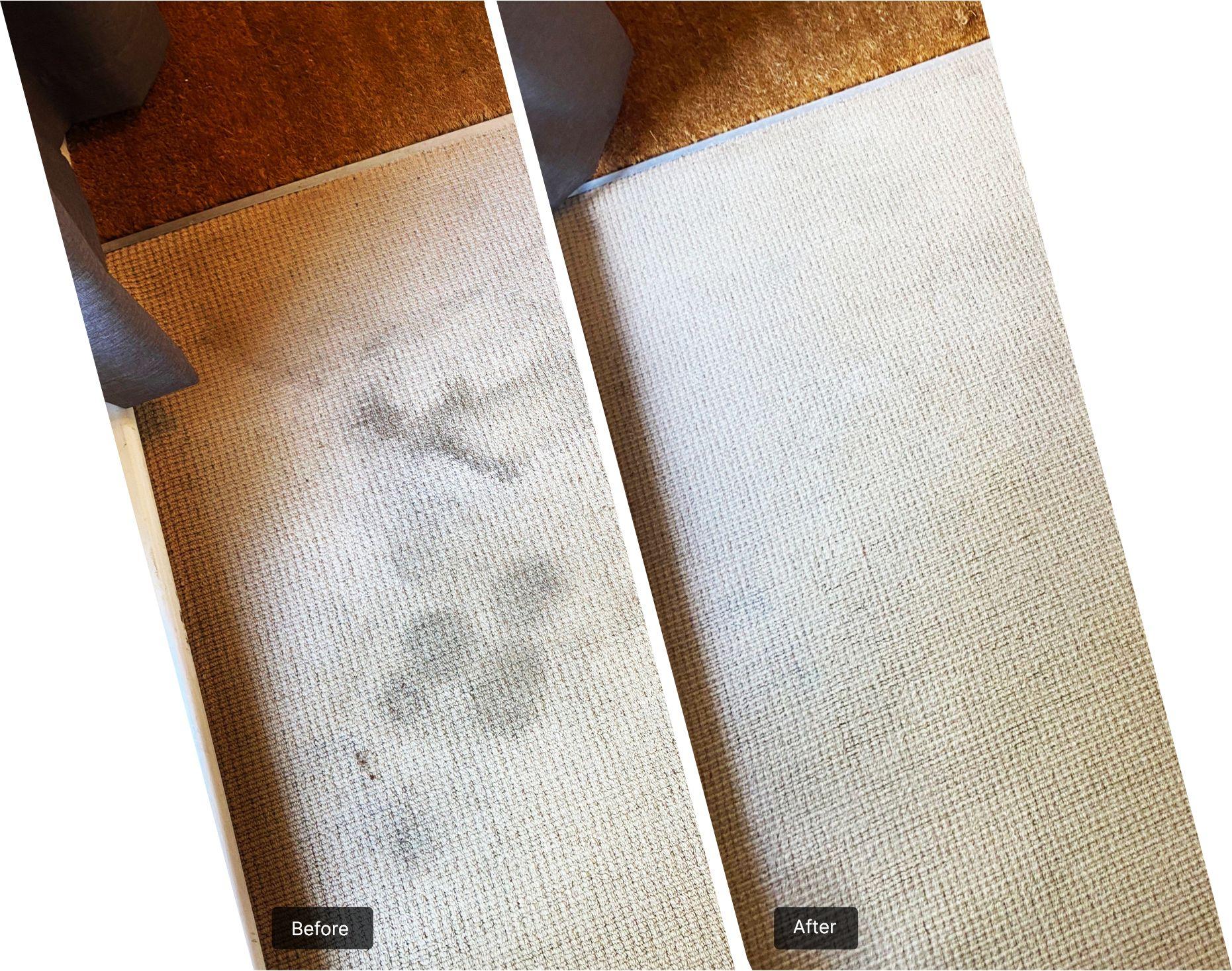
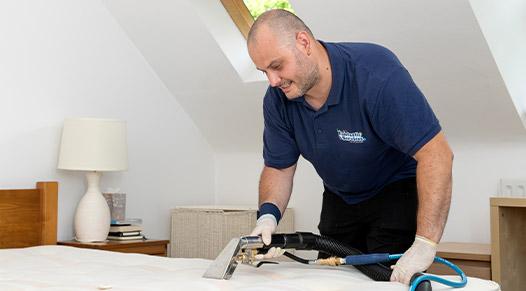
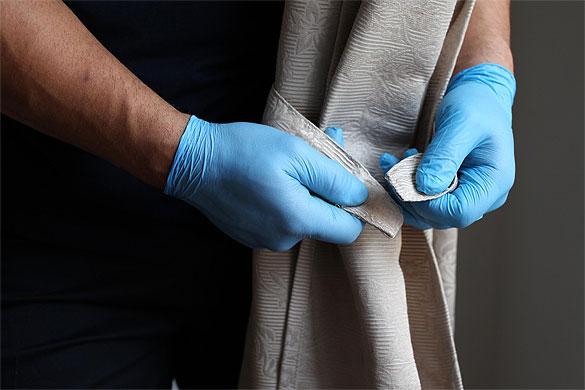
Viscose has quietly become the commonest reason a rug in NW3 is ruined by a well-meant attempt to clean it. Sold as art silk, bamboo silk or banana silk, it is a regenerated cellulose fibre with the lustre of real silk and almost none of its resilience, and it yellows, stiffens and goes blotchy the moment it is wetted where it lies. Hampstead houses are full of the stuff, usually over boards in a room where somebody once tipped a glass of wine.
Identifying a fibre before touching it
Nothing is decided by appearance. A burn test on a hidden tuft separates protein from cellulose from thermoplastic in seconds: wool self-extinguishes and smells of singed hair, viscose flares and leaves soft grey ash, polypropylene melts to a hard bead. Routine vacuuming and upkeep sit comfortably with a team arranged through Hampstead cleaning services specialists, but fibre identification and any wet process belong with a floor specialist, because a yarn that loses most of its strength when damp cannot be agitated at all.
Dye stability is tested, never assumed
Period houses here hold a lot of hand-dyed wool and a certain amount of cheaply over-dyed decorative import. A damp white towel pressed into the pile in a concealed corner, then read against the light, shows whether colour intends to travel. When it does, the piece cannot be cleaned in place at all, because bleeding follows the moisture line and halts wherever drying stops. Neighbouring districts hold a similar mix of stock, and the same discipline shapes experienced steam carpet cleaning in Camden.
Rugs laid over polished boards
A rug on a hard floor is a two-surface problem. Moisture through the backing marks a waxed or oiled board within minutes and lifts a shellac finish outright, so a piece is taken up and worked elsewhere rather than cleaned where it sits. Fine grit trapped between backing and timber abrades both, which is why a rug is turned and vacuumed on the reverse as routine. Day-to-day work that keeps that grit down runs through weekly cleaning services in Hampstead.
Wide flights and the Victorian runner
Large houses here tend to have generous staircases carrying a runner with exposed boards either side. All the traffic falls on a narrow strip, so wear concentrates at the nose of each tread and the pile thins there long before the colour looks tired. Hand tools are worked along the whole flight with the rods loosened rather than drawn, and the timber margins kept dry. Fitted suites, armchairs and headboards elsewhere in the house fall to armchair cleaning services in Camden.
Getting equipment into a conservation-area house
Much of the older stock sits inside a conservation area, with steps up to the front door, a railed basement area and no off-street standing. Long hose runs from the vehicle are normal, door seals protect the paintwork, and the route in is agreed before anything is unloaded rather than improvised on the doorstep. Those same steps and the paving below them are a different discipline, handled by local pressure washing across Golders Green.
Soil that starts outside the front door
Stone and brick paths shed a fine mineral dust that behaves like abrasive powder once it is walked into a pile, and an algae film on a shaded path transfers directly onto shoe soles in wet months. Cleaning indoors while that continues simply resets a clock. Hard-surface work of that kind, including in districts further west such as trusted driveway cleaning in Harlesden, is quoted separately because the equipment and the waste-water arrangements have nothing in common with interior work.
What is agreed before a rug leaves the house
Delicate pieces are assessed at the property: fibre, construction, dye behaviour, earlier repairs and existing damage are all recorded, and the owner is told plainly what should improve and what will not. Pricing works on the measured area of each piece plus any specialist treatment, rather than a flat room rate, while fitted carpet in the same house is quoted by room. General method across the network is documented on the full service.