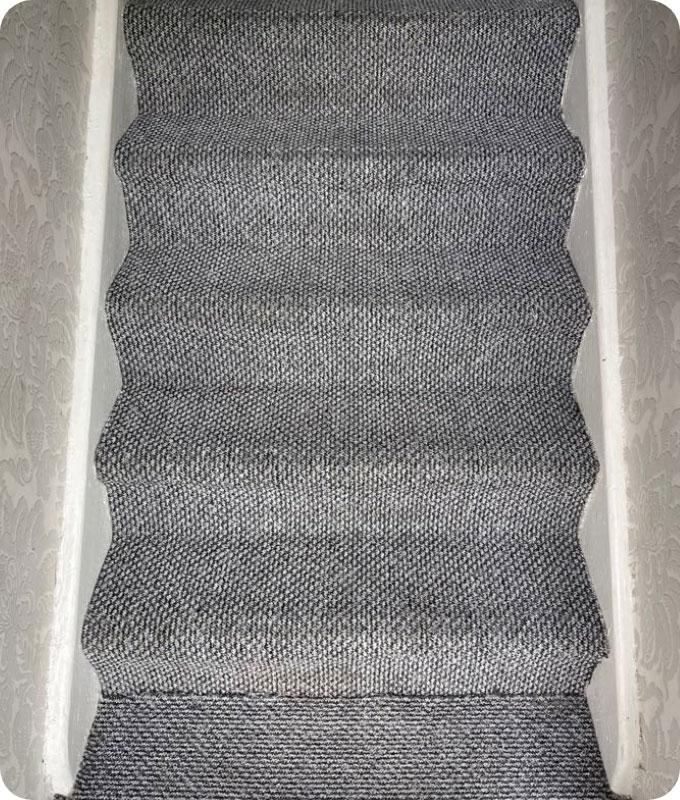
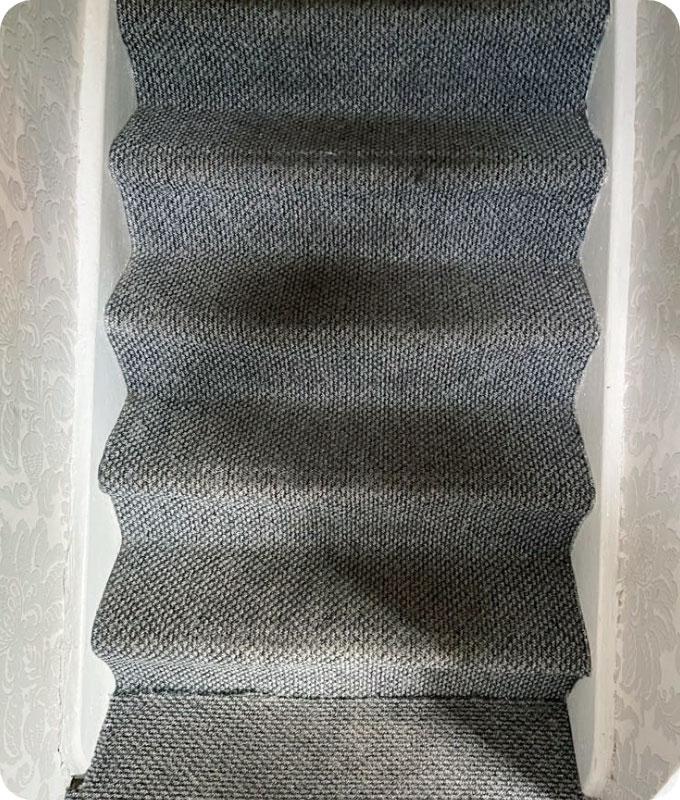
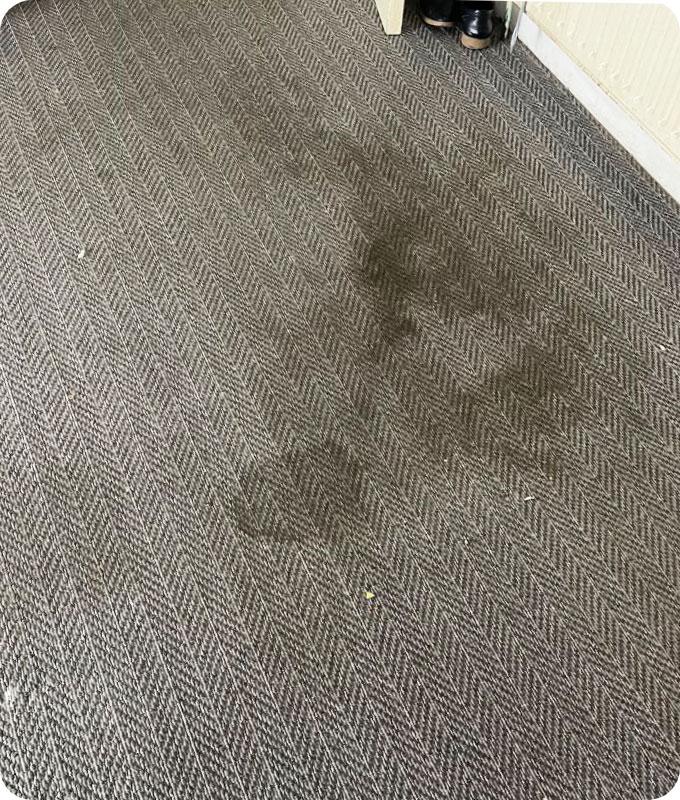
Low ground changes what a floor covering is up against. Much of GL1 sits on the level river plain, with ground-floor rooms close to the water table and alluvial silt in the soil outside. Silt is not ordinary dirt and it does not respond to ordinary treatment: the particles are extremely fine, they travel to the base of the pile, and they behave more like wet cement than like household dust once they dry. That, plus the periodic reality of water getting into a room, shapes the way floors are handled here.
Why river silt resists a normal clean
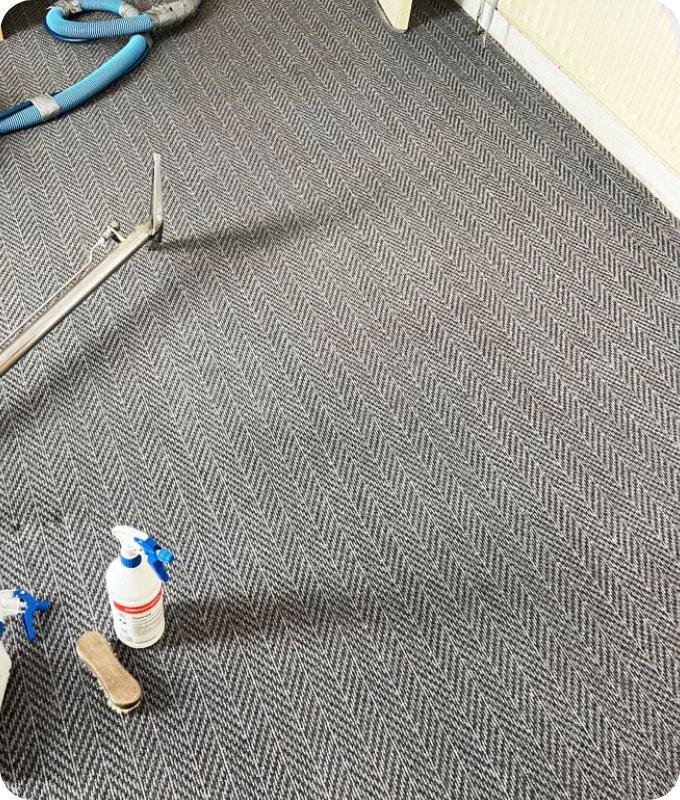
Ordinary household soil is a mixture of skin, fibre, food and grit, most of it loose enough to be vacuumed out. Silt is mineral, sub-microscopic and packed tight into the backing, and it holds a slight charge that helps it cling. Wetting it without removing the loose fraction first turns the base of the pile into a grey slurry that is then spread rather than lifted. The sequence that works is prolonged dry vacuuming with a beater, a wetting agent left to penetrate rather than scrubbed, and then multiple slow extraction passes with clean water.
After water has been in a room
Where standing water has entered, the carpet is the least of it. Foam or felt underlay holds many times its own weight and cannot be dried in place, so it comes out whatever the carpet's fate. The sub-floor is what actually has to be dried, with airflow and dehumidification measured over days rather than assumed. Water that has come off a road or through a drain is treated as contaminated, and a carpet exposed to it is a disposal decision rather than a cleaning one. The extraction and drying equipment involved is described under the service in detail.
Musty smells and the ground beneath
Solid ground floors in older property here frequently lack an effective damp-proof membrane, and moisture rises slowly into whatever is laid on them. The smell that results is microbial growth in the backing and underlay, not dirt in the pile, which is why an ordinary wash removes it for a fortnight and no longer. Diagnosis is straightforward: readings taken through the floor at several points, taken again after a dry spell. If the slab is feeding the problem, the honest answer is to fix the floor before spending on the covering.
Building dust behaves like fine sand
Plaster and screed dust generated during a refurbishment settles into carpet and stays there, alkaline and abrasive, and every footstep afterwards grinds it against the fibre. Wet cleaning before the dust has been removed dry simply sets it, sometimes leaving a pale haze that will not wash out. Floors are therefore scheduled last, once the rest of the property has been dealt with through experienced post-build cleaning in Gloucester and the air has had time to settle. Rushing that order costs more than waiting.
Higher ground a few miles away
The contrast within a short drive is sharp. Climb out of the plain and the ground is limestone rather than silt, the soil that comes indoors is paler and grittier, and damp arrives as condensation in thick stone walls rather than as rising water. Method changes accordingly, which is why the approach taken for Stroud deep carpet cleaning looks different despite being the same trade.
Arranging a visit and what to have ready
An assessment covers area, fibre, the age of the covering and whether the floor has previously been wet, because that last point changes the method entirely. Costing follows measured area and condition, with heavily soiled or silted floors taking longer and being quoted accordingly rather than at a standard rate. Clear the floor of everything light, make an outside tap and a socket available, and expect several hours of drying with air moving before furniture goes back. Households wanting the rest of the property handled at the same time usually pair the visit with cleaning services across Gloucester.