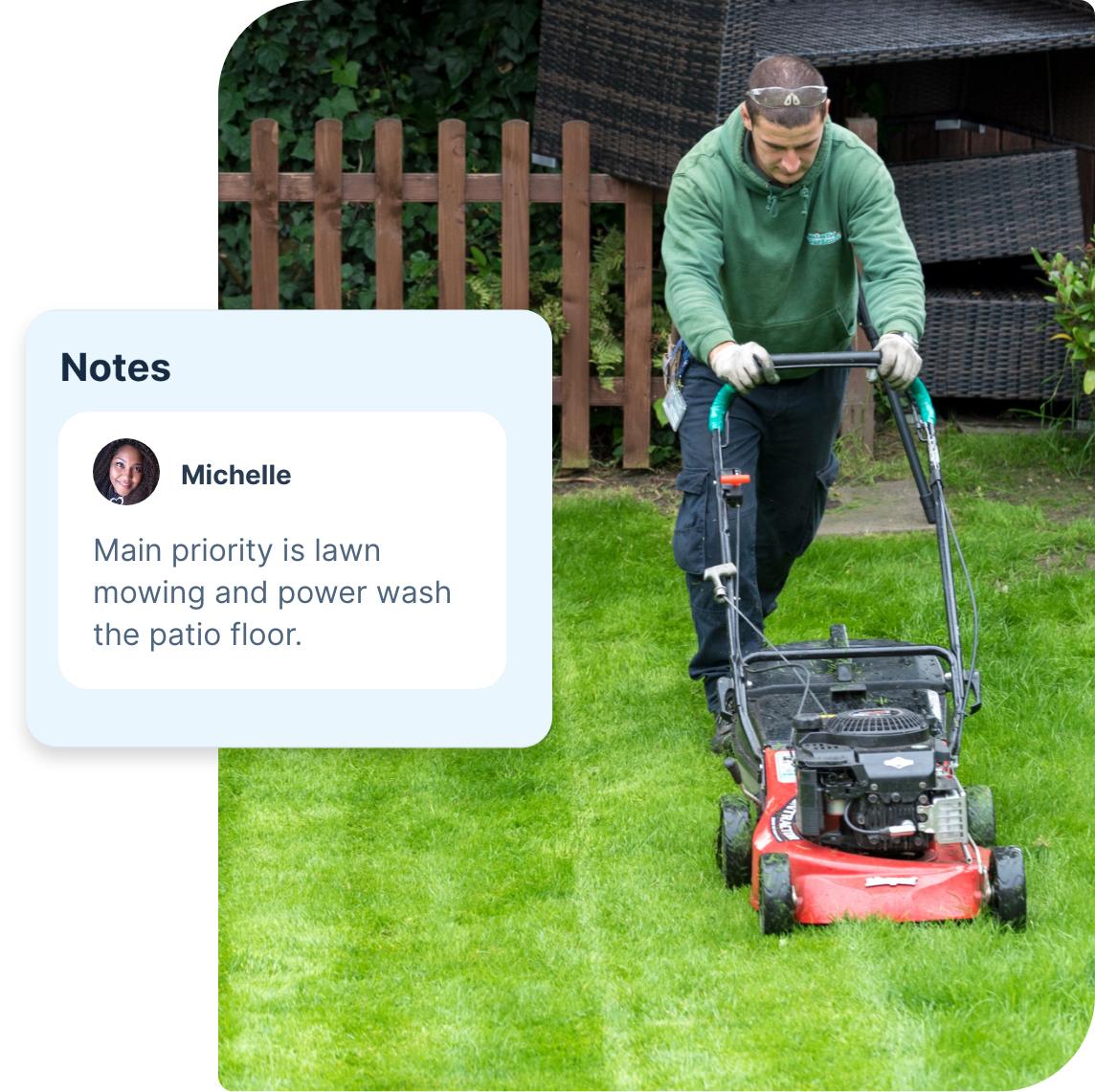
There is more difference between two mowers than between two gardeners. The larger lawns behind the Edwardian and interwar houses of SW15 are big enough for the choice to show, and the same piece of grass cut weekly with a worn rotary at the wrong height and cut weekly with a sharp machine at the right one will look like two different lawns by July. Most complaints about a lawn, from ragged tips and yellowing to moss, thin patches and scalped humps, trace back to the machine and the way it is being used.
Cylinder and rotary do different jobs
A cylinder mower cuts with a scissor action, blades passing a fixed bottom plate, and it gives a clean severed edge and a very short cut. It suits fine, level, well-kept turf and it hates long grass, twigs and uneven ground. A rotary machine cuts by impact, a blade spinning fast enough to sever the leaf, and it copes with length, damp and rough surfaces. On the mixed, tree-shaded, slightly bumpy lawns typical of this area the rotary is usually the right tool, and a fine cylinder finish is a project rather than a service.
Sharpness and what a blunt blade leaves
A blunt rotary blade tears rather than cuts, and the damage is visible from a distance two days later as a straw-coloured haze across the whole lawn. Each torn leaf tip dies back, loses water faster and offers an entry point for disease. The tell is in the cut ends: a clean lawn has straight, pale green tips, while a torn one has frayed, whitening ones. Blades are sharpened or replaced several times through a season, not annually, and that single habit does more for a lawn than any amount of feeding.
Height of cut through the season
Cutting height is adjusted rather than set once. The first cuts of spring are taken high, coming down gradually as growth accelerates, held at the working height through May and June, then raised again for summer because longer leaf shades the soil and protects the crowns during dry spells. Autumn cuts rise again as growth slows. The governing principle throughout is never to remove more than about a third of the leaf in one pass, since taking more strips the plant of the reserves it needs to recover.
Clippings, collection and the alternative
Whether to collect depends on the lawn rather than on habit. Boxing off keeps the surface clean and removes the material that would otherwise feed thatch, which suits a fine lawn cut short. Leaving fine clippings on the surface in dry weather returns nitrogen and moisture and is genuinely beneficial on a family lawn in summer. What fails is leaving heavy wet clumps after a long or damp cut, which smother the sward and go slimy. Collected material composts well only when mixed with something coarser than itself.
Where the wheels go afterwards
A mower leaves the lawn and crosses the terrace, and on a damp day it brings a film of wet clippings and soil onto the paving that dries into a green stain along the route. Blowing and brushing the surface at the end of a cut, while the material is still loose, prevents most of it. Where a path or terrace has already taken on that permanent darkened film after several seasons, restoring it needs pressure and the right detergent for the material, and that work sits under our pressure washing in Putney.
Where the machinery lives
A garden shed holding a mower, a strimmer, fuel cans and a bag of lawn feed over winter is an undisturbed, sheltered building full of exactly what rodents look for. Chewed fuel lines and wiring are a common and expensive discovery in March. Storing feed and seed in metal containers, keeping the floor clear and cutting back the growth against the outside walls all reduce the attraction, but an established population in an outbuilding is treatment work for trusted bed bug treatment in Putney.
Frequency, machinery and access
A lawn cut weekly through the growing season stays healthy because no cut ever removes too much; one cut a fortnight in May means taking off more than is good for it every time. Visits are charged on the area and the interval rather than per cut, and a larger lawn may take a ride-on machine, which needs gate clearance of a particular width and somewhere to turn. Moving machinery of that size between properties calls for a vehicle and a ramp, of the kind provided by Streatham small moves. The maintenance programme is set out at the garden maintenance service, and neighbouring rounds include a local professional.