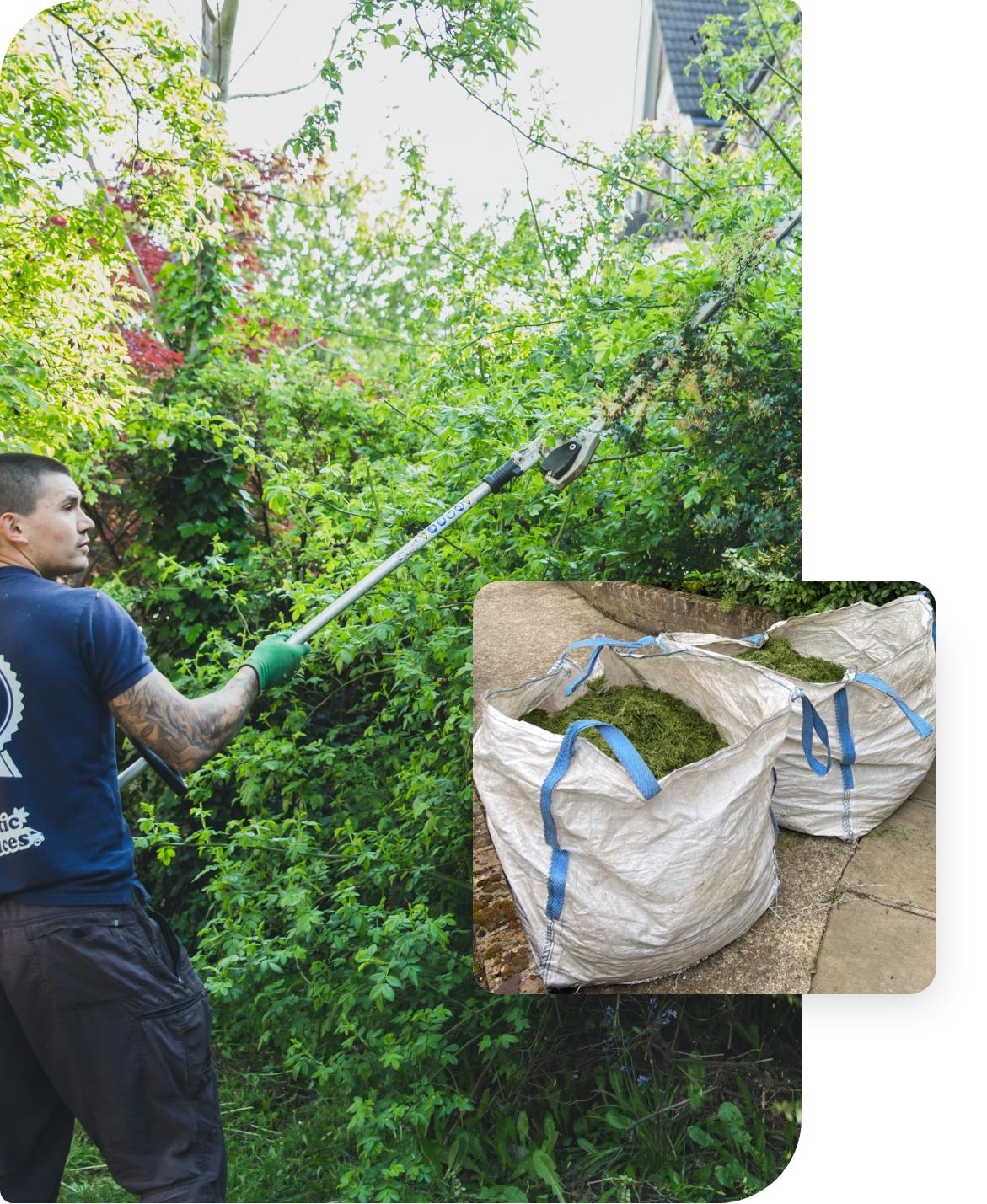
Two decades of extensions, off-street parking and outdoor kitchens have quietly reduced the amount of soft ground in SW6 to a fraction of what the terraces were built with. The result shows up in heavy rain, when water that once soaked away across a hundred front gardens now arrives at the kerb within minutes, and in high summer, when the one remaining border alongside a fully paved yard dries out faster than anything can cope with. Gardening in Fulham is largely the work of getting plants to thrive on a site that has been surfaced over.
What the rules say about paving a frontage
Laying more than about five square metres of impermeable surface across a front garden requires planning permission unless the water is directed to a permeable area within the property. That is not a technicality invented to be awkward; it is the mechanism that stops an entire street discharging into the same drain at the same moment. Gravel over a permeable base, permeable block paving, a chamfered channel feeding a planted strip and a border left along the boundary all satisfy it, and all of them look better than an unbroken rectangle of concrete.
Where the water goes instead
When there is nowhere for rainwater to soak, it concentrates. Downpipes that discharge onto slabs throw water against the base of a wall, patios laid with a fall toward the house pond at the threshold, and the single remaining bed takes the run-off from everything around it and stays saturated all winter. The fixes are unglamorous: correcting a fall, fitting a channel, lifting a bed to raise the root zone, or cutting a slot of permeable surface where water collects. The made ground further east around Vauxhall behaves differently again, and that is covered by the gardening team in Vauxhall.
Raised beds are the practical answer
Where a yard is already paved, building up is more sensible than breaking out. A bed needs real depth to work, closer to half a metre than the two courses of brick that are usually proposed, with drainage holes at the base, a coarse layer above them and a loam-based fill that will not slump by a third in the first year. Along a side return, a bed half a metre wide will support trained fruit, evergreen structure and seasonal planting indefinitely, provided the wall behind it is protected from the soil.
Growing upward on a narrow site
Where floor area is scarce, walls and fences carry the garden. Wires on vine eyes let a fig or a trained pear cover a warm return, climbers screen a neighbouring extension without taking floor space, and a row of tall planters can do what a hedge would have done with a fraction of the footprint. Anything grown vertically depends on watering, because a wall throws rain off and the base of a fence is the driest strip on the plot. How that sits within a routine of visits through the year is described in our garden maintenance service.
Under decking, out of sight
A raised deck over a former lawn creates a dry, undisturbed void with excellent cover, directly against the house. Add a barbecue area above and a bin store nearby and it becomes an established rodent harbourage that no amount of gardening will resolve. The garden side of it is keeping vegetation off the deck edges, clearing the void of leaf litter where boards can be lifted, and not stacking timber or bags against the house; the rest, including proofing the gaps, belongs with experienced cockroach control in Fulham.
Hard surfaces need their own maintenance
A paved garden is only as good as the state of the paving. Jointing sand washes out, moss establishes in the gaps, and a shaded run beside a return goes slippery in the first autumn. Bringing the surface itself back, and clearing the black film that builds where a downpipe splashes, is separate work, described under experienced driveway cleaning in Fulham.
Arranging work on a paved garden
Because the growing is nearly all in beds and containers, visits are shorter and more frequent than they would be on an equivalent plot with a lawn, and pricing follows the time each visit takes. Materials are the awkward part: soil, compost and gravel usually have to be carried through the house or over a gate, so bagged quantities and the number of trips get discussed before the work rather than on the day. Where a yard is being emptied ahead of a move and planters, furniture or a shed have to go, that is a straightforward job for removals for homes in Parson's Green.