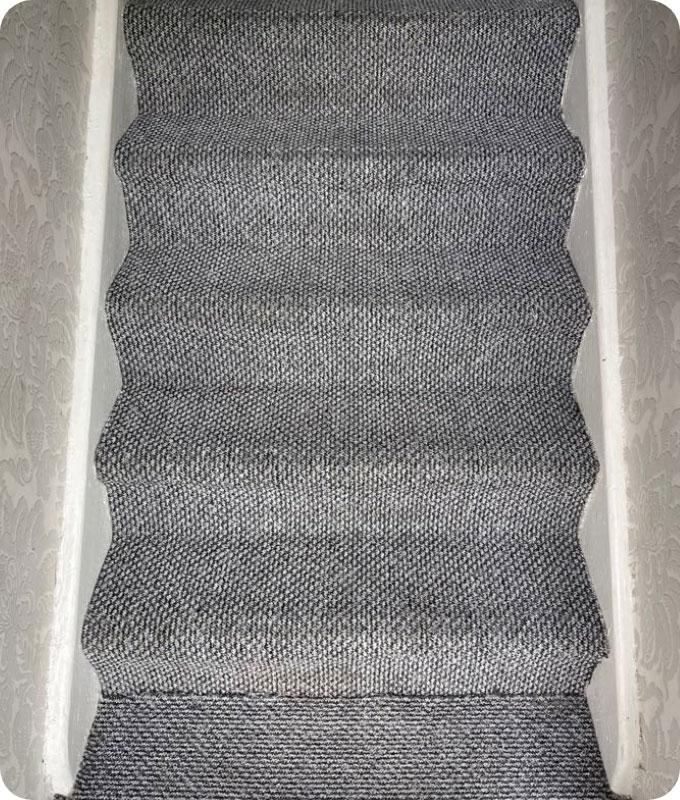
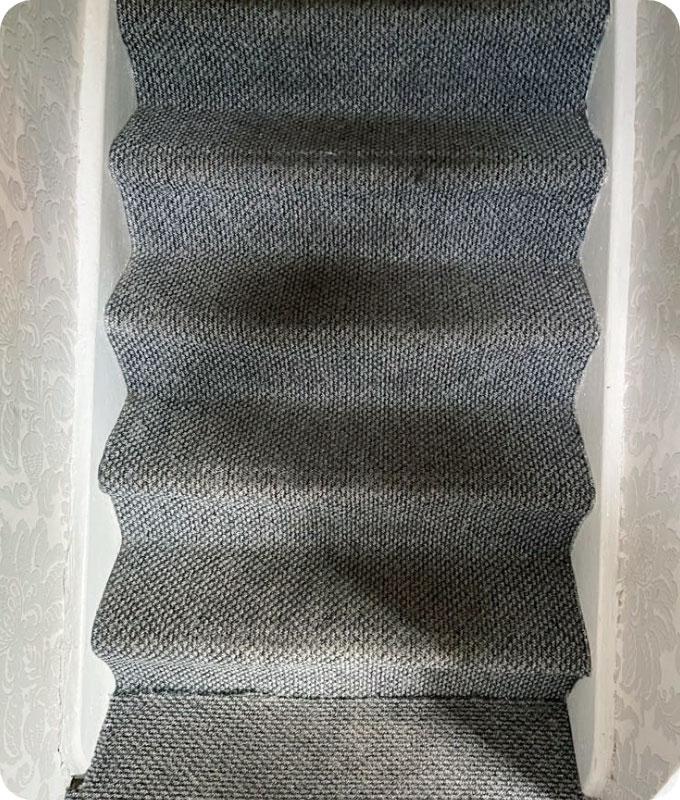
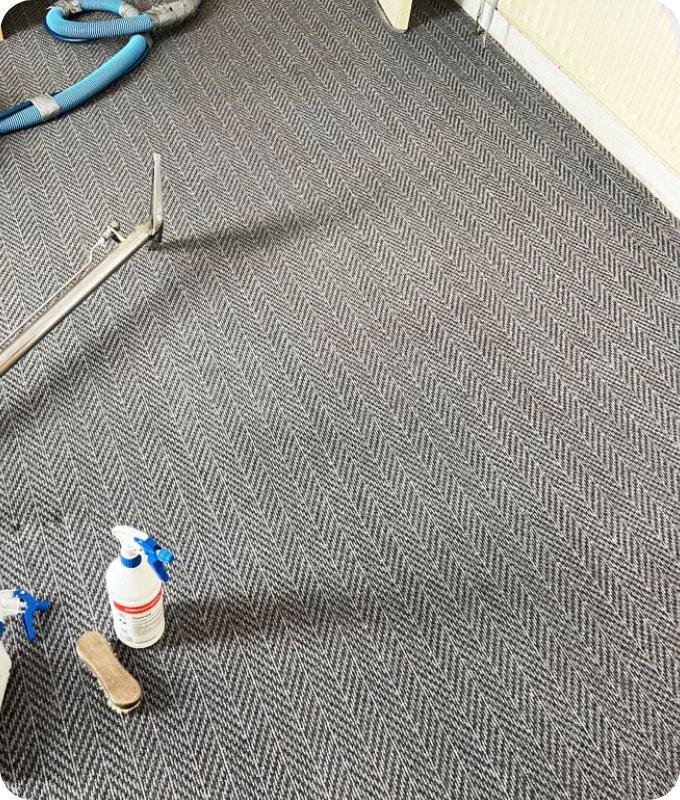
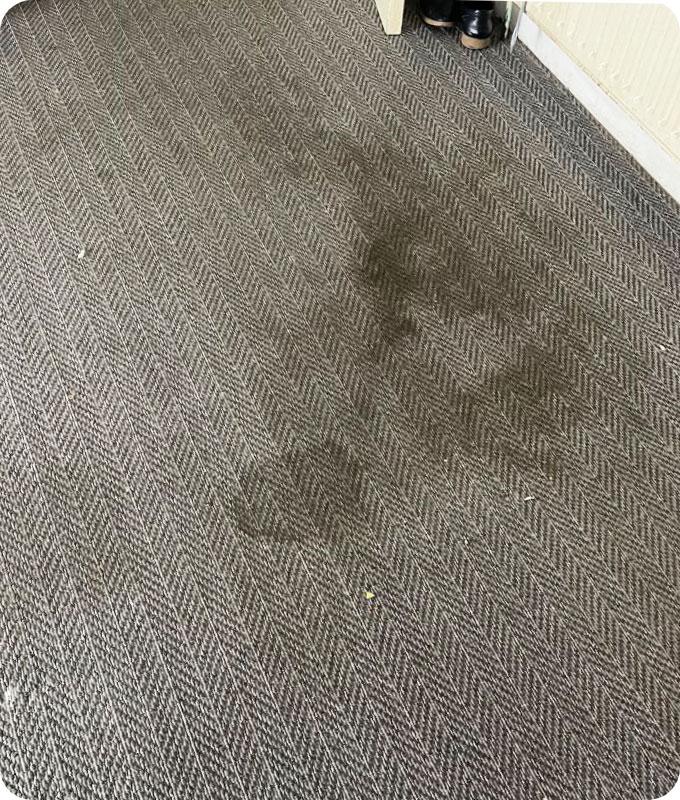
Construction dust is the worst thing that happens to a carpet, and it happens to a great many carpets in Windsor. Period property here sees constant refurbishment - reordered kitchens, opened-up ground floors, new bathrooms, consent-controlled work on older and listed buildings - and every one of those projects generates fine particulate that finds its way into pile that was supposed to be protected. Plaster dust, gypsum from board cutting, MDF sawdust and brick dust are all abrasive, alkaline and extremely fine. Treated wrongly they do permanent damage in a single visit.
Why building dust must come out dry
Plaster and gypsum dust reacts with water. Wet it and it sets: the fine particles bind into a hard grey deposit locked around the yarn, and at that point no amount of further washing will release it. The correct first step is repeated dry extraction, with a pile lifter to bring buried dust to the surface and several slow vacuum passes using a machine with a sealed filter, emptied outside. Only when dry removal has stopped producing material does anything wet go near the floor.
Sequencing trades so the floor is cleaned last
Cleaning a carpet while any dusty work remains is money spent twice. The order that works is all cutting, sanding and plastering finished, decorating complete, then a builders' clean of surfaces high to low, and the floorcovering last of all. Fine dust settles for days after the noise stops, so allowing a gap before the carpet work is sensible rather than fussy. Where the wider property needs stripping back after a project, the after builders cleaning team in Windsor covers surfaces, frames and sills that carry the same deposit, and larger jobs in the neighbouring town follow the same pattern through after builders cleaning services in Maidenhead.
Protecting a carpet before work begins
Prevention costs very little. Self-adhesive protective film laid over carpet in circulation routes, hardboard on stairs, and a dust screen with a zip at the doorway between the work area and the rest of the house will save most of the problem. Doors closed and taped, and a negative-pressure extraction unit venting to outside, keep dust in the room where it is generated. Protective film should not be left down for weeks at a time, as the adhesive becomes harder to lift cleanly.
Older buildings and the constraints that come with them
Consent-controlled and older properties often have restrictions on what can be fixed, drilled or altered, and their floors may be uneven timber with gaps that let dust down into voids. Access is frequently awkward: narrow stairs, low doorways, limited parking, and rules about working hours. Equipment is selected for what can be carried and where hoses can safely run. Where a move is involved as well, the interior work is planned around it rather than fitted in afterwards.
What is achievable and what is not
Dust removed promptly comes out well. Dust that has been walked into a wool carpet for a month and then rained on through an open window may leave a permanent grey cast, and the fibre will also have been abraded by the mineral content. An honest assessment before work starts is worth more than an optimistic one. Comparable projects nearby are handled as under Slough carpet cleaning services, and properties being handed back at the end of a let combine the work with local end of tenancy cleaning services in Slough.
Booking after a project
Quote by room, with stairs counted separately, and mention what work has been done - plastering, sanding, brick cutting - because each leaves a different deposit. Confirm that skips, materials and tools have gone before the visit, as a single bag of offcuts dragged across a cleaned hall undoes the morning. Expect the dry stage to take longer than the wet one. Fibre and method background is kept on carpet and rug cleaning services UK.