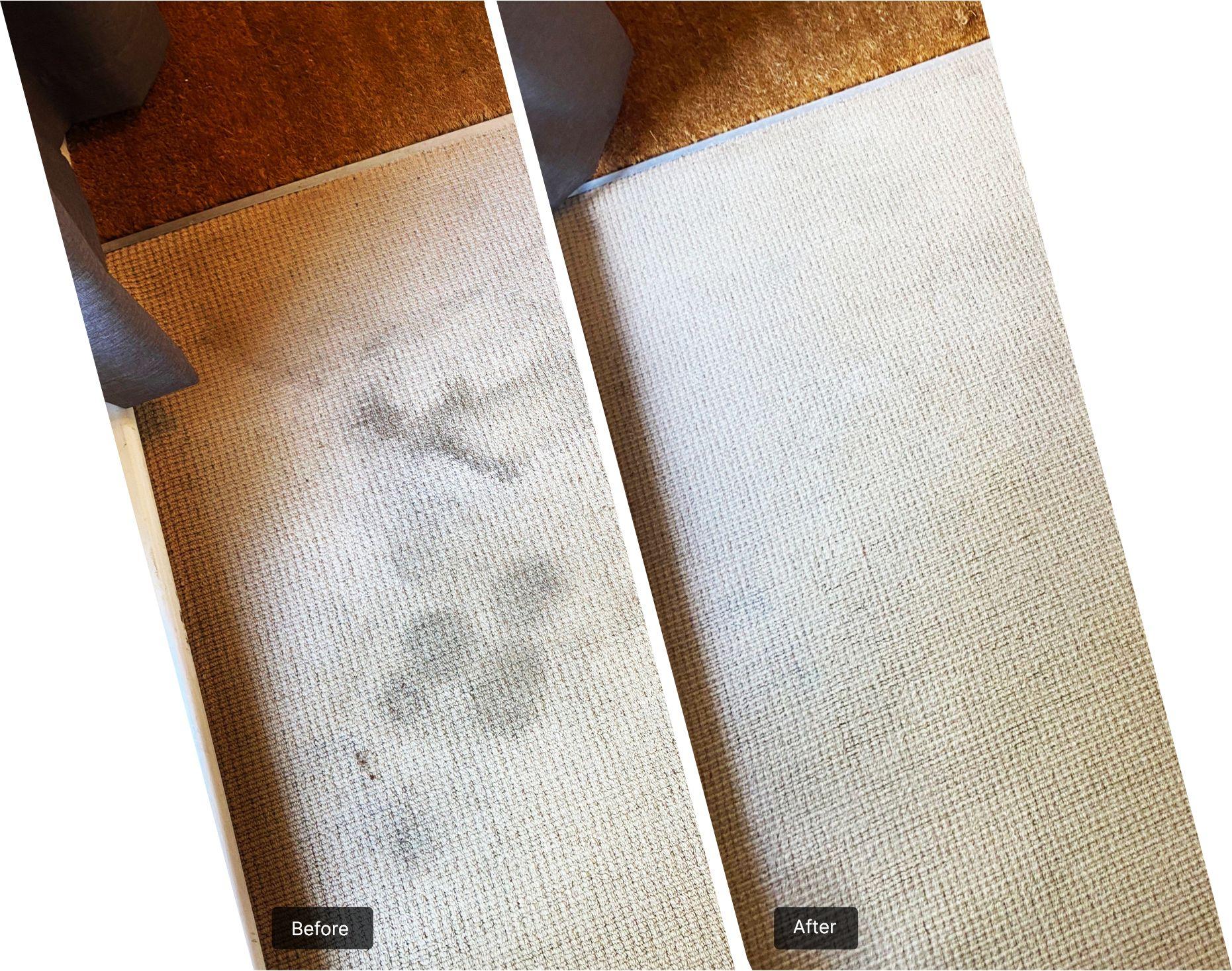
Leaf fall does more damage to a carpet than most households would credit. W5 contains some of the largest gardens in this part of London, on mature tree-lined streets with deep back plots, and from late September a steady traffic of wet leaf litter, bark and lawn debris comes in through the back door on shoes and paws.
Tannin is a dye, not a dirt
A crushed leaf trodden into wool leaves more than a fragment to be vacuumed up. Leaf and bark contain tannins, which are plant dyes, and once they transfer into fibre they behave like any other dye: a straightforward wash will not shift them. The correct treatment is a tannin remover, mildly acidic, applied to the mark and given time to work, followed by a neutralising rinse. Alkaline detergent makes a tannin stain permanently darker, which is why the general-purpose spray under the sink so often makes things worse.
The spring problem is different from the autumn one
From April the incoming material changes to pollen, blossom and tree sap. Sap is sticky and resinous and comes out with a solvent spotter rather than water. Pollen is a fine yellow powder that sits on the surface and, in households with hay fever, is worth removing by vacuuming thoroughly with a sealed machine rather than allowing it to be disturbed underfoot for weeks. The two seasons genuinely call for different chemistry in the technician's kit.
Clay lawns and the band inside the back door
The subsoil across much of this ground is London clay, which waterlogs in winter and compacts to dust in summer. Either form travels indoors. The result is a concentrated strip of soiling two or three paces inside the rear door, far darker than the rest of the room. That band is worked as a separate zone with a longer dwell and more dry passes; treating it at the same rate as the middle of the room leaves it visibly different when everything else has come up.
Timing a clean to the gardening year
The most useful moment for a deep clean in a garden-facing house is late spring, once the wet season's mud has finished arriving and before the windows are open to pollen. A second, lighter pass in November catches the leaf load. Cleaning in high summer looks good for a fortnight and then meets the whole autumn intake. Households that shift their schedule by a couple of months often find they need one fewer visit a year.
Hard landscaping is the first line of defence
Whatever reaches the back door has crossed a patio, a path or a set of steps, and a surface furred with algae and leaf mulch transfers far more than a clean one. Periodic washing down of that approach, of the kind described on pressure washing team in Hanwell, cuts the load arriving indoors, and the same argument applies to front paths and steps as in decking cleaning services in Fitzrovia. Good matting at both doors, long enough for two full strides, does the rest.
Furniture that has stood through the same seasons
Armchairs facing a garden window take sun, pollen and the dog that came in muddy, and the fabric holds all three. Treating the floor and ignoring the seating leaves half the job done, so the fabric work set out on vetted upholstery cleaning services in Ealing is commonly scheduled alongside the carpet while the same drying window is open.
Arranging the visit and clearing the ground
Charging is by room with staircases counted separately and any heavily soiled zone identified before work begins. Furniture is shifted within reason, though a room cleared beforehand cleans better and dries faster, and where items need to leave the property the handling described on Hammersmith man and van team is arranged first. Household upkeep between visits is generally covered by trusted house cleaning in Ealing, comparable riverside terraces are discussed on deep carpet cleaning in Chiswick, and the fibre and chemistry background sits on nationwide carpet and rug cleaning services.