Single-skin brick has no way of dealing with the water it collects. A garage, a workshop or a store built half a brick thick, unheated and with a solid floor cast straight onto the ground, will go damp in any ordinary British winter, and in KT9 that describes a large number of detached and side garages, brick stores and converted outbuildings on the interwar and post-war plots. The complaint is rarely a wall — it is boxes of belongings gone mouldy, a bicycle furred with rust and a door frame that has started to soften.
Why an unheated outbuilding sweats
An occupied house is warm enough, most of the time, that its internal surfaces sit above the temperature at which air gives up its moisture. An unheated outbuilding does not. Its walls, floor and the underside of its roof track the outside temperature closely, so every mild, humid day after a cold spell puts a film of water on cold masonry and cold metal. Nothing removes it, because there is no heating and usually no through-draught. Over a season that cycle is enough to colonise cardboard, fabric, leather and bare timber. The way this differs from moisture inside a heated house is covered on the full service.
Converted garages and the floor nobody membraned
Garage conversions are common here and the floor is where they go wrong. An original garage slab was laid to drain, without a damp-proof membrane, because nothing in a garage minded. Convert the space into a room and that slab is now under carpet or laminate with a warm room above it, and ground moisture passes up through the concrete and condenses under the covering. The symptoms are a musty smell, dark patches at the perimeter and mould on the back of the skirting rather than the front. Putting it right means a liquid damp-proof coating or an overlaid membrane and a floating floor, insulation, and linking that to the wall at the junction. Suspended timber floors in the older stock nearby fail in a completely different way, which the local team goes into.
Metal doors, still air and stored belongings
An up-and-over steel door is the coldest surface in most garages, and water forms on its inside face and runs onto whatever sits below. Roller shutters and metal sheet roofs do the same. Meanwhile, the way people store things makes it worse: boxes stacked tight to an external wall, sealed plastic crates left on a cold slab with warm air trapped inside, and furniture pushed up against brick. Raising storage clear of the floor on battens or racking, keeping a hand's width off external walls, and leaving air able to circulate around stacks changes the outcome more than any treatment applied to the brick. Outbuildings used for storage are also a prime harbourage, and where gnawing and droppings come to light, a local professional handles it.
Garden rooms and timber cabins
Timber buildings bring their own faults. A cabin sitting directly on slabs with no ventilated gap wicks water up through its bearers; a felt or EPDM roof with no vapour control below the insulation collects interstitial moisture and the ceiling lining goes black along the joist lines; and an insulated cabin heated only occasionally cycles between warm and cold, driving moisture into the build-up. Lifting the structure clear of the ground, ventilating beneath it and getting the vapour control layer on the warm side are what solve it.
What the work involves
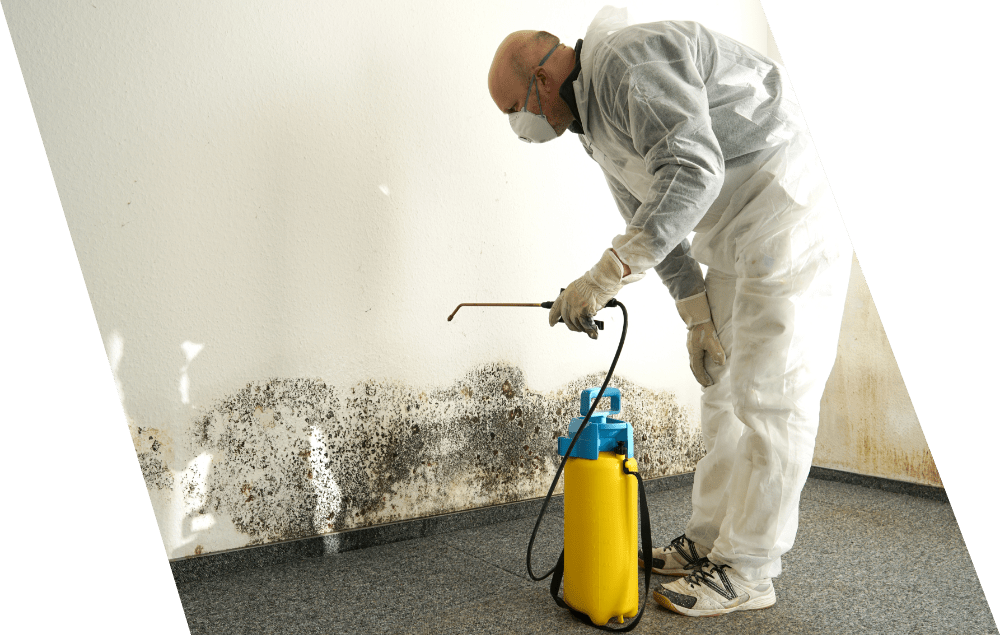
The order is fixed: stop water getting in, remove what cannot be saved, treat and clean the structure, then change the conditions. That usually means repairing the roof covering or a defective gutter, treating masonry and timber, fitting vents high and low on opposite walls so air can cross, sealing a floor where it is the source, and reinstating linings with the right layers in the right order. Draught seals, vent fitting, racking and shelving, and door adjustments are covered by handyman specialists in Chessington.
Booking, access and how it is priced
Outbuildings are quoted by structure rather than by room count, and the two things that move the figure are the amount of contents handling and whether a floor or roof needs sealing. Clearing as much as possible beforehand shortens the visit and cuts the cost. Anything being brought back into the house after treatment is best cleaned rather than simply wiped over, and deep cleaning cover across Kingston takes care of that stage.