


Mould Removal and Treatment New Malden
Advanced mould removal services using professional-grade equipment and safe HOCl treatment to ensure complete eradication of mould contamination.

Advanced mould removal services using professional-grade equipment and safe HOCl treatment to ensure complete eradication of mould contamination.
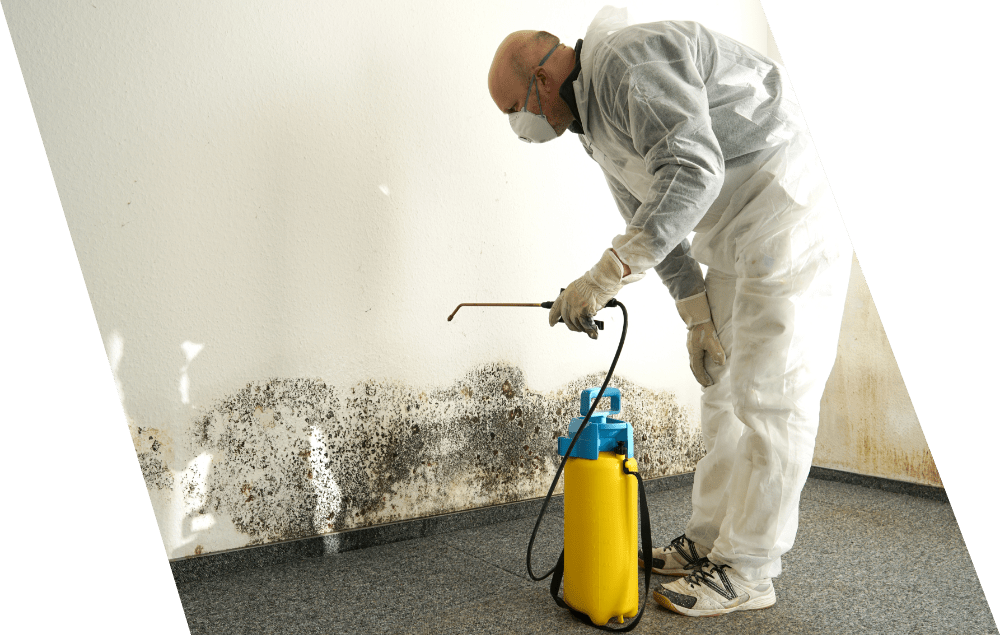
The cost of mould removal depends on the size of the affected area and the type of treatment required. After a detailed inspection a clear, personalised quote is provided based on the scope of work.
| Small mould area (e.g. around a window or corner) | Medium mould area +£100 (large section of a wall affected) | Large mould area +£150 (more than one wall or ceiling) | ||||
|---|---|---|---|---|---|---|
| Room | Standard | Fantastic Club* | Standard | Fantastic Club* | Standard | Fantastic Club* |
| Bedroom | £350 | £320 | £450 | £420 | £500 | £470 |
| Bathroom | £350 | £320 | £450 | £420 | £500 | £470 |
| Kitchen | £350 | £320 | £450 | £420 | £500 | £470 |
| Living / Dining room | £350 | £320 | £450 | £420 | £500 | £470 |
| Hallway / Landing | £350 | £320 | £450 | £420 | £500 | £470 |
| Utility room | £350 | £320 | £450 | £420 | £500 | £470 |
| Paid inspection | £50 | |||||
| *Price for members of the Fantastic Club. The Fantastic Club is a yearly subscription of £89. | ||||||

Our mould removal in New Malden begins with a thorough inspection and moisture assessment to determine the extent of contamination and its underlying causes. Mould growth can often be traced back to issues such as condensation, high humidity, inadequate ventilation, or previous water damage. Identifying the source of moisture is crucial for delivering lasting results, as it allows us to implement appropriate strategies to mitigate future growth. Our service ensures complete mould cleaning New Malden, focusing on structural surfaces like walls, ceilings, and floors where mould typically thrives. Please note that our treatment does not extend to soft furnishings such as carpets or sofas.
Professional mould remediation in New Malden involves more than just surface cleaning; it addresses airborne mould spores and creates an environment that prevents future infestations. Our thorough approach not only safeguards your health by improving indoor air quality but also protects your property from further structural damage. We strive for long-term mould prevention by implementing effective condensation control and assessing potential damp areas. Choose our reliable mould removal services to ensure a clean, healthy living space, free from the detrimental impacts of black mould removal New Malden, and other types of mould contamination.
The mould remediation process in New Malden begins with a thorough inspection and moisture assessment, utilizing professional hygrometers to identify hidden damp conditions that contribute to mould growth. By accurately detecting excess moisture, our technicians can provide targeted solutions to prevent recurrence. This foundational step is critical in ensuring that all underlying issues are addressed. During remediation, HEPA filtration systems and air scrubbers are deployed to capture airborne mould spores, effectively maintaining safe indoor air quality throughout the entire process. These systems work tirelessly, ensuring that both visible and invisible contaminants are managed, paving the way for a successful mould removal.
Following the initial assessment, we utilize HOCl (Hypochlorous Acid) treatment, a professional-grade, non-toxic solution designed to neutralize mould, bacteria, and mycotoxins at a microscopic level. To ensure comprehensive coverage, ULV (Ultra-Low Volume) fogging technology is employed, which evenly disperses the treatment to reach hidden areas such as cracks and corners. Our team then physically removes mould using specialized equipment with H-Class filtration to contain contaminants safely. Finally, we implement air purification measures to significantly reduce airborne spores and improve indoor air quality, achieving long-lasting results in damp and mould removal throughout New Malden.

Booking mould cleaning is quick and designed to get results without unnecessary delays.
Share what you’re dealing with, whether it’s visible mould, damp patches, or a recurring problem. This helps determine the right approach, from mould cleaning to full mould remediation.
A specialist checks the affected areas and identifies what’s causing the mould, such as excess moisture, condensation, or poor ventilation. This ensures the issue is treated properly, not just on the surface.
You’ll get a straightforward quote based on the level of contamination and the type of mould removal required. The service is tailored to ensure effective results and long-term protection.
The treatment removes mould and improves indoor air quality, helping to prevent future growth and create a healthier living space. It also targets the root cause of the problem for longer-lasting results.
Mould removal requires more than basic cleaning, which is why it’s handled by trained mould remediation specialists experienced in treating both visible and hidden contamination. Each specialist assesses the full extent of mould growth, including underlying causes such as excess moisture, condensation, and ventilation issues, ensuring the problem is addressed properly rather than just on the surface.
Number of bookings: 213
With Fantastic Services for: 2 years
Other specialities:
Number of bookings: 139
With Fantastic Services for: 2 years
Other specialities:
Number of bookings: 123
With Fantastic Services for: 2 years
Other specialities:
Alongside professional mould removal and mould cleaning, a range of additional property care services is available to help maintain a healthier indoor environment.








Mould can spread quickly and impact both health and property if not treated in time. Book a service today to remove mould, improve indoor air quality, and restore a cleaner and healthier living environment.

A loft conversion changes the way a roof handles moisture, and in New Malden that matters more than it might elsewhere. KT3 is largely interwar and post-war semis and detached houses with generous roof volumes, and a great many of them now have a bedroom, a study or a shower room built into the slope. Where the conversion went in without a workable ventilation strategy, black growth appears along the line where the sloping ceiling meets the knee wall, around the rooflight liner, and on the cheeks of a dormer. It appears in the same places every time, and only in the cold months.
An unconverted roof is a cold roof: the insulation sits at ceiling level and the void above it is ventilated to outside, so whatever vapour reaches it gets carried away. Converting the space lifts that insulation up between and under the rafters. Unless the design either keeps a continuous ventilated air path above the insulation or is detailed properly as a sealed warm roof, the result is a third thing that works as neither — a closed slope with no air movement behind a cold outer covering. Vapour from the room reaches the underside of the tiling, condenses there, and wets timber and insulation from behind. The spotting visible indoors is the last stage, not the first.
Each cause leaves a different signature. Growth confined to a rooflight reveal points at a cold liner with no insulated return. A continuous band where the slope meets the knee wall points at the eaves, where insulation has been pushed hard into the corner and closed the airway the roof depends on. Staining that runs dead straight and repeats at regular centres is following the rafters and is a cold-bridge pattern. A single irregular patch with a hard tide edge is liquid water — a slipped tile, a failed flashing at a dormer cheek, a dried-out mortar fillet. Which signature is present decides whether the answer is airflow, insulation or roofing, and trusted mould removal and remediation sets out how that sequence runs generally.
An eaves shower room is the most common single trigger in a converted roof. The space is tight, the walls are usually stud lined straight off the rafters, and the extract has a long run to reach a tile vent or a gable terminal. Flexible ducting, sagging between joists, destroys the airflow the fan was rated for, and an uninsulated duct crossing a cold void condenses inside itself and drips back down the run. Rigid, insulated ducting on a gentle rise with as few bends as possible is what actually moves the moisture out. Where a duct simply ends inside the void, the roof structure is being humidified every time somebody showers. That side of the work is covered by the handyman team in New Malden, along with rerouting, terminals and making good afterwards.
Once the cause is dealt with, attention turns to the materials that took the water. Surface growth on plasterboard can be killed and the board retained, but board that has been wetted repeatedly softens and holds spores in its paper facing, and it is better removed. Mineral wool that has been damp stays compressed and loses most of its value even after drying, so it is replaced rather than left in place. Rafters are checked at the feet and at any wet patch, because sustained moisture in roof timber leads to decay rather than mere staining. Damp roof voids are also the ones with gnawed insulation and droppings along the joists; where both turn up, local pest control in New Malden handles the infestation side.
A visit to a converted roof needs the room workable: beds pulled off the slopes, eaves cupboards emptied, and access to a hatch or crawl space where one survives. The inspection covers moisture readings on the slope and knee walls, whatever void can be reached, the whole extract run from fan to terminal, and the outside face of the dormer and rooflight upstands. Pricing follows the extent of treatment and reinstatement rather than the size of the house, so a single cold reveal and a fully stripped slope are quoted quite differently. The stock one district over behaves much the same way, and mould removal throughout Worcester Park works to the same order. Where a slope has been stripped back and rebuilt, the Kingston branch puts the room back into use.
Skip the line, request and
book a service online















