M1 is overwhelmingly flats, and a good share of them occupy buildings that were never designed for anyone to live in. Mills, warehouses and old commercial blocks converted into apartments come with exposed brick, exposed steel, exposed ductwork and windows two storeys high, and the standard tenancy cleaning checklist - written for a two-bedroom house - does not describe any of it. What passes an inspection in a conversion is not what passes in a new build.
Brick, steel and services on show
Exposed brickwork is porous and sometimes only lightly sealed, which means it cannot be washed like a tiled wall. Dust is drawn off dry with a brush attachment, and anything wet is kept to spot work with minimal moisture, because water carries salts and mortar dust into the face and dries as a pale bloom. Steel beams and exposed conduit above head height collect a thick felt of dust that is never visible from the floor and is entirely visible from a stepladder. The same holds for exposed joists and boarded soffits, which are dry-brushed for exactly the same reason.
Glazing that runs the height of a room
Original warehouse windows are large, divided into many small panes and frequently only partly openable. The internal face is what falls within a tenancy, and it is a long job: each pane, each glazing bar, the deep reveal and the sill below. Old metal frames rust at the corners and stain the paint around them, which is a repair matter rather than a cleaning one and is better recorded than scrubbed. External faces at height are outside the scope.
Polished concrete and resin floors
Hard industrial floors look indestructible and are not. Polished concrete is porous unless it has been densified and sealed, and it will absorb a strongly coloured cleaner or an oil spill permanently. Acidic products etch it. The method is a neutral detergent, minimal water and a dry pass behind, and any mark that has soaked in is treated as a stain rather than a soil. Resin floors tolerate more but scuff, and scuffs come off with a pad rather than a chemical.
Open plan, with nowhere to hide
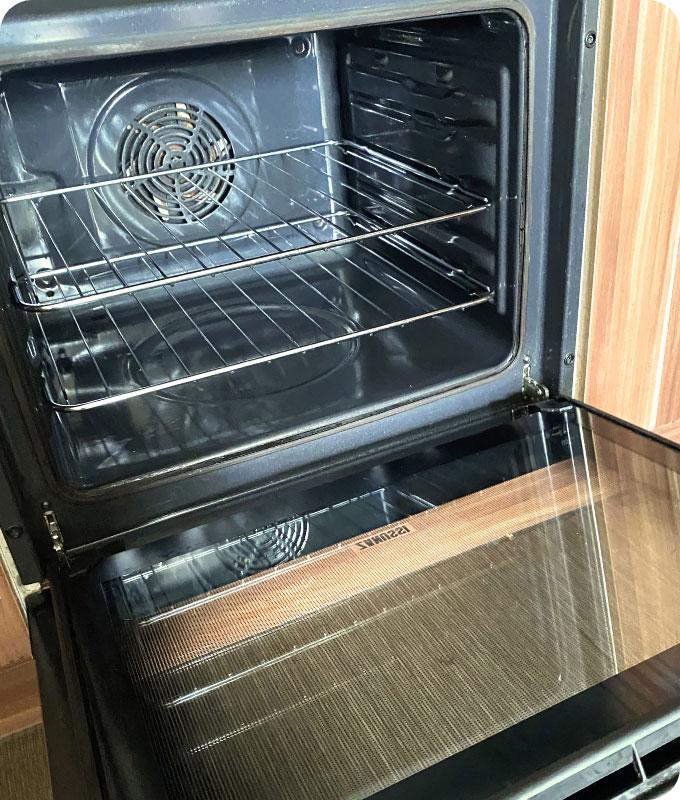
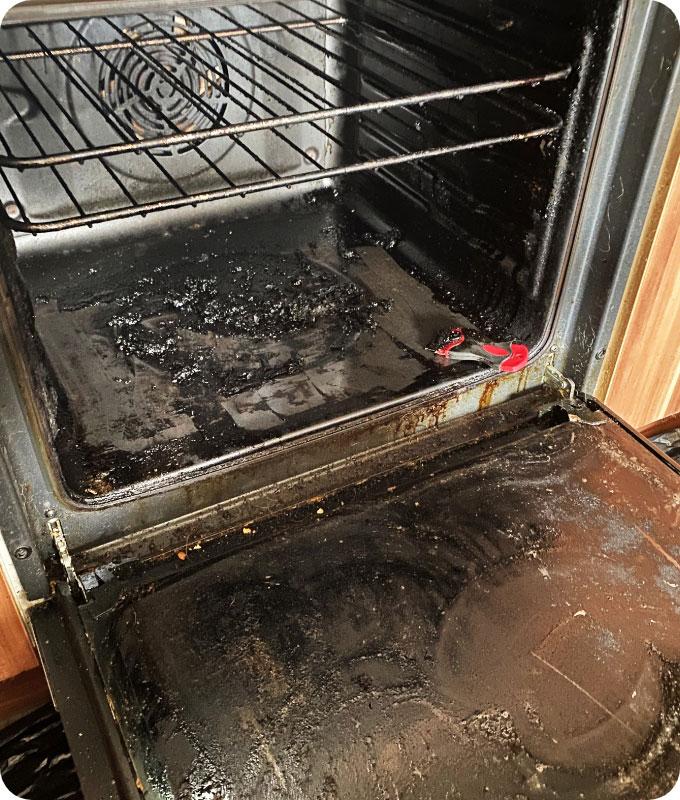
In a converted flat the kitchen is usually part of the main room, which means cooking residue lands on the sofa, the shelving and the walls rather than being contained. Extraction is often recirculating, so the filters carry the whole load and the carbon cartridge is a replacement item. A heavily used oven in this layout affects the whole flat, and stripping it back properly is its own appointment through a local professional rather than an add-on.
Refurbished flats and the dust after
A great many of these apartments are refitted between tenancies, and plaster and cutting dust behave nothing like household dust: it stays airborne for hours and settles again after the first clean. That sequence needs planning and more than one visit, which is the approach taken under our specialists in the area.
Water, gutters and an old building envelope
Converted buildings frequently have original rainwater goods, and a blocked hopper or downpipe shows up inside as a damp patch on a reveal rather than outside. That is a building matter for the freeholder rather than a tenancy one, but it explains marks that cleaning will not remove, and clearing them falls under Manchester gutter cleaning services.
Handing a city centre flat back
Access is the usual constraint: a booked service lift, a loading bay with a time limit and a concierge who signs keys in and out. Pricing runs on the size of the flat and the number of bathrooms, with cooker stripping and internal glazing as separate items. Utilities stay connected. Comparable work across the river is described on local cleaning services across Salford, and the national room-by-room scope sits under what the service covers.