Rain in this part of the country is notable less for intensity than for persistence. A rainwater system copes with a sharp shower whatever state it is in, because the volume is small and brief; what finds every weakness is a week of steady rain that keeps a gutter working at capacity for days. Under those conditions a partly blocked run does not merely overflow, it overflows continuously, and the wall beneath never gets a chance to dry. That is the practical reason roofline maintenance matters more in the city than the same task does somewhere drier.
Valley gutters on a mill roof
Central Manchester is full of converted mills and warehouses whose roofs are a series of parallel pitches with lead or asphalt valleys between them, draining into sumps and then down pipes that often run inside the building. Those valleys are wide, shallow and completely invisible from the street. Debris gathers at the sump, the valley ponds, and when it finally overtops, water enters at ceiling level in a flat rather than staining an outside wall. Clearance is hand work at the sump, followed by a flow test, and the weir or overflow provision is checked at the same time.
Back streets, set-down and getting kit to the roof
Terraced streets with rear alleys, and city blocks with no frontage to speak of, make access the largest single variable in planning a job. An alley half filled with bins will not take a tower. Loading restrictions on main routes limit where a van can stand. On managed buildings, roof access is through a hatch under a permit to work at height, with a method statement lodged in advance. Establishing all of that before the date is set is why a survey call precedes the booking on anything above two storeys.
Contractor hours and shared buildings
Apartment blocks and managed conversions impose their own timetable: work in communal areas within set hours, notice to residents, a booked service lift for equipment, and floor protection through lobbies. None of it is difficult, but all of it consumes time, and a crew that turns up without having arranged it loses the slot. Where a building is mid-refurbishment the dust and debris load on the roof is much heavier than normal, and the follow-on interior work is the specification described in Pendleton after builders cleaning services.
Terraces and the shared downpipe
The older brick housing carries cast iron ogee gutters, and in many rows two adjoining houses discharge into one downpipe at the party line. A blockage there affects both, and a repair benefits both, which tends to complicate a straightforward job unless it is raised early. Cast iron is heavy, its bolted joints are sealed with putty that hardens and shrinks, and its brackets are driven into mortar joints. It is worth keeping and repainting where it is sound; what it does not tolerate is being climbed on or levered.
Landlords, tenancies and the timing of the work
A large share of the city's terraced and apartment stock is rented, and a landlord's repairing obligation covers the exterior structure including the gutters, regardless of who lives there. The practical consequence is that clearance tends to be scheduled around void periods, when access is straightforward and no one is inconvenienced. That is also when interior work is done, which is why the visit is often paired with a turnaround clean of the sort in the service in full, or with kitchen work such as oven cleaning for period property in Manchester in a managed flat.
How a job is quoted and finished
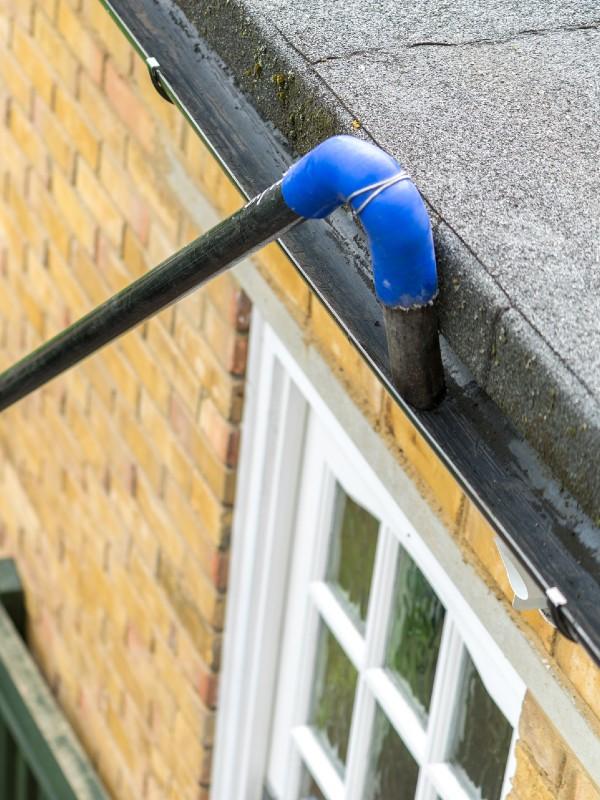
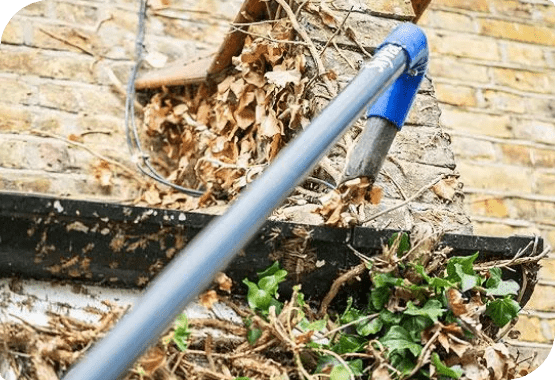
Pricing follows the building rather than the postcode: elevations, height, access method, whether valleys or internal outlets are involved, and whether a permit or lift booking is needed. The work finishes with outlets flow tested, downpipes rodded, debris bagged and removed, and photographs of each run. Where a pole system is already rigged for gutters, upper-floor glass is straightforward to add, which is the work in the Manchester branch, and the general shape of the service is set out on what our gutter cleaning includes.