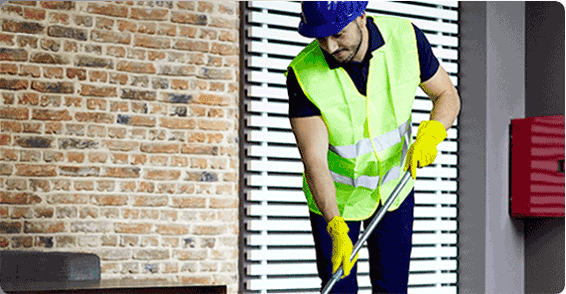
A refurbished apartment on the eighth floor of a converted mill cannot be cleaned the way a house with a driveway is cleaned, and most of the difference has nothing to do with the rooms themselves. It is the building around them. Service lifts are booked in slots, loading bays have time limits, concierge desks hold contractor rules about working hours and communal protection, and there is nowhere to park a van while equipment is carried in. In central Manchester the logistics decide the schedule before anyone picks up a cloth.
Getting equipment into an M1 building
Most city-centre blocks restrict trades to a goods lift with a booking window, often an hour. Everything needed for a full clean has to go up in that window: extraction machines, water containers, ladders, chemistry and waste sacks. If a second trip is needed, it may not be available until the following day. Experienced teams work from a written inventory rather than fetching things as they go. Lift lobbies and corridors normally have to be protected and left clear, because a blocked escape route is a serious matter in a managed block.
Warehouse conversions and their dust traps
The exposed brick, riveted steel and timber decking that make these apartments attractive also make them awkward to finish. Raw brickwork holds construction fines in every mortar recess and will not tolerate saturation, since water drawn into the face brings salts back out as a white bloom days later. Steel columns collect residue on every flange and bolt head. Open ceiling voids with visible ductwork hold a settled layer that drops again the first time the heating cycles. All of these need suction with a fine filter and controlled damp wiping, not slurried water.
Glazing without external access
Above a certain height, exterior glass is inaccessible from the ground and often cannot be reached from inside because openings are restricted to a narrow tilt. Interior faces, reveals and frame channels are done during the clean; anything on the outside is a separate arrangement, usually organised through the building manager or covered by our window cleaning service in Manchester. Adhesive residue from protective film is the main problem on new glazing, and it responds to a solvent dwell followed by a flat blade, never to dry scraping.
Waste, and where it is not allowed to go
Building waste from an apartment refit cannot go into residents' bins, and most blocks prohibit staging it in corridors or the bin store. It has to leave the building in the same booked lift slot, in sealed sacks, and go to a licensed facility. Duty of care applies: whoever produces the waste remains responsible for where it ends up. This is worth confirming before a clean is booked, because a team arriving to find a flat full of packaging cannot start on the actual work.
Appliances installed and then ignored
New kitchens are usually fitted early and then used as a worktop for the rest of the project. Protective film is peeled off, hob surrounds collect mortar, and the oven cavity picks up dust that bakes on the first time it is switched on. Once that has happened it is a carbon deposit rather than a dust film, and it needs the dedicated treatment described under Manchester range cooker cleaning. Removing the film and cleaning cavities before first use is far quicker than dealing with it afterwards.
What a booking involves in the city centre
Pricing follows the size of the apartment and the depth of the work, with an adjustment for buildings where access is restricted enough to slow the job. The useful preparation is administrative rather than physical: confirm the lift booking, get the team on the concierge list, check permitted working hours, and know where the loading bay is and how long a vehicle can stay. Work across the river is covered by what the service covers and Salford cleaning services team, while the national outline of the after builders cleaning service describes the standard scope.