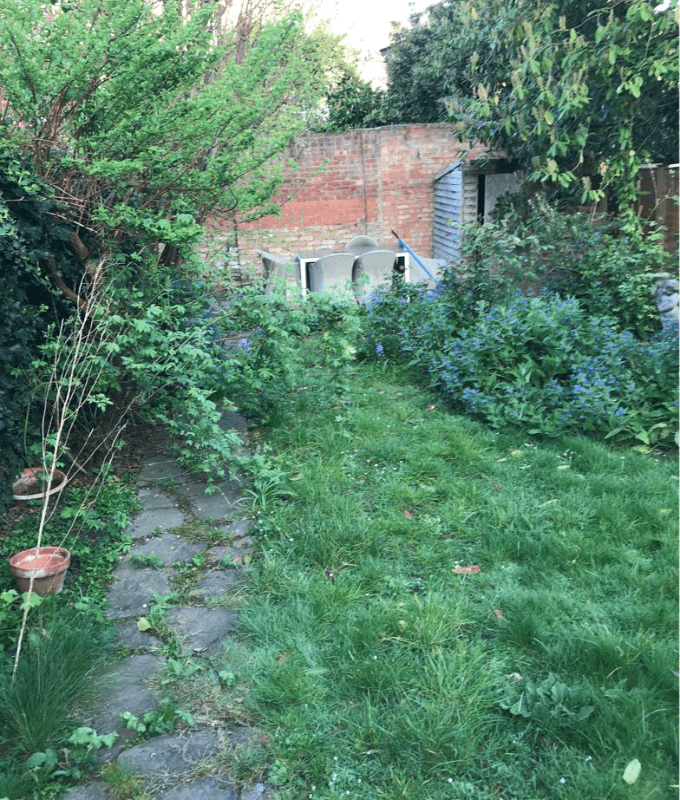
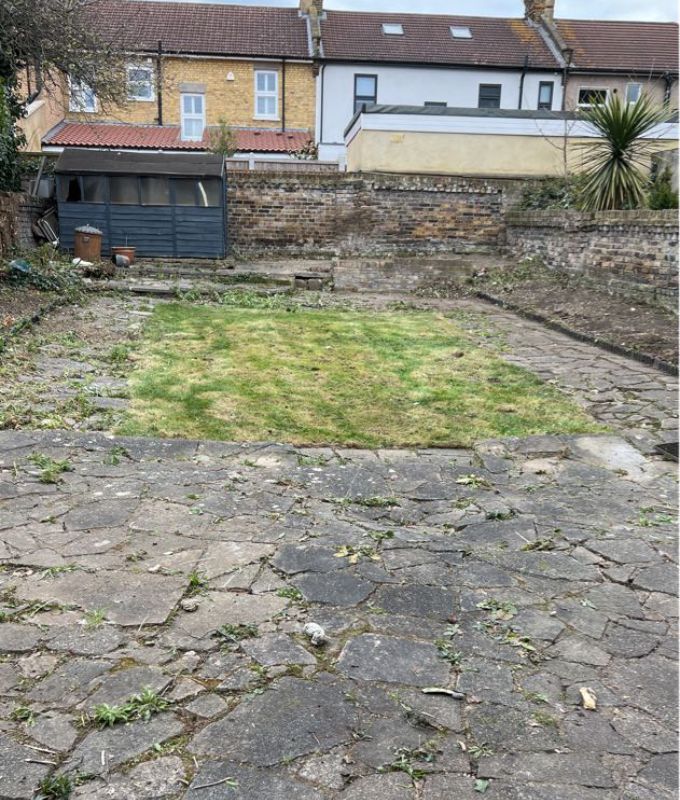
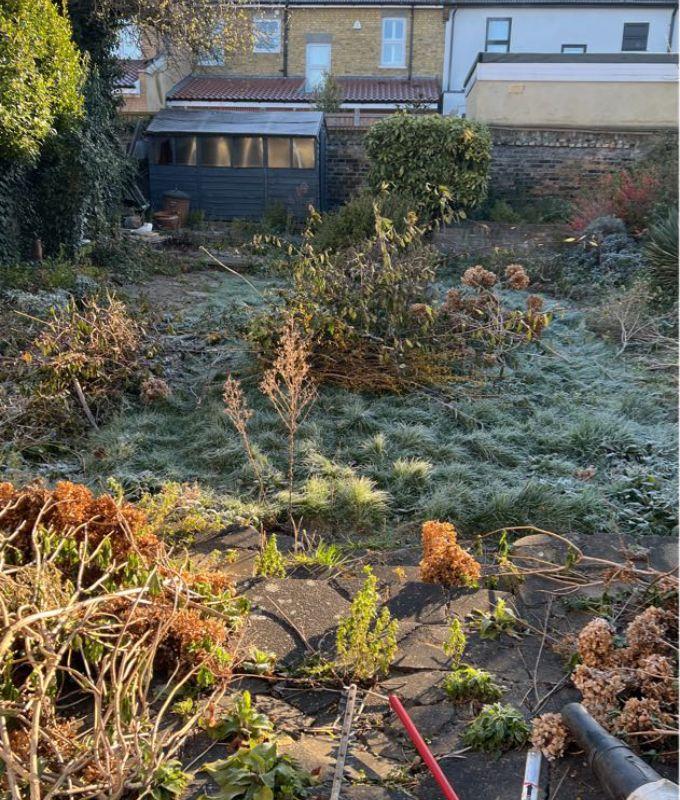
Much of the housing growth around Bicester happened quickly, and the gardens were the last thing finished. A plot that has carried site traffic for eighteen months is not a growing medium by the time turf is rolled out over it, and OX26 gardens tend to fail in a recognisable order - water standing in the same corner after every downpour, a lawn that goes straw-coloured before anyone else's, and shrubs that sit still for three years without quite dying.
The layer nobody sees under a new lawn
Lift a corner of turf on a handover garden and the profile is usually identical: an inch or two of screened topsoil, then a dense grey pan of subsoil that has been tracked over by machinery and rolled flat. Below that there is often builder's spoil - mortar crumbs, plaster, lumps of broken block. Grass roots reach the pan, find they cannot get through it, and turn sideways. The sward ends up living in a very shallow reservoir, which explains both the winter puddles and the drought stress in July.
Breaking the pan, and picking the right week to do it
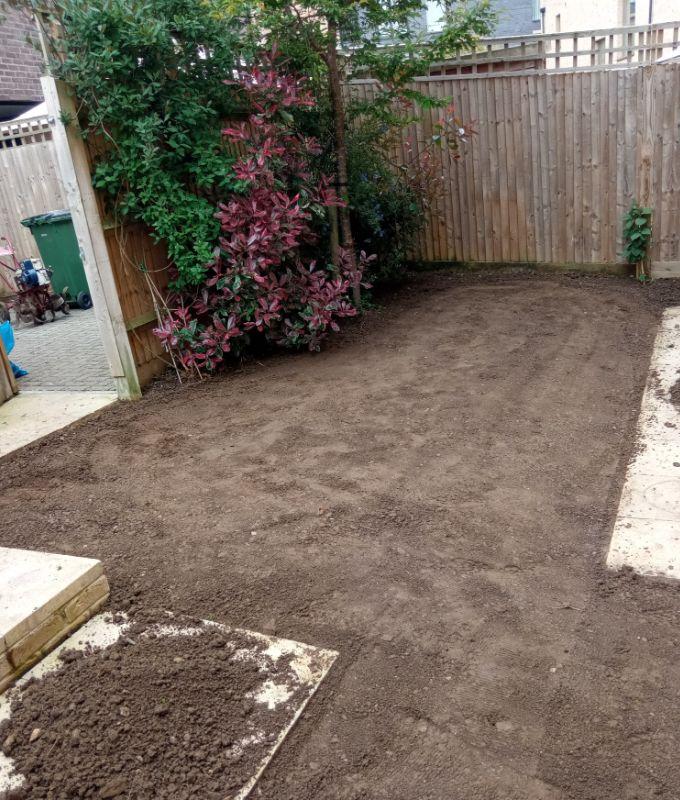
Decompaction is the first real job on these plots, and it is not the same as running a surface aerator about. A fork or a hollow-tine machine worked in staged passes, deep enough to punch through the compacted layer, opens vertical channels that roots and water can follow. Soil needs to be moist but not saturated: work heavy ground when it is wet and the tine smears the sides of each hole, sealing it again. Hollow tining lifts cores out and leaves room for a sandy top dressing to be brushed in, which keeps those channels open into the following season. Gardens on the older ground west of the county behave differently again, and the round there is described on local gardening across Witney.
Turf, seed, and an honest comparison
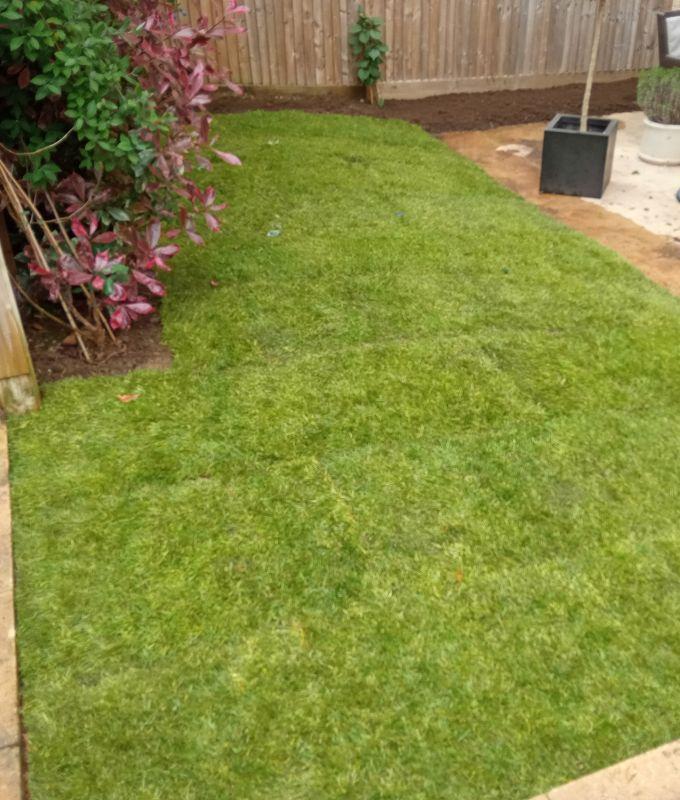
Where a lawn has failed outright the choice is between relaying turf and starting again from seed. Turf gives an instant surface and suits households with children or a dog who cannot fence an area off for two months. Seed is slower, but it roots into the soil it germinates in rather than arriving with its own thin mat, and a seeded lawn on prepared ground routinely outlasts turf laid on unprepared ground. Either way the preparation underneath decides the result. Reshaping levels properly, building a retaining edge or running a path across soft ground belongs to landscaping prices in Bicester rather than to routine garden work.
Planting into ground that has never been cultivated
A pit dug into compacted clay with a spade develops glazed sides, and a shrub planted in it behaves like a plant still in its pot - roots circle, water collects around the rootball, and the whole thing rocks in wind. The remedy is unglamorous. Square the hole rather than round it, scratch the sides and base until they are rough, and backfill with the soil that came out, improved rather than replaced. Filling a pit with bagged compost creates a sump that holds water all winter and dries faster than the surrounding ground in summer. Everything a routine visit might cover is itemised on garden maintenance services UK.
Bare boundaries and the first three seasons
New estate gardens are ringed with fresh close-board panels and very little else, which is why screening is the most common request here. Bare-root hedging whips planted between late autumn and early spring establish far better than container-grown stock put in during summer, and cost a fraction as much per metre. Where a hedgerow tree or a field oak has been kept on the edge of a development, anything above ground level needs a different trade and falls to tree felling in Oxford.
Starting a round at a newly finished address
Most new-build gardens begin with one longer assessment visit - soil depth, drainage, levels, what the developer actually planted - followed by a regular round once there is a plan. Charging follows the time a garden takes and the volume of material leaving site rather than a flat rate per house, so a first clearance normally comes in above the visits that follow it. Worth having to hand: the handover pack if levels were altered, any knowledge of where service runs cross the plot, and the code or key for a side gate. Households still finishing indoors often pair the garden visit with fully insured builders clean in Bicester, because fine building dust settles on both sides of the back door at much the same rate.