

TL;DR — Lawn Irrigation System Cost At A Glance
- A professionally installed lawn irrigation system costs £1,500 – £4,500 on average in 2026, with small gardens starting around £600 – £800 and large multi-zone systems reaching £5,000+.
- A full pop-up sprinkler system for a 100 m² lawn typically costs £800 – £2,500 installed.
- DIY options are far cheaper: a plug-in drip-irrigation kit runs £250 – £315, and a simple oscillating sprinkler on a hose is just £10 – £25.
- Cost is driven by garden size, the number of zones, the type of system, groundworks (trenching) and the controls you choose.
- Quotes usually exclude reinstating the lawn after digging, a new outdoor tap or major mains work — check what's included.
- Money-saving tip: install irrigation while the garden is already dug up for turfing or landscaping, so you pay for the trenching once.
Thinking about an automatic watering system? Check prices and book a gardening pro online or call to discuss your lawn and beds. Irrigation is arranged through the Fantastic gardening and landscaping teams.
 Add to Preferred Sources
 How Much Does A Lawn Irrigation System Cost In 2026?
The average cost to install a lawn irrigation system in the UK is £1,500 – £4,500 (inc VAT), with the figure rising by roughly 20–30% in London and the South East. A small garden can be set up from around £600 – £800, while larger gardens or complex multi-zone sprinkler systems climb to £5,000 or more.
The reason the range is so wide is that "lawn irrigation" covers everything from a £15 oscillating sprinkler you clip onto a hose to a fully automated, multi-zone underground system with pop-up heads, a smart controller and a rain sensor. Most homeowners who want a genuine "set and forget" system for a typical back lawn spend somewhere in the £800 – £2,500 bracket.
Here's a quick guide to what you'll pay across common scenarios:
| System / scenario | Rest of UK | London & South East |
|---|---|---|
| DIY kit (oscillating sprinkler or drip kit) | £10 – £315 | £10 – £315 |
| Drip or soaker system (beds & borders) | £200 – £1,500 | £250 – £1,900 |
| Pop-up sprinkler, small lawn (1–2 zones, ~100 m²) | £800 – £2,500 | £1,000 – £3,100 |
| Multi-zone sprinkler (medium garden, 3–4 zones) | £2,500 – £3,800 | £3,100 – £4,700 |
| Smart or large underground system (4+ zones) | £3,000 – £5,500+ | £3,750 – £6,800+ |
Figures include VAT and reflect 2026 market rates. Your price depends on garden size, zoning and groundworks — get a quote here.
Lawn Irrigation Cost By System Type
Choosing the right type of system is the biggest single decision for your budget. Drip and soaker systems are cheapest and ideal for planting, while pop-up sprinklers are the classic choice for lawns. On the other hand, smart systems cost the most but save water. This table breaks down installed prices by type:
| Type of system | Ideal garden size | Rest of UK | London |
|---|---|---|---|
| Soaker hose system | Small gardens or borders | £200 – £500 | £250 – £625 |
| Drip irrigation system | Small–medium gardens, planting beds | £500 – £1,500 | £625 – £1,900 |
| Basic sprinkler system (1–2 zones) | Small lawns | £1,500 – £2,500 | £1,900 – £3,100 |
| Multi-zone sprinkler (3–4 zones) | Medium gardens | £2,500 – £3,800 | £3,100 – £4,700 |
| Smart irrigation system | Medium/large gardens | £3,000 – £4,500 | £3,750 – £5,600 |
| Large underground system (4+ zones) | Large landscaped gardens | £3,800 – £5,500+ | £4,700 – £6,800+ |
In simple terms:
- Soaker hoses are porous pipes that "sweat" water slowly along their length — cheap and effective for borders.
- Drip systems deliver water through small emitters straight to the roots of plants, minimising evaporation. Best for beds, borders, veg patches and hedges.
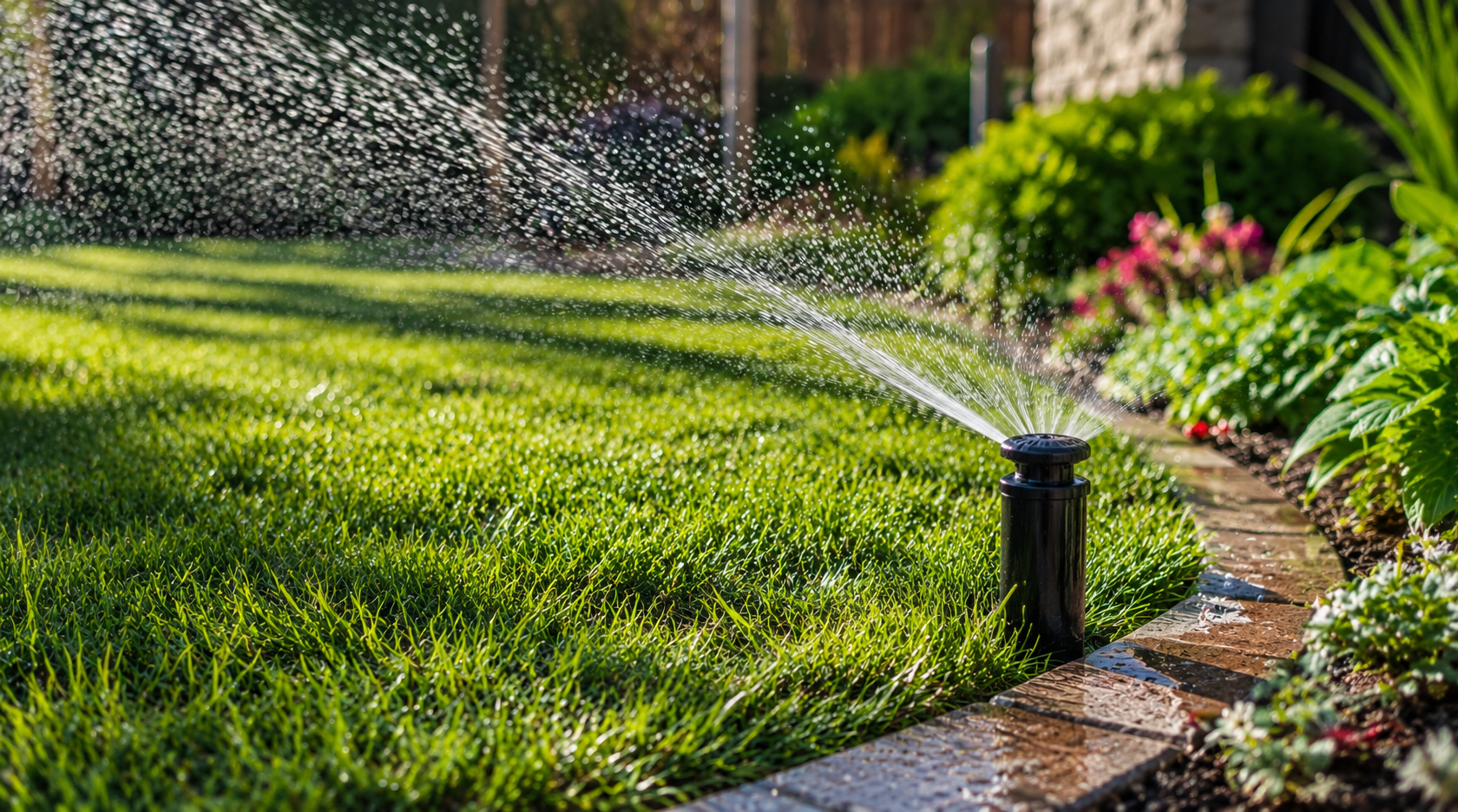
- Pop-up sprinklers sit flush underground and rise to spray the lawn when watering starts — the go-to for even lawn coverage.
- Smart systems add a Wi-Fi controller, weather data and rain sensors so watering adjusts automatically, cutting water use.
On a professionally installed sprinkler system, labour and groundworks make up roughly half the cost, with the pipes, pop-up heads, valves and controller making up the rest. That's why the size of your garden — and how much trenching is needed — matters as much as the kit you choose.
What Affects The Cost Of A Lawn Irrigation System?
1. Garden Size And Layout
Bigger lawns need more pipe, more sprinkler heads and more trenching, so cost rises with area. An awkward, broken-up layout with beds, paths and trees costs more than one open rectangle, because it needs more heads and careful zoning to cover everything evenly.
2. Number Of Zones
Gardens are split into "zones" that water in sequence, so mains pressure isn't spread too thin. A small lawn might need just 1–2 zones while a large or varied garden may need 4 or more. Each zone adds valves, wiring and controller channels — and cost.
3. Type Of System And Controls
A basic timer is inexpensive; a smart controller with app control, rain sensors and weather adjustment costs more up front but reduces water waste and can lower bills. Drip systems are cheaper to install than buried pop-up sprinklers, which need trenching across the lawn.
4. Groundworks And Reinstatement
Burying pipework means digging trenches and lifting turf, then making good afterwards. On an established lawn this is the messy, labour-heavy part of the job. Hard ground, tree roots or paving to cross all add time and cost.
5. Water Supply And Connection
Systems need a reliable feed, which may mean a new outdoor tap, a connection to the mains and — importantly — the correct backflow prevention to protect drinking water (a WRAS-compliant requirement in the UK). If your mains pressure or flow is low, extra work or a pump may be needed.
6. Location
As with most garden work, expect to pay roughly 20–30% more in London and the South East than in the North of England, Wales or Scotland, reflecting higher labour rates.
What's Included — And What's Not
Typically included in an installation quote:
- Design and zoning of the system for your garden
- Supply of pipework, sprinkler heads/emitters, valves and a controller
- Trenching, laying pipe and connecting the system
- Basic reinstatement of lifted turf
- Testing and setting up the watering schedule
Usually charged separately:
- A new outdoor tap or upgraded mains connection
- Backflow prevention devices where extra work is needed
- Major lawn repair or returfing after extensive digging
- Smart controllers or rain sensors (if upgrading from a basic timer)
- Annual "winterising" (draining the system before frost) and servicing
Can I Install Lawn Irrigation Myself?
Yes — for the simpler systems. Above-ground kits are designed for DIY: an oscillating sprinkler on a hose (£10 – £25) waters a small lawn with zero installation, and a drip-irrigation kit (£250 – £315) with a timer, pipe and emitters can be laid out across beds and borders in an afternoon. For seasonal watering of a modest garden, these do the job well and cost a fraction of a professional system.
Call a professional for buried, automated systems. In-ground pop-up sprinklers involve trenching, zoning, electrical wiring for the controller and — just as important — a mains connection with correct backflow protection, which in the UK must comply with water regulations. Get the pressure, spacing or backflow wrong, and you'll have dry patches, wasted water or, at worst, a risk to your drinking supply. A pro designs even coverage, installs it to regulations and sets a schedule that actually suits your lawn.
How To Save Money On A Lawn Irrigation System
- Install during other works — if the garden is already dug up for turfing, a new lawn or landscaping, adding irrigation then means paying for trenching only once.
- Use drip for beds, sprinklers for lawn — don't pay for pop-up heads where a cheaper drip line will do.
- Zone sensibly — fewer, well-planned zones cost less than over-engineering the system.
- Add a smart controller — the up-front cost is offset by lower water bills, especially on a meter.
- Start with a DIY kit for beds and borders, and only invest in a full lawn system if you genuinely need it.
- Get 2–3 quotes and compare the number of zones and heads, not just the total price.
How To Hire A Good Irrigation Installer
Irrigation is part gardening, part plumbing, so look for an installer with specific experience in garden watering systems and an understanding of UK water regulations and backflow prevention. Confirm they're insured, ask for examples of previous installations, and get an itemised written quote covering zones, heads, the controller, reinstatement and any tap or mains work. Also, ask whether winterising and servicing are offered, since a system that isn't drained before frost can crack.
With Fantastic Services, you can arrange vetted, insured gardening and landscaping professionals, with transparent pricing and easy online booking — just describe your lawn and beds to scope the right system.
Frequently Asked Questions
How Much Does It Cost To Install A Lawn Irrigation System?
In 2026, a professionally installed system costs £1,500 – £4,500 on average, with small gardens from around £600 – £800 and large multi-zone or smart systems reaching £5,000+. A full pop-up sprinkler system for a 100 m² lawn typically costs £800 – £2,500.
What Are The Different Types Of Lawn Irrigation Systems?
The main types are soaker hoses (cheap, for borders), drip systems (targeted watering for beds and plants), pop-up sprinklers (even coverage for lawns), and smart systems (automated, weather-responsive watering). Drip and soaker systems are cheapest, while buried sprinkler and smart systems cost the most.
Is A Lawn Irrigation System Worth It?
For many homeowners, yes. It saves time, keeps grass and plants healthier with even, consistent watering, and — with a smart controller and rain sensor — can use water more efficiently than a hose. It's especially worthwhile for larger gardens, busy households, or anyone who travels during summer.
Can I Install A Lawn Irrigation System Myself?
You can install above-ground kits yourself — an oscillating sprinkler (£10 – £25) or a drip kit (£250 – £315) needs no digging. Buried, automated systems are best left to a professional, because they involve trenching, zoning, wiring and a regulation-compliant mains connection with backflow prevention.
When Is The Best Time To Install A Lawn Irrigation System?
Spring or early autumn are ideal, so the system is ready before summer's peak watering demand and any lawn disturbance has time to recover. Installation is possible year-round, but avoid frozen or waterlogged ground in deep winter.
How Much Does It Cost To Run An Irrigation System?
Running costs depend on your garden size and whether you're on a water meter. A smart controller with a rain sensor keeps costs down by watering only when needed and skipping rainy days, which often pays back its extra installation cost over a few seasons.
Do You Need To Winterise An Irrigation System?
Yes. In-ground systems should be drained before the first frost to stop water freezing and cracking the pipes or heads. Many installers offer a winterising and spring reactivation service; budget for this as a small annual cost.
