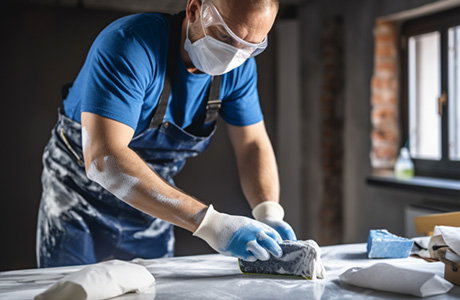
The riskiest day of a KT11 refurbishment is not during the build. It is the day everything comes back in. A house that has been emptied for months - furniture crated, rugs rolled, pictures wrapped and stacked in a garage or a storage unit - is finished, cleaned and then subjected to several hours of trolleys, blankets, boxes and doorway manoeuvres. More damage is done to new paintwork and new flooring in that single afternoon than in the whole of the preceding project, and almost all of it is avoidable with sequence and protection.
Cleaning before reinstatement, not after
The logic is straightforward. Surfaces are only properly accessible while the rooms are empty: the backs of radiators, the full run of skirting, window reveals, the whole floor. Once furniture is in place, half of it is unreachable without moving everything again. The clean therefore goes in while the house is bare, and the reinstatement is then managed so it does not undo the work - protection down on floors, corners guarded, and doors taken off where a piece will not turn.
What comes back out of storage
Contents that spent months in a container or a garage rarely come back in the state they went away. Fabric holds a musty note from an unheated space, wood dries or swells, and anything wrapped after the works started is carrying construction fines inside the wrapping. Upholstery and rugs are better treated before they are placed rather than after, when moving them again is the whole problem.
Unwrapping is a cleaning job in itself
Bubble wrap, blankets, tape and cardboard generate a surprising volume of debris in a finished room, and tape adhesive pulls off a newly painted door if it is torn rather than warmed and lifted. Unwrapping is done in one place with a waste run set up, rather than piece by piece across the house, so that finished rooms receive the item and not the packaging. Crate liners and foam corners shed fragments that find their way under a rug within days.
The last construction residue hides where furniture goes
Alcoves, the space behind a wardrobe wall, the back of a chimney breast and the floor under a fitted unit are all places a builder's own tidy never reaches and a furnished room permanently conceals. Those are done deliberately before anything is placed, along with the tops of doors and the upper edge of every frame, which are the first surfaces to give a room away when the light is low.
Coordinating the move itself
Getting contents back in is a logistics exercise: what returns first, what goes upstairs, what is being disposed of rather than kept. A van with a crew makes that a single controlled day instead of a fortnight of trips, and it is arranged through our team in the area. Assembly, wall fixings and rehanging - the wardrobe that was dismantled, the mirror, the curtain poles - belong to experienced TV wall mounting in Chessington and are better done before the final vacuum.
Holding the standard afterwards
A house that has just been refurbished and refilled needs a fortnight of attention before it settles: new plaster and fresh paint shed, and a newly laid floor shows every footprint. Some households put a routine in place at that point instead of trying to hold it themselves, which is what our local team covers.
Practicalities worth settling early
Dates drive everything here, since the clean has to sit between the builder's last visit and the removal date, and both tend to move. Scope covers the rooms refurbished, the access route and any storage space used on site. Charging follows crew hours and the number of people needed rather than a headline rate. Neighbouring coverage is listed as local after builders cleaning in Esher, and the wider service description is on our after builders cleaning service.