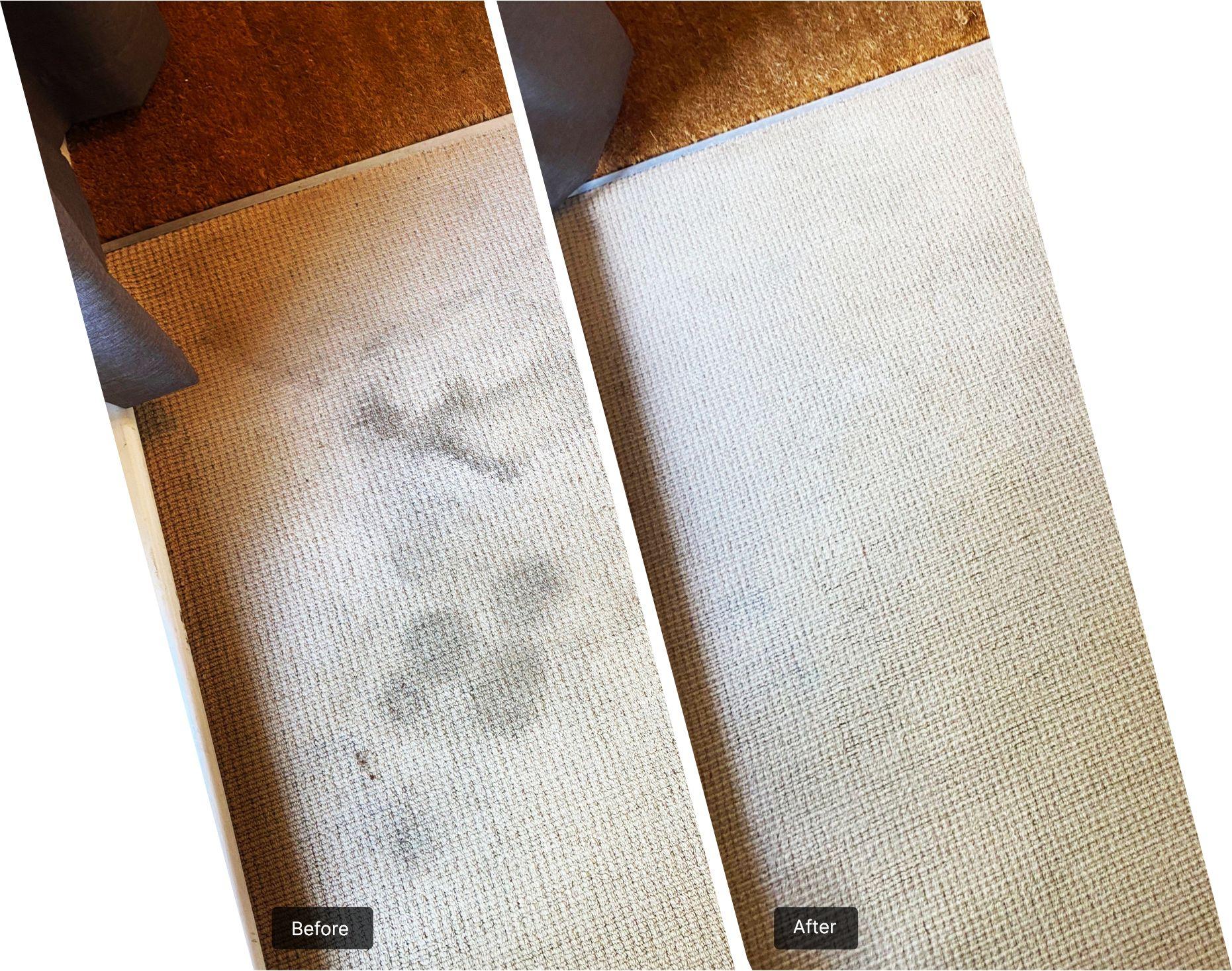
Fibre protector is the most oversold and least understood product in the trade, and it is worth being precise about what it actually does. It does not make a carpet stain-proof. It coats each fibre with a treatment that lowers surface energy so that liquids bead rather than spread, which buys the few minutes between a spill landing and somebody arriving with a cloth. In a family house in E4, with children, sport and a garden backing onto open ground, those few minutes are the whole difference.
How the coating works and how it wears off
The treatment sits on the fibre surface, not inside it, so anything that abrades the surface removes it. Foot traffic wears it away in lanes first, which is why a hallway loses its protection long before a bedroom does. Strong alkaline cleaning strips it as well. Reapplication after a deep clean, while the fibre is warm and open, is when it bonds best, and applying it to a dirty carpet simply seals the soil in under the coating.
What it will not do
A protector holds off water-based spills for a short time. It does not stop dye. Blackcurrant squash, a felt-tip pen and food colouring will all dye a nylon fibre on contact whatever is on the surface, and a treated carpet with a dye stain is exactly as stained as an untreated one. Nor does it remove the need to clean, since dry grit still works into the pile and abrades it. Sold honestly, it is a delay mechanism and a very useful one.
The first ten minutes after a spill
Speed matters more than technique. Solids are lifted off with the edge of a spoon rather than pressed in. Liquid is blotted with a white cloth, working inwards from the outside so the edge does not spread, and with weight rather than rubbing, since rubbing distorts the pile permanently and leaves a fuzzy patch that stays visible after the mark has gone. Cold water only on anything containing milk, egg or blood. A saved label helps a technician later.
Playrooms, sports kit and the mud off the fields
Football boots, muddy knees and wet dogs after a walk on open ground bring in a heavy clay-and-grass load. The instinct is to attack it while it is wet, which grinds it deep into the pile. Dried mud vacuums out almost completely, so the right move is to leave it, let it dry hard, vacuum it up, and only then treat whatever remains. The same applies to grass staining, which needs a specific treatment rather than general detergent.
Sofas in a room children actually use
Family seating absorbs food, drink and skin oils at a rate a carpet never matches, and the arms and headrests go first. Fabric takes protector well and benefits from it more than a floor does, since a sofa cannot be moved out of the way of a spill. Upholstery is quoted per piece, and upholstery cleaning services in Hackney covers that work. Treating floors and seating in one visit also means the protector on both is at the same stage of its life.
Garden paths, patios and the back door
Most of the mud in a family house arrives through one door, and the surface outside it decides how much. A paved path that has gone green transfers a black film indoors on every wet day, and hard surfaces of that kind fall under fully insured driveway cleaning in Canning Town, with the same machinery working the same problem in the districts nearer town through the pressure washing team in Clapton.
Arranging the clean and the treatment
Protector is applied after cleaning, as a separate priced item, charged by the area treated rather than per room, and it needs a few hours undisturbed to cure before the floor is used. Rooms should be cleared of toys and low clutter beforehand. It is worth deciding which areas are genuinely worth treating: hallways, stairs and a sitting room, rather than every bedroom. Wider household services are under professional cleaning services in Chingford, regular visits through the service in full, the neighbouring service page is vetted carpet cleaning services in Bow, and the method notes are on the carpet and rug cleaning service.