Sisal and seagrass runners are common on the original staircases and long hallways of Surbiton's Victorian and Edwardian villas, and they are the one floor covering that must never meet an extraction wand. Natural plant fibres absorb water greedily, shrink as they dry, and pull brown lignin and residual dyes to the surface in tide marks that cannot be reversed. A cleaner who treats a seagrass runner like a nylon carpet will hand back a shorter, stiffer, permanently blotchy runner and an awkward conversation.
What plant fibres will and will not tolerate
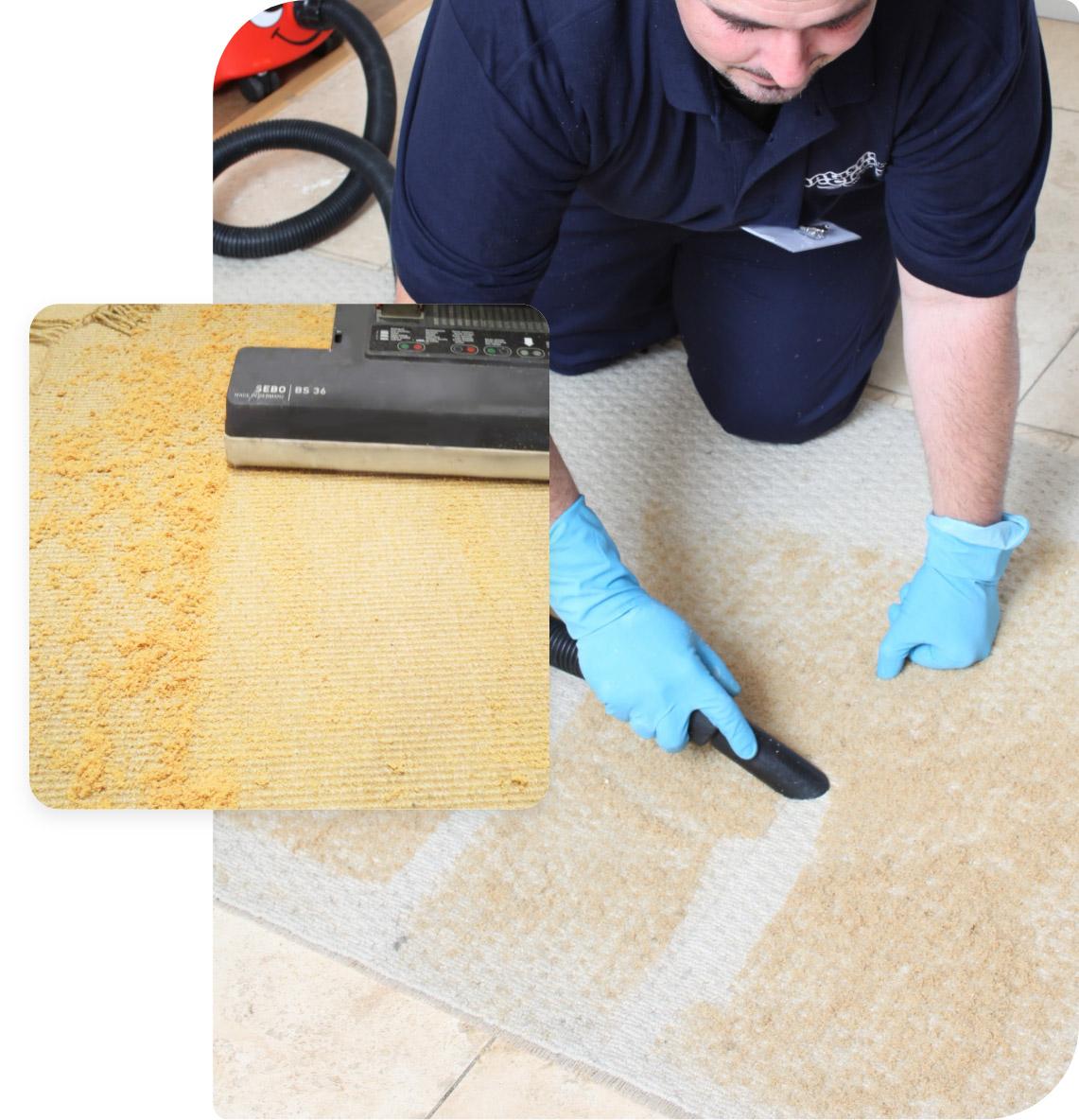
Sisal, coir, jute and seagrass are cleaned dry. The method uses a slightly damp absorbent compound, brushed through the weave with a machine, left to bind the soil and then vacuumed out thoroughly. It lifts general soil and refreshes the appearance without wetting the backing or the floor beneath. What it will not do is remove an old liquid spill, and it will not restore a fibre that has already browned. Prompt blotting at the moment of a spill matters more on these floors than on anything else in the house.
Viscose, which looks like silk and behaves like paper
Viscose and its relatives turn up in rugs and in the silky bands woven into modern carpet blends. Wet, the fibre loses most of its strength, distorts and yellows, and a water mark on viscose is often permanent. Identifying it before work starts is not optional, and a discreet test in a corner settles it in seconds. Where a rug is viscose or a blend, cleaning is done with minimal moisture and full drying under weight and airflow, or not attempted at all.
Wool on the stairs, and the pH that suits it
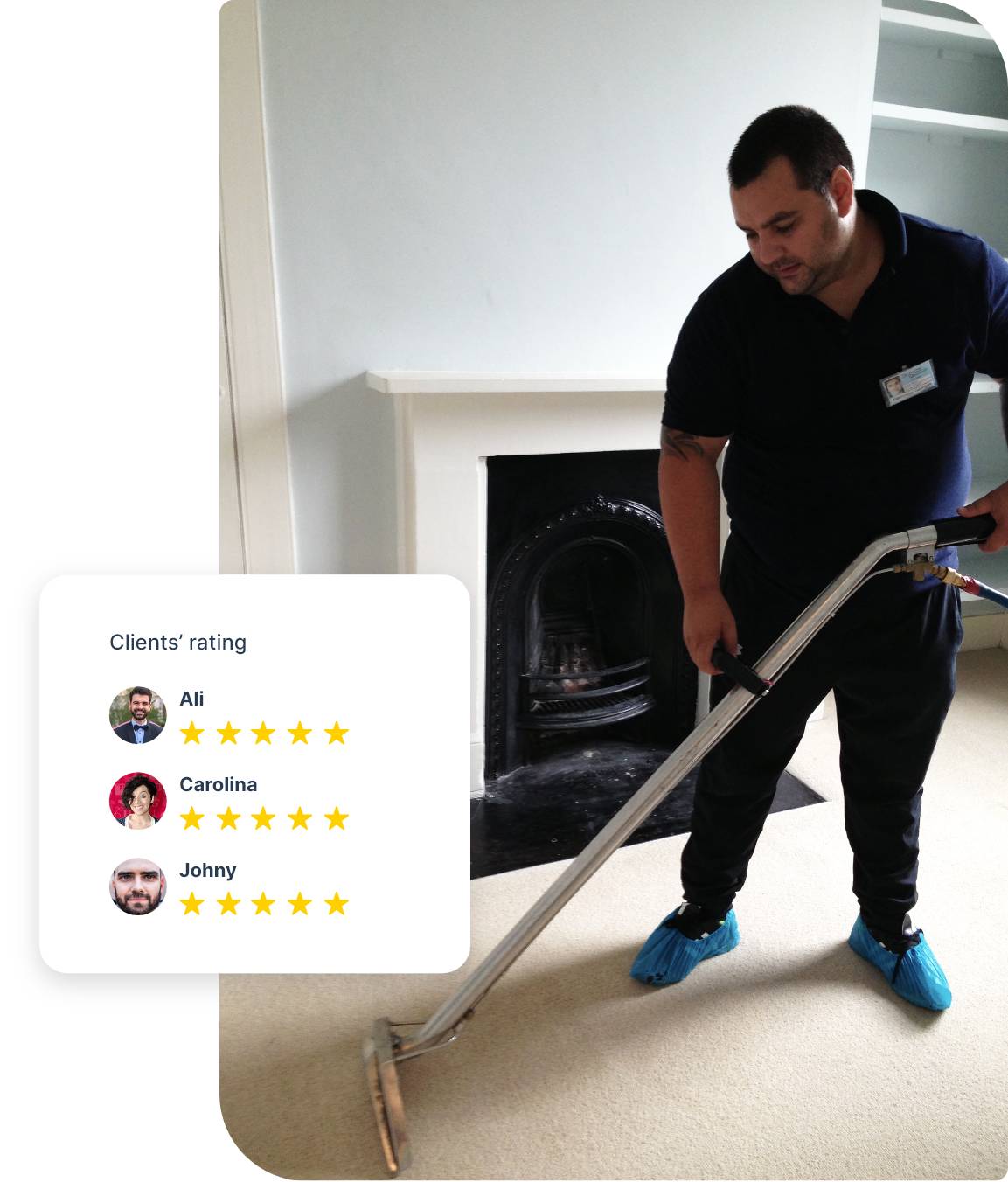
The fitted carpet in these houses is frequently wool or a wool-rich blend, laid over a hessian backing on original boards. Wool responds well to a gentle pre-conditioner and an acid rinse, and badly to high alkalinity, high heat and saturation. On a staircase the risk is compounded because water runs downhill onto the tread below, so the tool is worked in short strokes with dry passes between them.
Rugs laid over stripped floorboards
Stripped and waxed boards with rugs over them are close to a local signature, and the pairing causes its own problems: grit trapped underneath scratches the finish, a rubber-backed underlay can mark a waxed board, and a damp rug relaid too soon will leave an outline in the wax. Rugs are cleaned off the floor, dried fully on both faces and returned once the board beneath has been vacuumed.
End of a tenancy and the evidence trail
Deposits held in a statutory scheme are decided on evidence, and a dated professional receipt showing exactly which floors were treated carries weight where a bare claim does not. For the whole property rather than the floors alone, trusted check-out cleaning in Surbiton produces the same documentation across the inventory. Where a refurbishment has just finished, sanding dust and plaster residue need clearing first through a local pro near you, since both are abrasive and alkaline enough to damage wool.
Runners, rods and the awkward strip at the edge
Stair rods and fitted runners on an original flight leave a margin of bare timber on either side, and that margin collects the grit that the runner sheds. Rods are lifted where they come away cleanly, the runner is cleaned in place with the pile combed forward across each nosing, and the exposed board is vacuumed before anything is refitted. Where a rod is seized or the fixing is fragile, it is left alone and the work is done around it rather than risking a split in a hundred-year-old newel or string.
Arranging a visit
Natural fibre and rug work is quoted separately from fitted carpet because the method and the time involved are different, and both are assessed on sight rather than over the phone. Parking on the residential roads here is largely permit-controlled, so a visitor bay saves a slow start. Households a short way west are covered by trusted deep carpet cleaning in Aldershot, neighbouring areas by New Malden cleaning services team, and the wider explanation of fibres and their limits sits on professional carpet and rug cleaning.