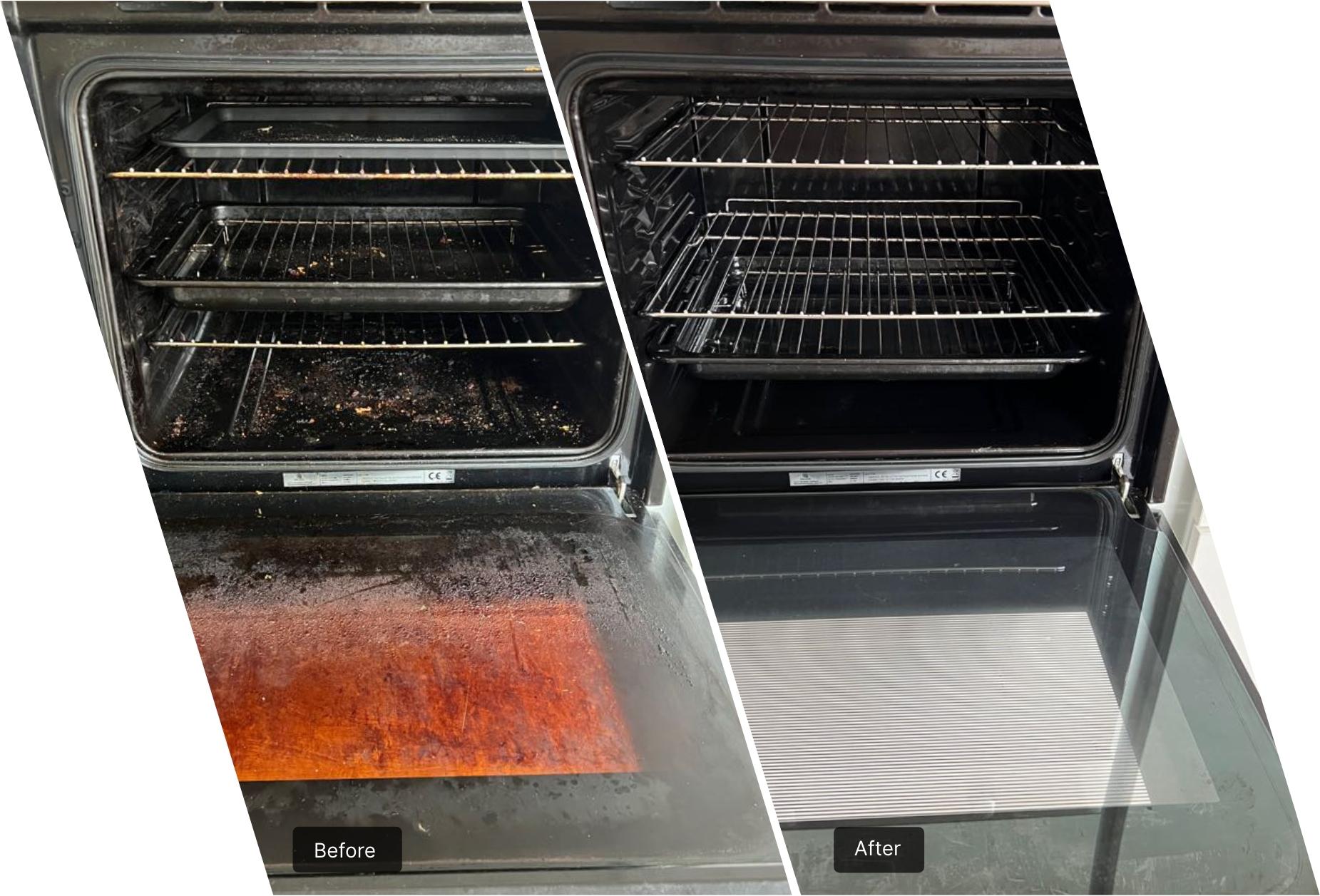
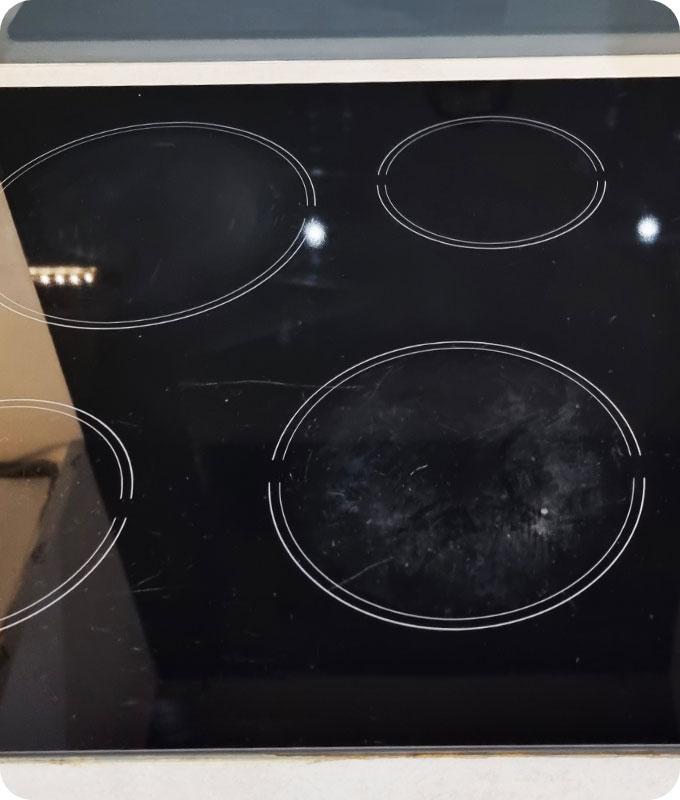
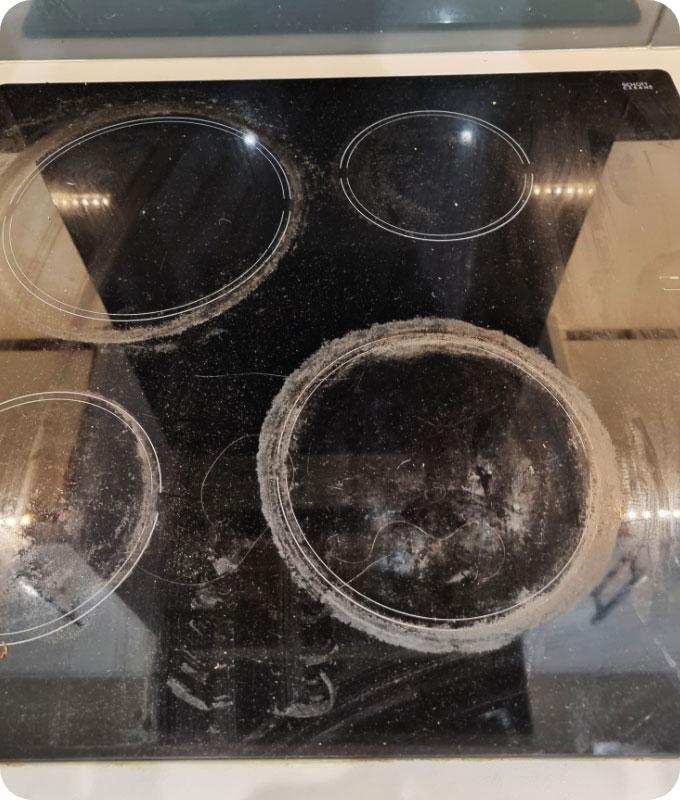
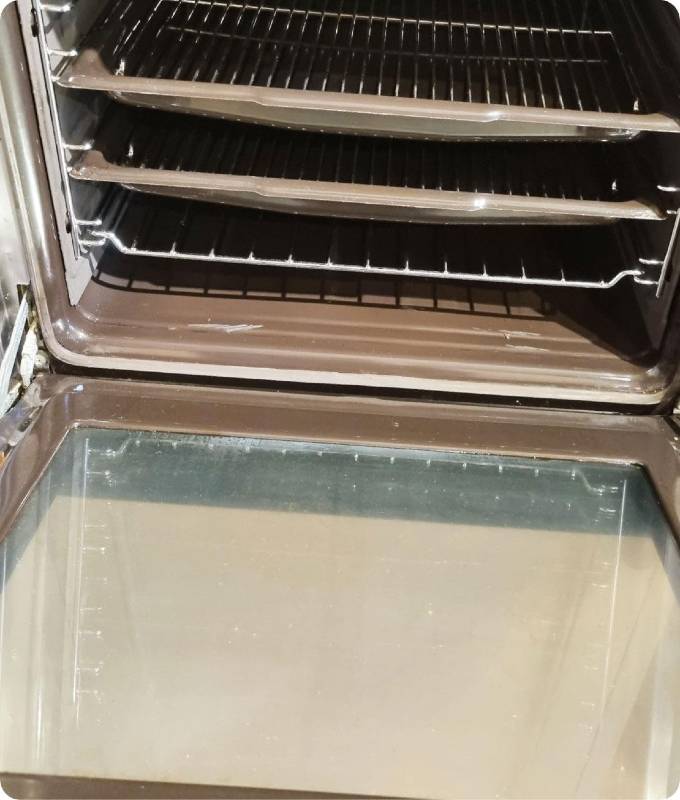
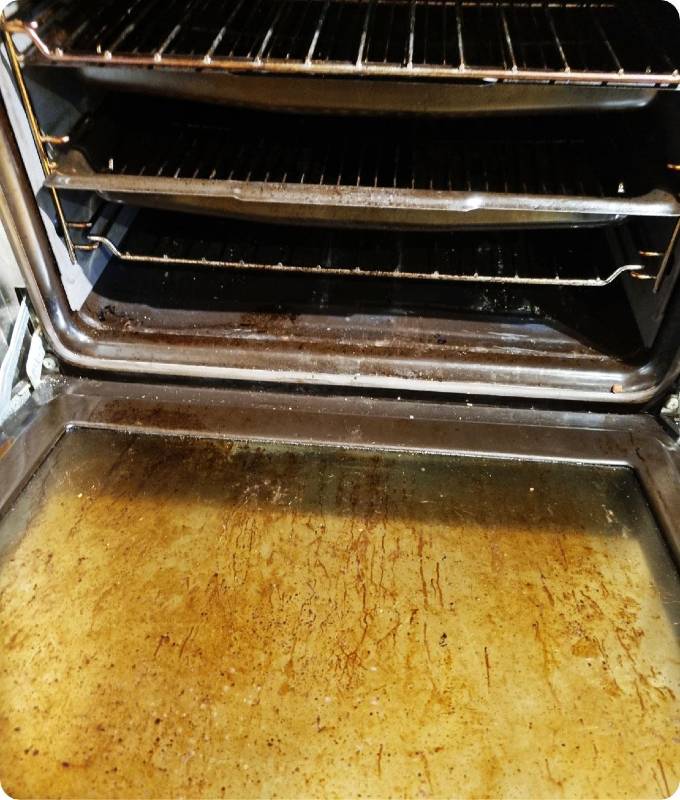
Denton is a largely residential town in Tameside with a mix of terraced streets, 1930s semis, and more recent housing developments across M34. Kitchen sizes vary from compact mid-terrace layouts to the larger rooms found in detached properties near the edges of town. Whatever the setup, the oven accumulates carbon and grease in the same way, and those deposits cannot be properly shifted without professional-grade equipment and the right technique.
On arrival, the technician lays down protective sheeting across the kitchen floor before any part of the oven is touched. They assess the appliance, identify the oven configuration, note any specialist features such as a fan-assisted dual cavity or a steam-clean function, and locate the areas with the most significant carbonised build-up.
Detachable parts come out next. Shelf racks, side runners, the grill pan, and the inner door glass are removed and placed into the portable heated dip tank. The citric acid-based solution in the tank draws out baked-on grease during the soak while the technician focuses on the fixed interior surfaces.
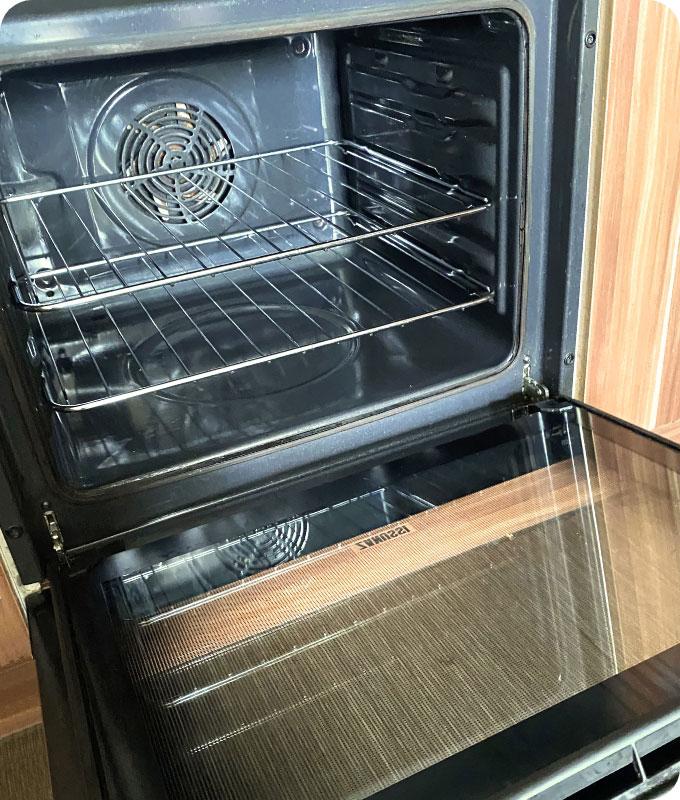
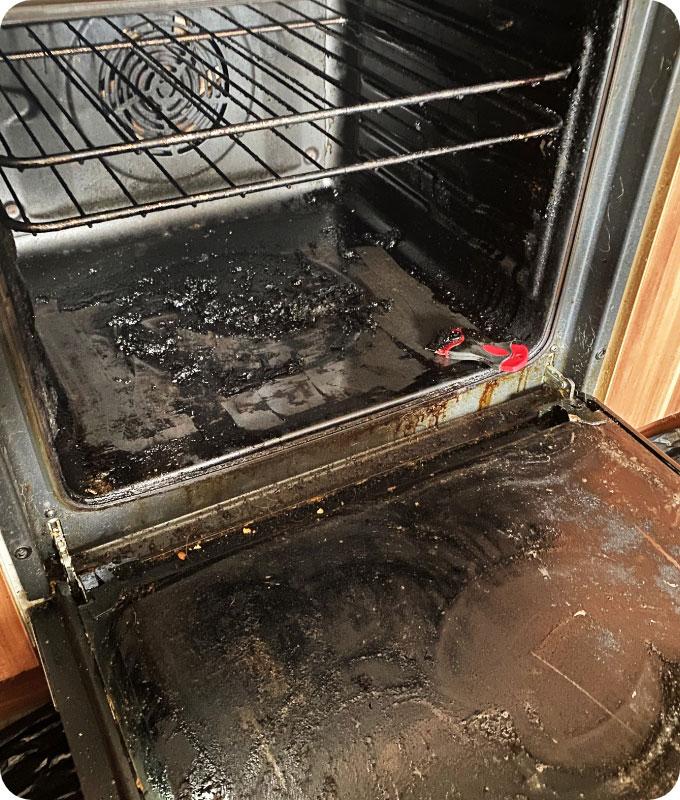
The cavity is cleaned methodically. Roof, rear wall, two side panels, and the oven base are each given separate attention. The lower element surround receives careful treatment given the concentration of carbonised spillage in that area.
- Dip tank soak: Racks, grill pans, and glass panels treated in a heated citric acid solution.
- Systematic interior clean: All cavity surfaces addressed individually for consistent, thorough coverage.
- Door glass restored: Inner and outer panels polished back to full clarity.