

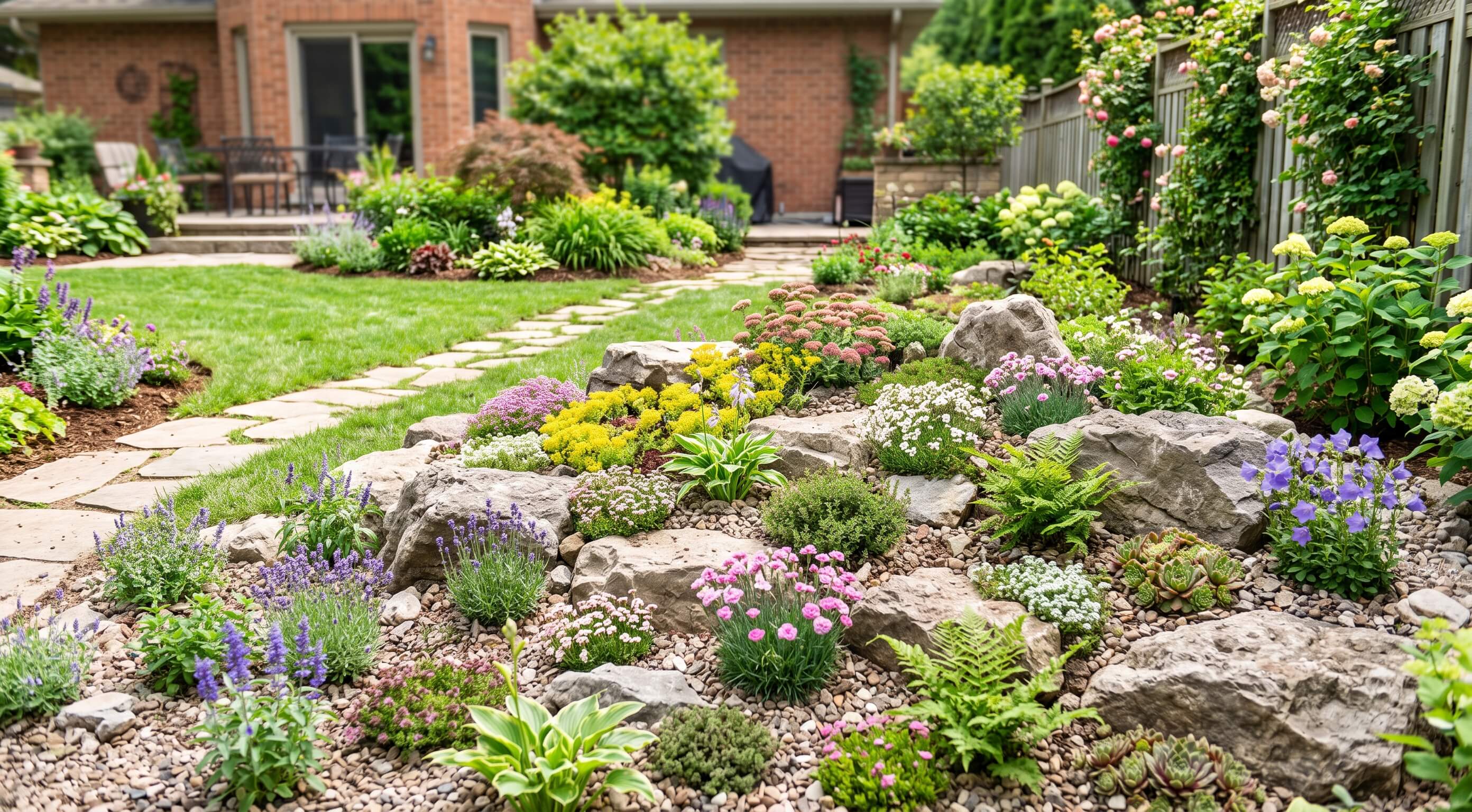
TL;DR — Rockery Installation Cost At A Glance
- Most UK households pay £700–£1,500 to have a rockery built in 2026, averaging around £1,110. Small rockeries start nearer £400; a large rock garden using hand-picked feature boulders can pass £4,000.
- The price is driven by stone tonnage, not by area. Graded rockery stone in genuine one-tonne bags is £85–£120 per tonne before delivery; decorative slate and hand-selected feature boulders are two to four times that, at £250–£556 per tonne.
- Reckon on roughly one tonne of stone per 2–3 m² of rockery at normal density, so a 10 m² rockery is 3–5 tonnes. That single number tells you most of what the quote will be.
- Getting the stone off the lorry is a real cost line. A grab or crane offload is £170–£420, and where a vehicle cannot reach, barrowing several tonnes through a side gate adds a day of labour at £145–£250.
- London and the South East run roughly 20–35% above the rest of the UK, and haulage is worse than labour — stone is heavy, and a Cumbrian slate delivered to Kent carries the mileage in the price.
- Buying local stone is the biggest single saving available, because you stop paying to move rock across the country and the rockery looks right for the area.
 Add to Preferred Sources
 How Much Does A Rockery Cost In 2026?
A rockery is a small groundworks job wearing a decorative hat. What you are paying for, in order of size, is stone, the labour to place it, and getting the stone from a lorry to the spot.
The labour is straightforward: a landscape gardener at £23–£40 per hour (average £31), or £145–£250 per day. A small rockery is half a day. A large rock garden with drainage and planting is two to three.
| Unit of sale | Rest of UK | London & South East |
|---|---|---|
| Landscape gardener, per hour | £23–£40 | £29–£54 |
| Landscape gardener, per day | £145–£250 | £180–£320 |
| Graded rockery stone, per tonne before delivery | £85–£120 | £105–£150 |
| Decorative slate rockery, per tonne before delivery | £250–£315 (estimate) | £310–£395 (estimate) |
| Feature boulders, per tonne | £250–£556 | £310–£700 |
| Grab or crane offload | £170–£420 | £210–£530 |
| Small rockery (2–4 m², 1–2 tonnes) | £400–£800 | £500–£1,000 |
| Medium rockery (5–10 m², 3–5 tonnes) | £700–£1,500 | £875–£1,900 |
| Large rock garden (15 m²+, 8–12 tonnes) | £1,800–£4,000+ | £2,250–£5,000+ |
| Feature-boulder rockery (hand-picked stone) | £2,500–£6,000+ | £3,150–£7,500+ |
| Membrane and drainage substrate, per m² | £8–£20 | £10–£25 |
| Alpine and rockery planting, per plant | £4–£11 | £5–£14 |
| Ground levelling before build, per m² | £20–£120 | £25–£150 |
Rockery Installation Cost By Stone Type
Stone type changes the price more than anything except tonnage, and it changes it in two directions at once: the rate per tonne, and the haulage to get it to you. The figures below are supply-only rates per tonne before delivery; add labour and offload from the table above.
| Stone type | Typical look / use | Rest of UK (per tonne) | London & South East (per tonne) |
|---|---|---|---|
| Graded rockery stone, mixed | General-purpose, budget builds | £85–£120 | £105–£150 |
| Lakeland / plum / dove grey slate | Sharp, layered, contemporary | £250–£315 (estimate) | £310–£395 (estimate) |
| Purbeck and Portland limestone | Warm buff, hand-selected pieces | £100–£160 | £125–£200 |
| Cotswold and buff limestone | Soft honey tones, cottage gardens | £100–£170 | £125–£215 |
| Welsh quartz and granite | Speckled, very hard-wearing | £200–£270 | £250–£340 |
| Yorkstone | Gritty buff, traditional, heavy | £180–£300 | £225–£375 |
| Westmorland waterworn limestone | The classic UK rockery stone, weathered and fissured | £180–£350 | £225–£440 |
| Large slate boulders, single pieces | Focal points, 1 per rockery | £200–£235 each | £250–£295 each |
| Feature boulders, hand-picked | Statement stone in a designed scheme | £250–£556 | £310–£700 |
| Pond-edge and cascade rock | Smaller stone hiding a liner edge | £30–£100 | £38–£125 |
Working out your tonnage. Rockery stone at normal build density covers roughly 2–3 m² per tonne when it is placed as visible stone with soil pockets between, so a 10 m² rockery needs 3–5 tonnes.
Then check what a "bag" actually weighs, because this is where quotes go wrong. Budget Topsoil's dumpy bag is a stated one tonne. Plenty of suppliers sell a "bulk bag" of 900 kg — 10% less stone than the word implies — and a "mini bag" with no published weight at all, usually 400–500 kg, so two make a tonne and the real per-tonne rate is roughly double the bag price. Convert every bag price to a tonne price before comparing. The slate rows above are marked as estimates for that reason.
The rockery totals in the first table assume graded stone. In decorative slate or hand-picked boulders the stone alone is two to four times more — £750–£1,600 on a 10 m² build rather than £300–£600 — putting you nearer the feature-boulder row than the medium-rockery one.
What Affects The Cost Of A Rockery?
1. Tonnage Of Stone
The stone itself is usually the biggest part of a rockery budget. At around £85 per tonne for graded stone, 5 tonnes would cost about £425, while premium feature boulders can push the same quantity above £2,000. The overall price therefore depends heavily on the type, size and quantity of stone you choose. Deciding whether you want a few large statement rocks or a larger number of smaller stones before requesting quotes can make the final cost much easier to control.
2. Stone Type And Where It Comes From
Stone is heavy, so haulage is a large fraction of what you pay, and that means local stone is almost always cheaper. Welsh quartz and granite boulder packs run £203–£266 at UK suppliers; Purbeck Portland is £99.50 per tonne plus VAT at the quarry gate in Dorset and considerably more once it has crossed the country. Using indigenous stone also looks right for the area, which matters more than most people expect.
3. Offload And Access — Grab, Crane Or Barrow
Several tonnes of rock has to get from the road to the rockery. If a grab lorry or crane-offload vehicle can reach, that is £170–£380 for a 4-wheeler, £190–£400 for a 6-wheeler and £260–£420 for an 8-wheeler. If it cannot, somebody barrows it — and a tonne of stone is roughly twenty barrow loads, so five tonnes through a narrow side gate is most of a day at £145–£250. Ask about this first; it is the single most common reason a rockery quote comes back higher than expected.
4. Groundworks, Drainage And Membrane
Alpines die of wet feet, not cold, so a rockery needs free drainage under it. Budget £57–£60 per tonne for MOT Type 1 or coarse rubble as a drainage layer — one tonne covers about 10 m² at 50 mm — plus woven geotextile membrane at £0.50–£1.80 per m² supply-only, or £2.40–£6 per m² fitted with pins. If the ground has to be regraded first, levelling runs £20–£120 per m²; see our garden levelling cost guide for that work priced properly.
5. Planting And Topdressing
Alpine and rockery plants at the RHS run £3.99–£11.02 each depending on pot size, with 9 cm pots typically £5.59–£10.39. A 10 m² rockery wants 25–40 plants, so £150–£400 of planting. Add a gravel or grit topdressing to shed water off the crowns — a further £60–£120 of aggregate for the same area. Skimping on topdressing is how a smart new rockery becomes a weed nursery in eighteen months.
6. Your Location
Labour in London and the South East runs roughly 20–35% above the rest of the UK — landscape gardener hourly range of £23–£40 becomes £29–£54. Haulage is worse, because stone is charged by weight over distance, and skip or grab access in a terraced street may need a council permit at £15–£60. Spoil disposal follows the same pattern: a builder's skip is £190–£450 and our garden clearance cost guide covers muck-away rates.
What's Included — And What's Not
- Marking out and setting the levels
- Excavation of the base and forming the drainage layer
- Geotextile membrane where the design uses one
- Placing and setting the stone, with the grain and strata running the same way
- Backfilling the planting pockets with a free-draining gritty mix
- Tidying up and taking the packaging away
Charged as extras:
- The stone itself, in most quotes — check whether it is supply-and-fix or fix-only
- Grab or crane offload — £170–£420
- Barrowing where a vehicle cannot reach the spot
- Levelling or regrading the ground first — £20–£120/m²
- Spoil removal and skip hire — £75–£450
- Alpine and rockery plants — £4–£11 each
- Gravel or grit topdressing
- A permit for a skip or grab on the public highway — £15–£60
Can You Do It Yourself?
Partly, and honestly the split matters more here than in most garden jobs.
Buying the stone yourself is easy and it is where the saving is. Graded stone is £85–£120 per tonne before delivery from a landscaping supplier, membrane is £0.50–£1.80 per m², MOT Type 1 is £57–£60 per tonne, and plants are £4–£11 each. Materials for a decent 10 m² rockery in graded stone come in around £600–£900 including delivery — against £700–£1,500 for the whole job installed, which tells you how much of that figure is stone rather than labour. Buy slate instead and the materials bill alone passes £1,000.
Placing the stone is the part to think about. A single rockery stone worth having weighs 25–100 kg, and large feature boulders are far heavier. They have to be set into the ground, not perched on it, with the strata lines running the same way in every stone or the whole thing looks wrong. People injure their backs on this job every summer, and a badly seated stone will roll.
The middle path works well: order the stone and materials yourself, and pay a landscaper for a day at £145–£250 to place it. You get the saving on materials and somebody else does the lifting. If you are moving more than about two tonnes, or if there are steps or slopes involved, pay for the labour.
How To Save Money On A Rockery
- Buy local stone. It is the biggest single saving on the job, because you stop paying to haul rock across the country — and it looks right for your area, which is free.
- Choose graded rockery stone over hand-picked boulders. At £85 per tonne against £403 per tonne, five tonnes of graded stone saves you £1,600 against feature boulders. Use one or two large stones as focal points and graded stone for the rest.
- Take a full grab load rather than part loads. Grab hire is priced per vehicle, not per tonne — an 8-wheeler at £260–£420 carries 16–18 tonnes, so a half-empty lorry is money thrown away. Order stone, drainage substrate and topdressing together.
- Do the materials run and pay for the placing. Splitting the job saves the mark-up on stone without you having to lift 25–100 kg rocks.
- Build the rockery from spoil you already have. If a pond, patio or levelling job is generating subsoil and rubble, that is your drainage layer and your mound for free. Our garden renovation cost guide prices whole-garden packages where that kind of reuse is normal.
- Plant small. Alpines establish fast. 9 cm pots at £5.59–£10.39 fill in within a season and cost half what 2-litre pots do.
How To Hire A Good Landscaper For A Rockery
Ask how they will get the stone to the spot before you ask anything about price. A landscaper who has looked at the access and told you it needs barrowing is quoting a real job; one who has not will come back with a variation.
Check the quote states the tonnage and the stone type by name, and whether the stone is included or supplied by you. "A rockery — £1,200" is not a quote. "4 tonnes of Lakeland blue slate rockery, grab offload, membrane, 100 mm MOT Type 1 drainage layer, two days' labour" is.
Look for BALI or APL membership for landscaping competence, and public liability insurance of at least £1m — moving multi-tonne stone near a boundary wall is exactly the risk that cover exists for. RHS guidance is worth reading on plant choice; a landscaper who talks about drainage and grit before they talk about stone colour knows what they are doing.
Red flags: stone placed on top of the soil rather than bedded a third into it; no drainage layer specified; strata running in different directions in adjacent stones; and no mention of where the spoil from the base excavation is going.
Book Your Rockery Installation Today!
If you're tired of dragging a hose round the pots every July evening, a drip system pays for itself in plants that survive the holidays. Fantastic Services' vetted, insured gardeners will design, fit and commission drip and micro-irrigation for your beds, borders, greenhouse and veg plot.
Frequently Asked Questions
How Much Does It Cost To Build A Rockery In The UK?
Checkatrade puts garden rockery creation at £700–£1,500, averaging £1,110. A small rockery of 2–4 m² is nearer £400–£800, and a large rock garden of 15 m² or more using several tonnes of stone is £1,800–£4,000+. The figure is driven almost entirely by tonnage of stone and how it gets from the lorry to the spot.
How Much Does Rockery Stone Cost Per Tonne?
Graded rockery stone in a stated one-tonne bag is £85–£120 per tonne before delivery — Budget Topsoil lists £85 a bag and Suttles' Purbeck Portland £99.50 plus VAT. Decorative slate and hand-picked feature boulders are a different market at £250–£556 per tonne. Watch the bag weight: a "bulk bag" is often 900 kg and a "mini bag" 400–500 kg, so convert to tonnes before comparing. Pond-edge rock is £30–£100 per tonne.
How Many Tonnes Of Stone Do I Need For A Rockery?
Roughly one tonne per 2–3 m² of rockery at normal build density, so a 10 m² rockery needs 3–5 tonnes and a 20 m² rock garden 7–10. Bulk bags hold about 1,000 kg each. Order slightly over rather than under — a part-load top-up delivery costs almost as much as the original one because you pay for the vehicle, not the stone.
What Is The Best Stone For A Rockery?
Whatever is quarried nearest you. Westmorland waterworn limestone is the traditional UK rockery stone, weathered and fissured with natural planting pockets; Lakeland slate suits contemporary schemes; Yorkstone and Cotswold limestone suit traditional ones. Local stone is cheaper because you are not paying haulage, and it looks correct in the setting. Avoid mixing stone types in one rockery.
Do You Need Membrane Under A Rockery?
Usually yes, but under the soil pockets rather than under the stone. Woven geotextile at £0.50–£1.80 per m² supply-only suppresses perennial weeds coming up between the stones, which is the main long-term maintenance problem. What matters more is free drainage — a 50–100 mm layer of MOT Type 1 or coarse rubble at £57–£60 per tonne underneath, because alpines die of waterlogging, not cold.
What Plants Should Go In A Rockery?
Alpines and low, drought-tolerant perennials: sempervivums, saxifrages, thymes, dianthus, aubrieta, hardy geraniums and Erigeron karvinskianus. RHS prices run £3.99–£11.02 per plant, with 9 cm pots at £5.59–£10.39. Budget 25–40 plants for a 10 m² rockery, about £150–£400, and top-dress with grit so water runs off the crowns rather than sitting in them.
Can A Rockery Be Built On Flat Ground?
Yes, but it needs building up rather than cutting in. On a flat plot you create the mound from clean subsoil and rubble — which is why a rockery pairs so well with a pond dig or a levelling job that is generating spoil anyway. Building up on flat ground uses more stone for the same visual effect than a natural slope does, so add 20–30% to your tonnage.
Book Your Rockery Installation Service!
Add to Preferred Sources 