

TL;DR — Lawn Treatment Cost At A Glance
- Most UK households pay £150–£400 a year for a professional lawn care programme on a typical 100–200 m² lawn, working out at roughly £25–£45 per visit.
- Large lawns over 400 m² run to £550–£800+ a year, while anything under about 100 m² is governed by a minimum charge of around £25–£45 per visit rather than a per-square-metre rate.
- Published per-m² rates average £0.21/m², but that figure cannot simply be multiplied out — minimum charges, the initial survey and free re-treatment of surviving weeds all sit outside it.
- Mechanical renovation is quoted separately from feeding: scarification £50–£250, hollow-tine aeration £70–£220, over-seeding £60–£160 and top dressing £80–£180.
- London and the South East run 20–35% above the rest of the UK.
- This guide covers feeding, weed and moss control and mechanical renovation — not cutting. If you want the grass mowed rather than fed, see our lawn mowing cost guide instead.
 Add to Preferred Sources
 How Much Does Lawn Treatment Cost In 2026?
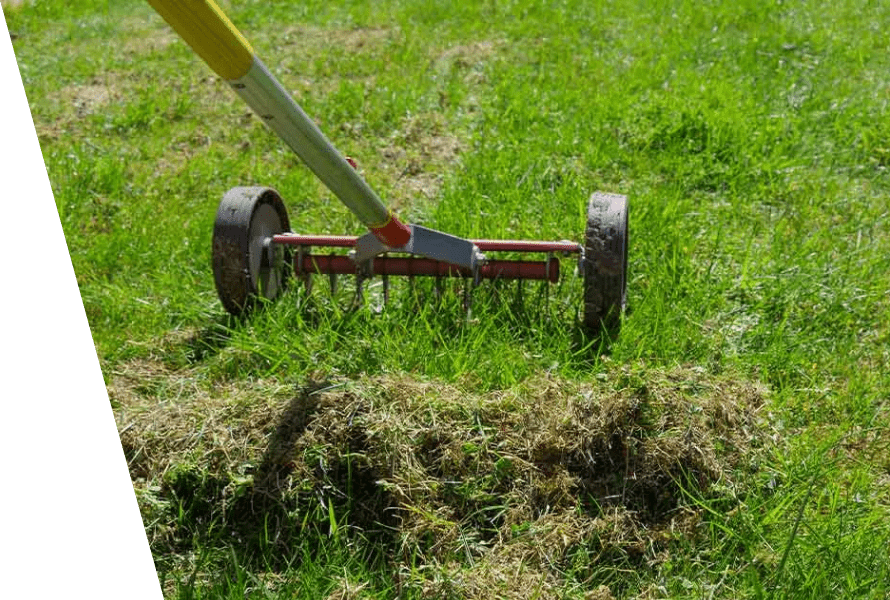
Lawn care splits into two jobs that most companies sell separately: mowing, which is cutting the grass, and lawn treatment, which is feeding it and putting right whatever is wrong with it. This guide is about the second one — the seasonal programme of feed, weed and moss control, plus the mechanical work (scarifying, aerating, over-seeding) that keeps a lawn thick and healthy rather than just short.
A standard industry programme runs four seasonal visits: a spring feed and weed in March–April, a summer feed with a selective herbicide from May–July, an autumn feed low in nitrogen and high in potassium in September–October, and a winter treatment with iron and moss control from November–February. Some operators split this into five visits covering seven separate treatments across the year.
| Unit of sale | Rest of UK | London & South East |
|---|---|---|
| Minimum charge, per treatment visit | £25–£35 | £32–£45 |
| Single treatment, per m² (lawns over ~100 m²) | £0.12–£0.30 | £0.16–£0.40 |
| Seasonal treatment visit, small lawn (up to 50 m²) | £25–£35 (minimum) | £32–£45 |
| Seasonal treatment visit, 100 m² | £25–£40 | £32–£52 |
| Seasonal treatment visit, 200 m² | £30–£45 | £40–£60 |
| Seasonal treatment visit, 300 m² | £40–£60 | £52–£80 |
| Seasonal treatment visit, 1,000 m² | £100–£125 | £130–£165 |
| One-off treatment, no programme | £30–£60 | £40–£80 |
| Annual programme, 4–8 treatments, up to 100 m² | £150–£300 | £190–£390 |
| Annual programme, 4–8 treatments, 100–200 m² | £260–£400 | £330–£520 |
| Annual programme, 4–8 treatments, 200–400 m² | £380–£600 | £490–£780 |
| Monthly direct debit equivalent | £6–£45 | £8–£58 |
A programme is not simply the per-visit rate multiplied by the number of visits. It typically includes an initial survey, free re-treatment of any weeds that survive the first pass, and sometimes an annual aeration bundled into the price — which is why annual totals often undercut what four separate one-off visits would cost.
Lawn Treatment Cost By Treatment Type And Add-On
Feeding is the cheap, routine part of lawn care. The mechanical renovation work — scarifying, aerating, over-seeding, top dressing — is quoted and charged separately, and it is usually where the real cost of getting a tired lawn back into shape sits.
| Treatment | When it's done | Rest of UK | London & South East |
|---|---|---|---|
| Granular feed / fertiliser visit | Spring, summer, autumn, winter | £30–£120 | £40–£155 |
| Combined feed, weed and moss visit | Spring or early autumn | £45–£130 | £58–£170 |
| Selective weed control | April–September | £35–£90 | £45–£115 |
| Moss control (iron sulphate) | Autumn and winter | £35–£140 | £45–£180 |
| Scarification / de-thatching | September–October or March–April | £50–£250 | £65–£320 |
| Hollow-tine (core) aeration | September–November | £70–£220 | £90–£285 |
| Solid-tine / spike aeration | Any time grass is growing | £30–£120 | £40–£155 |
| Over-seeding | After scarifying or aerating | £60–£160 | £78–£210 |
| Top dressing (sand or sandy loam) | Autumn | £80–£180 | £105–£235 |
| Fungicide / disease treatment | On diagnosis | £45–£120 | £58–£155 |
| Chafer grub or leatherjacket nematodes | August–September / September–October | £35–£85 | £45–£110 |
| Green waste removal (scarifying arisings) | With scarification | £50–£200 | £65–£260 |
Hollow-tine aeration costs roughly three times what spiking does, because it removes actual cores of soil rather than just punching holes. On heavily mossed lawns, scarification climbs to £200–£240 simply because of the volume of debris the machine has to clear.
What Affects The Cost Of Lawn Treatment?
1. The Size Of Your Lawn
This is the dominant driver, but the £0.21/m² average rate cannot be multiplied out in a straight line. Small lawns under 100 m² are governed by the minimum charge rather than area, so a 40 m² lawn and an 80 m² lawn often cost the same per visit. Above that, annual programmes step up in bands: £150–£300 up to 100 m², £260–£400 for 100–200 m², and £550–£800+ once you pass 400 m².
2. Programme Versus One-Off Visits
A single, standalone treatment averages around £45 and can reach £60. The same application bought as part of a contract on a mid-sized lawn is £25–£40. The programme becomes the cheaper option once you are having more than two treatments a year, which most lawns need anyway.
3. Which Mechanical Treatments You Add
Feeding is the inexpensive part of the job. Renovation work — scarifying, over-seeding, moss removal — is quoted separately at £80–£200 per visit. A full autumn renovation on a 200 m² lawn, combining several of these, runs to £375–£680.
4. The Starting Condition Of The Lawn
A neglected lawn costs more in year one and then settles onto the standard programme rate. As a worked example, a 100 m² lawn that needs renovation as well as feeding is £300–£500 in year one — £200–£300 for maintenance plus £100–£200 for renovation. Thatch depth, moss cover and soil compaction are normally assessed at a free survey before the first visit.
5. Pests, Disease And Diagnosis
Chafer grubs and leatherjackets are treated with nematodes at £35–£85, or you can apply the biological product yourself for around £26.99 per 100 m² — it is a live product and has to go on within a fortnight of arriving. Fungal disease such as red thread, fusarium or dollar spot is treated with fungicide at £45–£120. Neither is part of a standard programme; both are diagnosed on site and quoted separately.
6. Your Location
London and the South East run 20–35% above the rest of the UK. Trade rates there run £3–£10 more per hour than elsewhere, with sole traders typically charging £25–£35/hour and lawn care companies £35–£50/hour.
What's Included — And What's Not
A standard annual programme covers:
- A free initial survey assessing thatch, moss, compaction and pH
- Four or five seasonal visits with a fertiliser blend suited to that time of year
- Selective herbicide treatment for broadleaf weeds
- Iron-based moss control on the autumn and winter visits
- A written condition report after each visit
- Re-treatment of any weeds that survive the first application, at most firms
Charged as extras:
- Scarification — £50–£250, rising to £200–£240 where moss cover is heavy
- Hollow-tine aeration — £70–£220; solid-tine aeration — £30–£120
- Over-seeding — £60–£160, or £20–£30 per kg of seed if you do it yourself
- Top dressing — £80–£180
- Removing the arisings from scarifying — £50–£200
- Fungicide or nematode treatment — £35–£120
- Turf replacement — from around £4/m²
- Lawn edging — £20–£60
Can You Do It Yourself?
DIY Feeding
A season of DIY feeding costs £60–£120 in the first year and £30–£60 a year after that. A 400 m² bag of an all-in-one feed retails at around £75, or you can buy individual treatments for £5–£21. The main risks are cosmetic — scorch from over-application or temporary stripes — rather than anything you can't recover from.
DIY Mechanical Work
A petrol scarifier hires for £68 a day or £100 for the weekend plus a £150 deposit; a hollow-tine aerator is £80 a day or £110 for the weekend plus a £300 deposit. National hire chains price similarly — around £75 a day excluding VAT, £120 for the weekend, plus a £15–£20 damage waiver and a £235 deposit, which works out at roughly £108 for a weekday hire or £168 for the weekend. Against a professional hollow-tine treatment on 100 m² at £115–£145, the DIY saving is minimal once you account for your own time and the deposit tied up. An electric scarifier is a better value option for a small lawn — £20 a day to hire or £90–£250 to buy outright. A spring-tine rake costs around £15 and will de-thatch roughly 30 m², and aerator sandals at £16–£30 are close to useless on compacted clay soil.
Where DIY goes wrong is treating the symptom rather than the cause: treating moss on a lawn whose real problem is compaction and shade means buying moss killer every year forever. If that's where your lawn has ended up, our turfing cost and garden renovation cost guides cover what it takes to start again properly.
How To Save Money On Lawn Treatment
- Measure the lawn yourself and give the figure when requesting quotes, rather than paying for a site visit just to get a number.
- Book the annual programme rather than one-off visits — £25–£40 per treatment against £45 for a standalone visit.
- Do the feeding yourself and buy in only the mechanical work that needs a machine.
- Book scarification and aeration on the same visit, so you pay one call-out and one setup charge instead of two.
- Rake up and bag the arisings yourself rather than paying £50–£200 for green waste removal.
- Bundle lawn treatment with other garden work booked on the same visit to spread the call-out cost.
How To Hire A Good Lawn Care Company
Insist on a site visit before you accept a price — lawn condition varies too much for an accurate quote from a description alone. Ask for evidence of herbicide applicator qualifications: City & Guilds NPTC PA1 plus PA6 is the standard combination for anyone spraying selective herbicide, and Lantra Awards training or BASIS registration are good signs of a properly trained technician. Check the firm holds public liability insurance, and look for guidance that follows RHS timing recommendations rather than a fixed calendar regardless of weather.
A proper quote should state the measured lawn area, the number of visits, what is applied at each one, the total annual cost and its monthly equivalent, the minimum charge, which add-ons are excluded and what they cost, and the policy for re-treating weeds that come back.
Red flags include a "guaranteed weed-free lawn" promise, scarification sold in spring on a mossy lawn when autumn is the correct window, pressure to sign a rolling contract at the door, and hollow-tine aeration proposed in the middle of a July drought.
Book Your Lawn Treatment Today!
A lawn that's fed on schedule and renovated when it needs it looks completely different within a season — thicker, greener and far less prone to moss and weeds taking hold. Fantastic Services' local gardening teams feed, weed, scarify, aerate and over-seed, clear the arisings afterwards, and will tell you honestly which treatments your lawn actually needs.
Frequently Asked Questions
How Much Does A Lawn Treatment Programme Cost Per Year?
Expect £150–£400 yearly for a typical UK lawn on 4–8 seasonal treatments, rising to £550–£800+ over 400 m². Published bands are £150–£200 up to 50 m², £260–£400 for 100–200 m², and £380–£600 for 200–400 m². The monthly equivalent is £6–£45 depending on size.
How Much Does It Cost To Scarify A Lawn?
£50–£250, driven mainly by size and how much moss has built up. Typical figures are £55–£95 for 100 m², £90–£150 for 200 m² and £150–£240 for 300 m²+. A heavily mossed lawn pushes to £200–£240 because the machine clogs repeatedly. Removing the arisings afterwards is £50–£200 extra.
How Much Does Lawn Aeration Cost In The UK?
The UK average is around £90, with a range of £35–£145. Spiking a 100 m² lawn is £30–£50; hollow-tine aeration on the same lawn is £115–£145. Large lawns can reach £145–£220. It's usually sold as an add-on to a treatment programme rather than booked on its own.
Is Hollow-Tine Aeration Worth The Extra Cost?
On compacted, clay or heavily used lawns, yes. Hollow tines remove cores of soil, relieving compaction and letting air, water and feed reach the roots, whereas spiking just punches holes and can smear the sides of them shut on clay. Hollow-tine aeration costs roughly three times as much as spiking, and is worth doing every 2–3 years with spiking in between.
How Many Lawn Treatments Does A Lawn Need Per Year?
Four is the standard minimum — one per season. Programmes commonly run to 4–5 visits, with some applying seven treatments across five visits spaced 7–14 weeks apart. Two visits a year, in spring and autumn, will still make a visible difference on an otherwise healthy lawn.
Is Lawn Treatment Different From Lawn Mowing?
Yes, and they are usually sold by different firms. Mowing is cutting, priced at £20–£45 per visit outside London — see our lawn mowing cost guide for rates. Treatment is feeding, weed and moss control and mechanical renovation. Most lawn care companies do not mow, and most gardeners are not qualified to apply pesticide.
When Should You Scarify And Aerate A Lawn?
Early autumn — September to October — is the best window for both, when the soil is still warm and moist and the grass has time to recover before winter. March–April is the second choice for scarifying. Avoid a summer drought or waterlogged winter ground for either job.
Fantastic Services Lawn Care Prices 2026
| Service | Standard price |
|---|---|
| Gardening team of two, first hour | £83 |
| Gardening team of two, each subsequent hour | £65 |
| Green waste, single black bin bag | £5 |
| Green waste, jumbo bag | £55 |
Lawn treatment programmes are quoted after a free survey, since lawn size, condition and the mix of treatments needed all decide the final price.
Book your lawn care service!
Add to Preferred Sources 