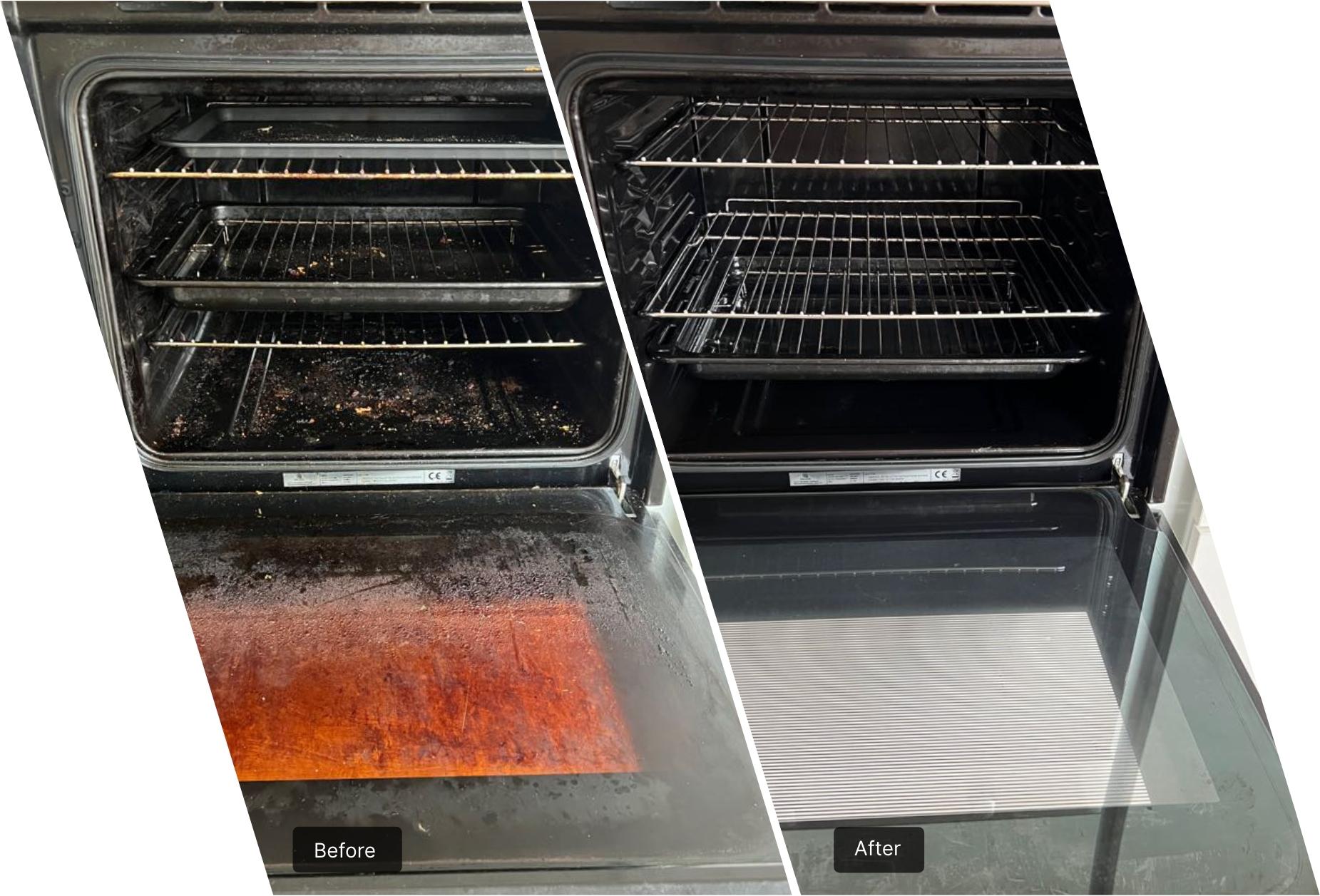
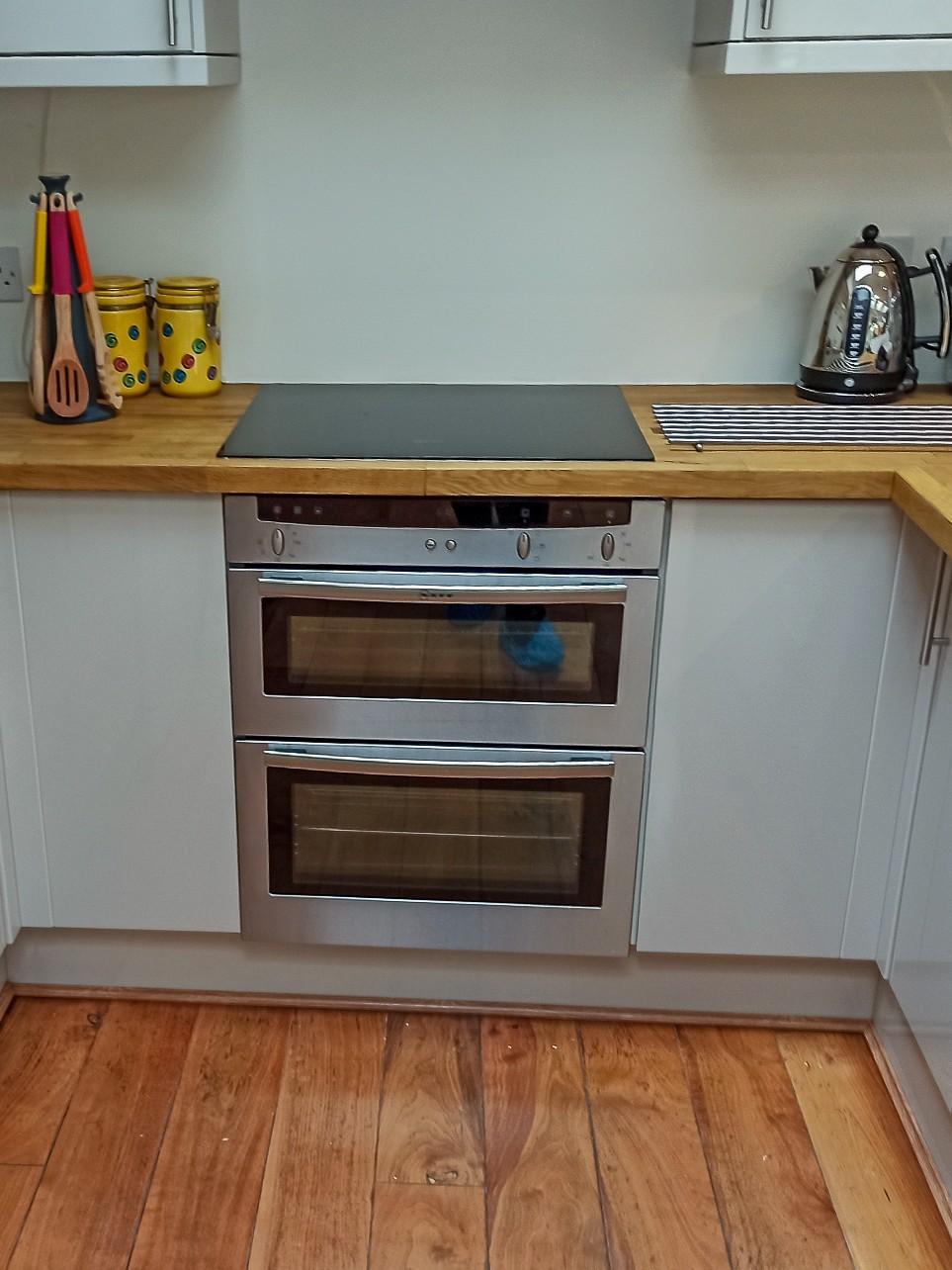
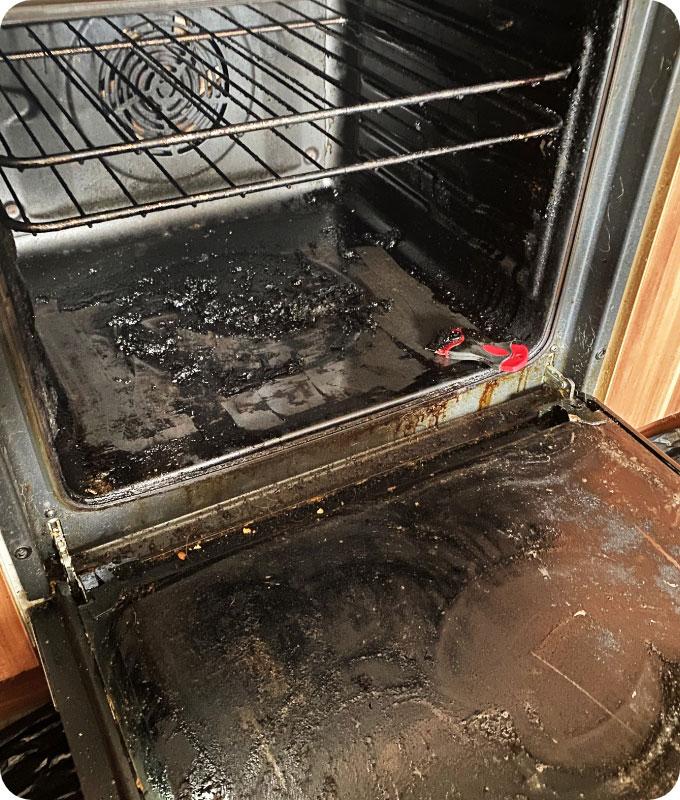
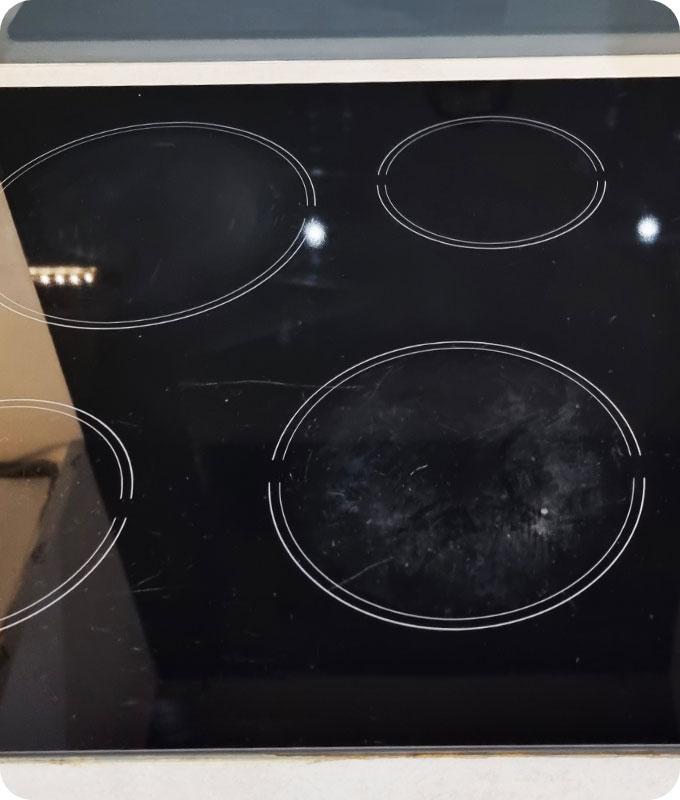
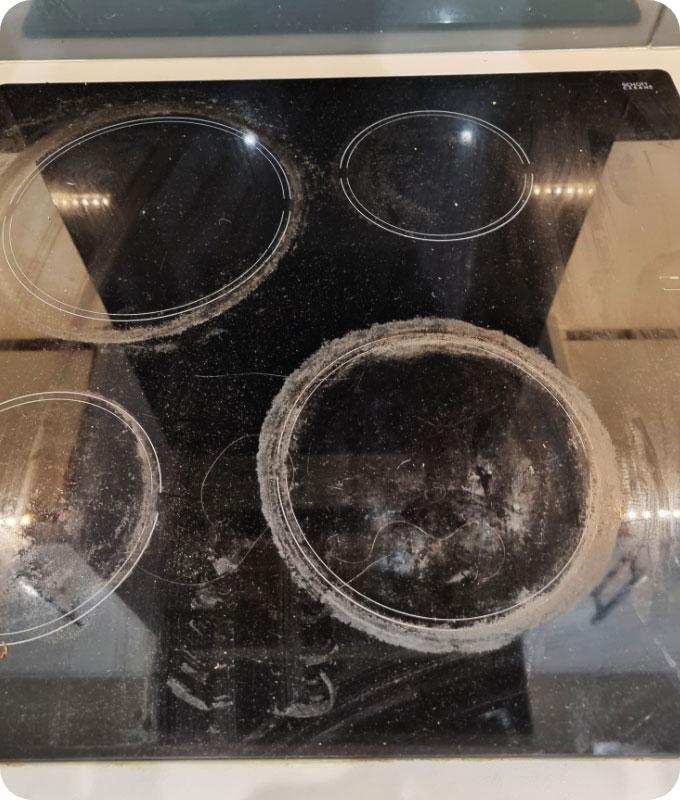
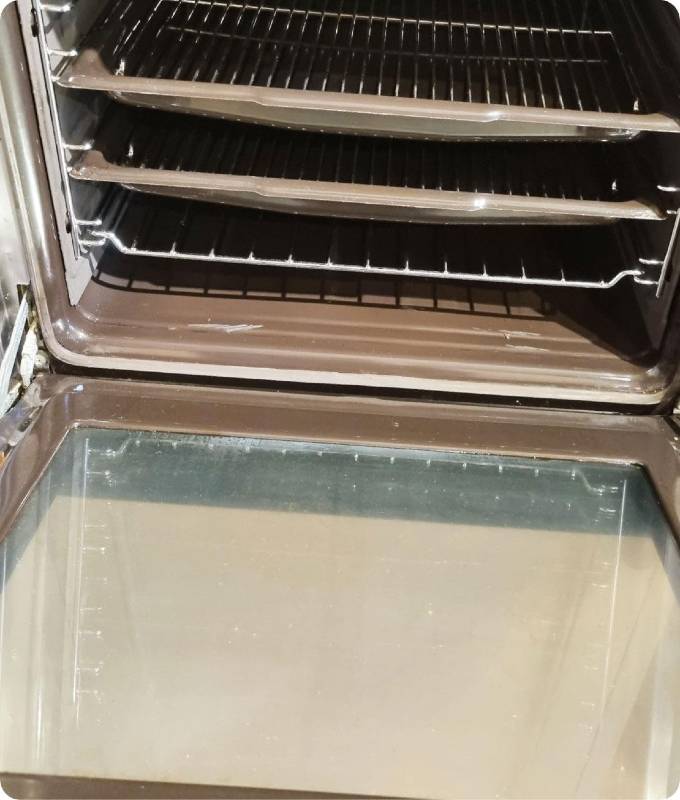
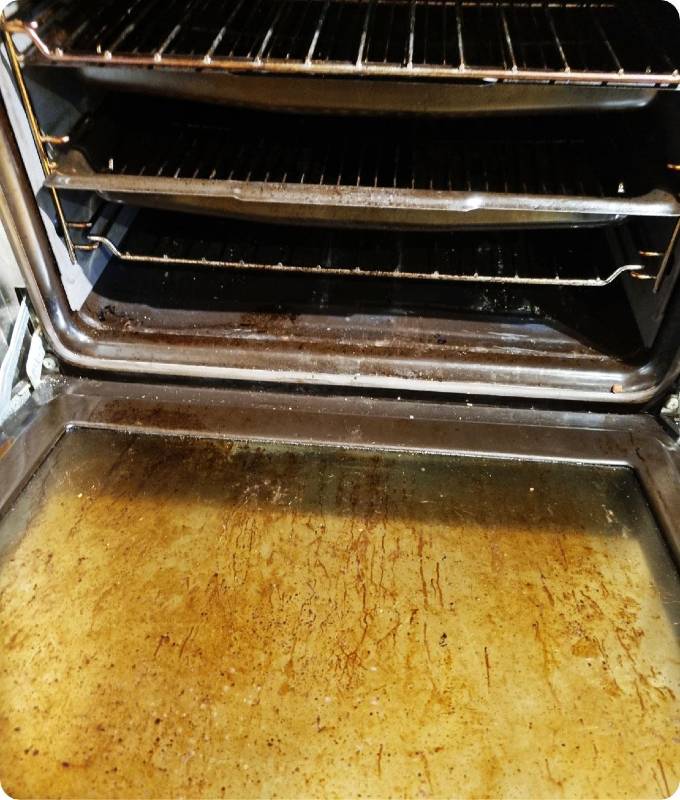
Chesham sits in the Chiltern Hills with a housing stock that ranges from Victorian and Edwardian townhouses in the older parts of town to 1970s estates and newer builds on the outskirts. Kitchens vary considerably in size and layout, but the challenge inside the oven is consistent: layers of carbonised grease from roasting, grilling, and everyday cooking that accumulate steadily regardless of how tidy the cook is.
The technician starts by covering the floor around the oven before anything is touched. They then assess the appliance closely, checking the oven type, noting any self-cleaning lining, dual-cavity arrangement, or built-in grill compartment, and identifying where the carbon and grease build-up is most concentrated.
Removable components are detached and placed into the portable heated dip tank. Oven racks, shelf supports, the grill pan, and the inner door glass all go in together. The citric acid solution in the tank breaks down baked-on grease progressively while the technician works on the oven interior.
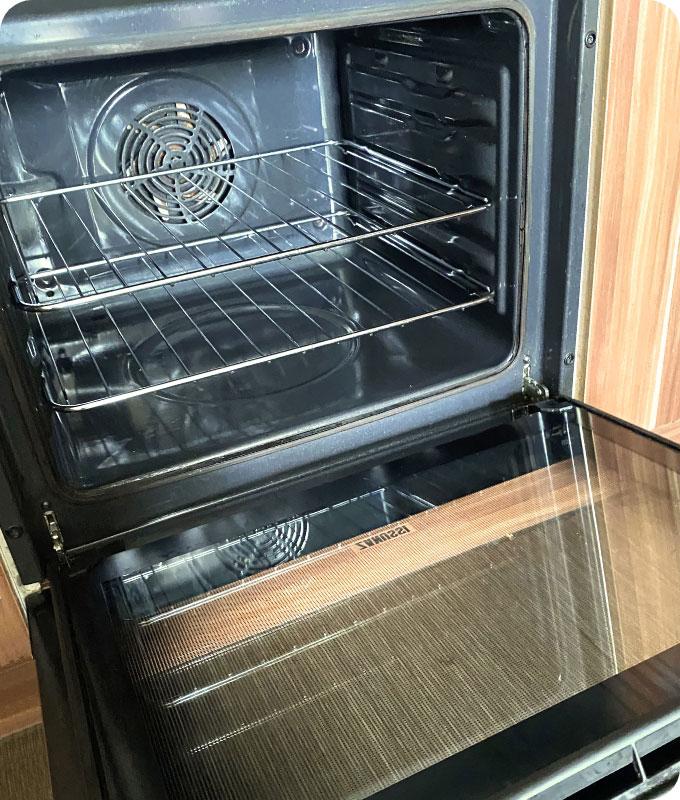
The interior is cleaned panel by panel. The cavity roof, rear wall, side panels, and oven base each receive individual attention. The lower element surround, where solidified drips tend to be thickest, is treated with particular care.
- Heated dip tank treatment: Racks, grill pans, and glass panels soaked in citric acid solution to dissolve carbonised grease.
- Panel-by-panel interior clean: Every cavity surface treated separately for an even, complete result.
- Full door glass restoration: Inner and outer panes cleaned back to clear transparency.