Floors take more punishment than anything else in a home, and most of the damage they suffer comes from cleaning rather than from wear. Battersea packs an unusual range of them into a small area: original pine boards in the terraces behind the park, herringbone blocks in interwar mansion flats, engineered oak in converted industrial space, and vinyl plank over screed in the newer riverside blocks. Each wants a different amount of water, a different pH and a different drying time. Treating them as one category is how a floor goes from tired to genuinely ruined.
Old pine boards and the gaps between them
Stripped boards in a Victorian terrace sit over a ventilated void, and the gaps between them are open to it. Water pushed across that surface with a wet mop goes straight through, carrying dust with it and wetting joist tops that were never meant to be damp. Boards are vacuumed with a brush head along the grain first, then wiped with a cloth wrung almost dry, a few boards at a time. Where the finish has worn through at doorways, bare timber absorbs whatever is applied and darkens unevenly as it dries.
Parquet, block adhesive and the steam problem
Herringbone and basketweave blocks are thin pieces of hardwood bedded in bitumen or a modern adhesive. Heat and moisture together release both. A steam mop run over parquet shows nothing that evening; three months later the blocks at the edge of a room begin to lift and click underfoot. Parquet is worked as dry as circumstances allow, with a spray-and-buff product made for timber applied to the cloth rather than to the floor, and spills dealt with the moment they happen instead of at the next visit.
Thin wear layers, and what grit does to them
Engineered board carries a veneer of real timber only a few millimetres deep. Luxury vinyl carries a clear wear layer thinner still. Neither can be sanded back once it is through. Both are destroyed by grit, which behaves as an abrasive underfoot and cuts fine scratches that eventually read as a grey path through the middle of a room. The most valuable few minutes on these floors are spent vacuuming along skirtings and in doorways before anything wet appears. Cream cleaners and strongly alkaline products dull the finish permanently.
Stone, tile and the film nobody can shift
Hall tiles and kitchen stone develop a dull haze that looks like dirt and is usually detergent. Ordinary floor cleaner leaves a residue, the residue attracts soil, more cleaner is applied to lift it, and the film thickens. Breaking that cycle means rinsing with clean water and no product at all for several passes, then moving to a neutral cleaner at the correct dilution. Unsealed limestone and terracotta are separate cases again, porous enough that anything acidic etches and anything oily stains.
What is happening under a rug
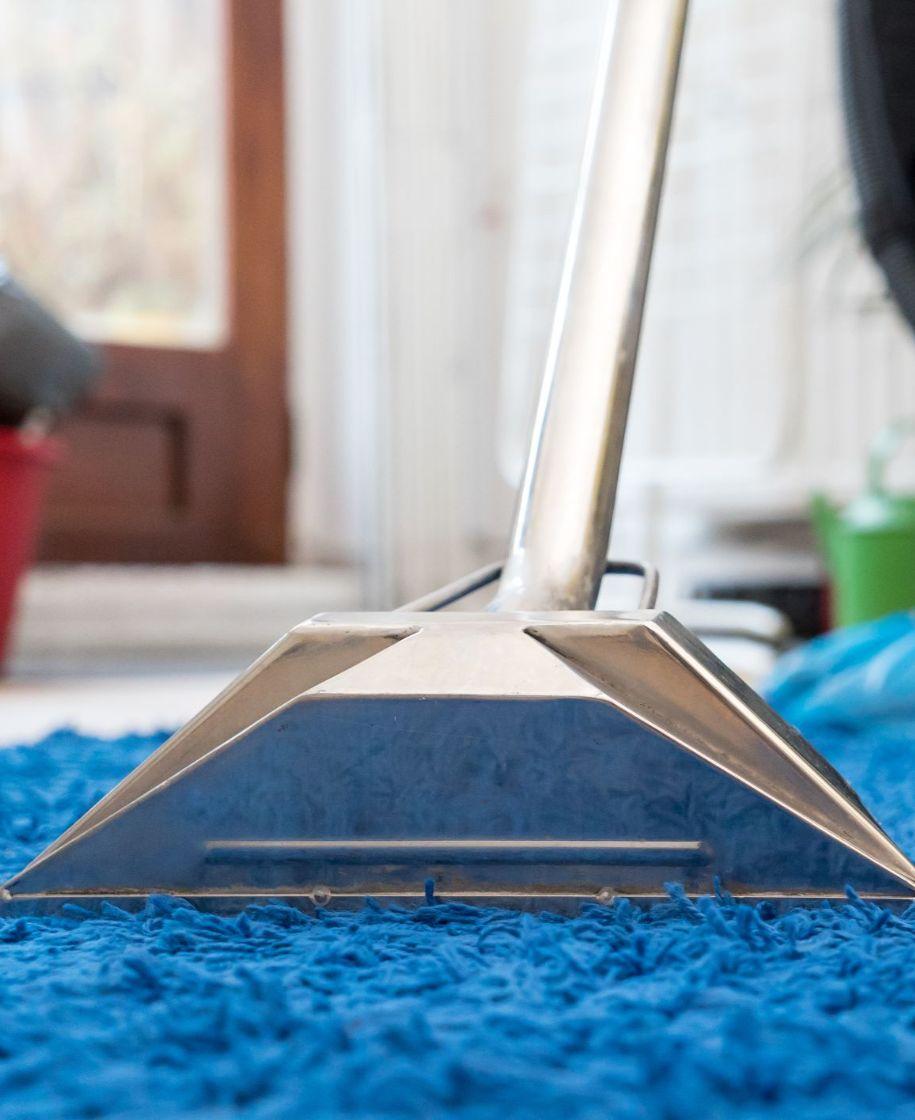
A rug protects the floor beneath it and quietly grinds it down at the same time. Grit works through the pile, settles on the boards and abrades with every footstep, while any trapped moisture has nowhere to escape. Rugs are lifted, the floor underneath cleaned and dried, and the rug handled separately, since pile work needs different equipment and the Battersea branch covers it properly. Dropping a heavy rug back onto timber that is still damp is how a pale floor acquires a dark rectangle.
Floors on a moving day
The day furniture arrives is the day floors get scratched. Protection goes down before anything is carried in, not after the first gouge, and hard floors near the entrance take the worst of it in wet weather. Where a household is relocating, our South West London team handles the lifting and protects the route, and the floor work is placed once rooms are empty. Comparable stock a short way east is served by professional cleaning services in Stockwell, where the same mixture of boards and blocks turns up in much the same proportions.
Arranging the work
Scope here is set by what is underfoot rather than by room count, so describing the floors in advance is worth more than describing the postcode. Charges follow the length of the visit and how many people attend. Households who want floors kept right rather than rescued tend to fold them into a recurring pattern, which is what domestic cleaning specialists in Battersea is built around, with deeper treatment once or twice a year. The full range appears on the service in detail.