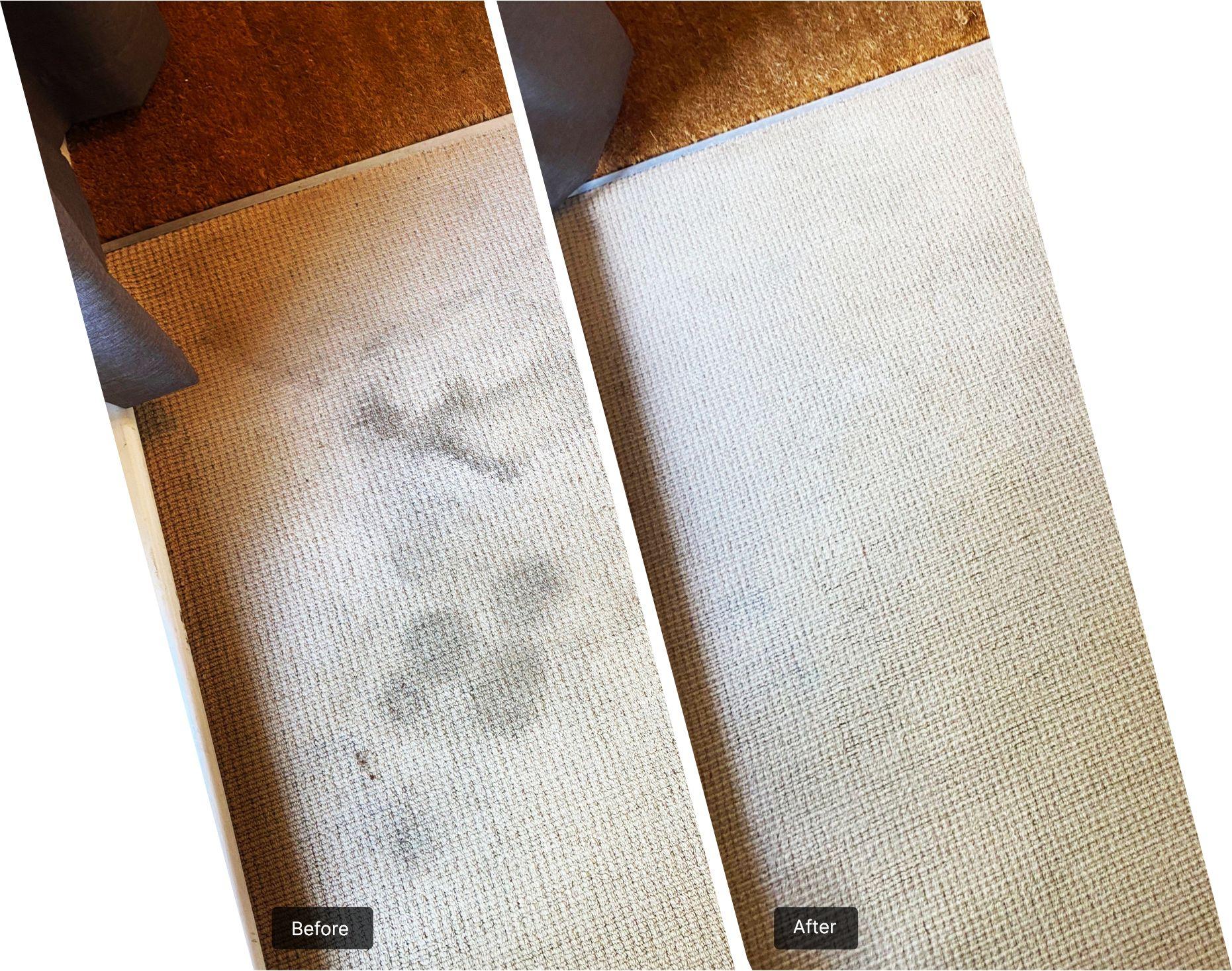
Pale carpet is the default in a great many Pimlico flats, and it is an unforgiving choice. The tall sash windows of the stucco terraces throw a great deal of daylight across a floor, and light rakes across a pale pile in a way that shows every shading, every footmark and every faint traffic lane long before the carpet is dirty by any objective measure.
Contrast, not quantity, is what shows
The same amount of soil that is invisible on a mid-brown carpet reads as an obvious grey path on oatmeal or bone. That has a practical consequence: pale floors are best cleaned on a shorter cycle and at a lower intensity, rather than left until the lanes are pronounced and then subjected to aggressive treatment. Heavy chemistry on a light wool also risks a subtle yellow cast, which is far more noticeable on a pale ground than on a dark one.
What a fabric protector actually does
A fluorochemical protector does not seal a carpet. It lowers the surface energy of each fibre so liquid beads instead of spreading and so dry soil sits loose rather than keying into the filament, which buys time to blot a spill and makes vacuuming more effective. It does not make a carpet stainproof, and it does nothing at all against dye-based spills that are already in contact with the fibre.
Where protector wears off and when to renew it
Protector is abraded away by footfall, so it disappears from the hall and the lanes first while the corners of a bedroom are still fully treated. Reapplication belongs after cleaning and never before, because it has to bond to clean fibre, and it is applied evenly and then groomed in so it reaches the sides of each tuft rather than sitting on the tips. On a pale floor the practical value is mostly in the first minutes after a spill.
Prompt action still beats any treatment
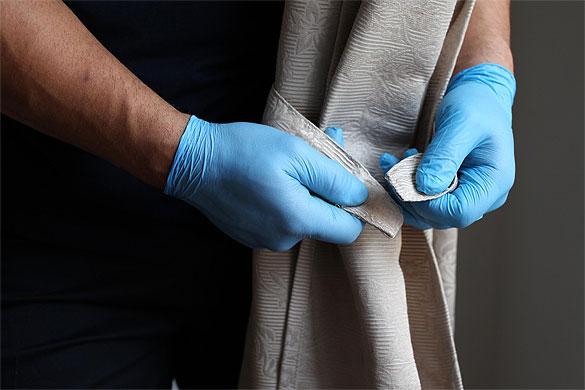
Nothing on the market removes the need to deal with a spill quickly. Blotting with a white cloth from the outside inward, without rubbing, lifts the great majority of what would otherwise become a set stain. Coloured cloths and kitchen scrubbers cause their own problems, as does any household spray that leaves a sticky film in the pile.
Condensation at the bay window
Original sashes in these terraces run with condensation on cold mornings, and the water finds its way over the sill and onto whatever is beneath. On a carpet that reaches the window the result is a tide line a few centimetres from the wall, often with a faint brown edge where moisture has drawn soil out of the backing and deposited it at the drying front. Repeated cycles rot the backing and can mark the boards below. The mark itself is treatable and the cause is not: trickle ventilation, a wiped sill and curtains that do not trap cold air against the glass all reduce it, and a carpet dried properly after each episode fares much better than one left to dry on its own.
Lower-ground flats and the soil route
A flat below street level is reached down area steps that stay damp and gritty, and that debris arrives at the front door in concentrated form. A long mat inside the door and a brush at the top of the steps intercept much of it. Communal halls and stairs in these conversions take the same traffic, and they are usually handled alongside our cleaning services in Pimlico.
Arranging a clean
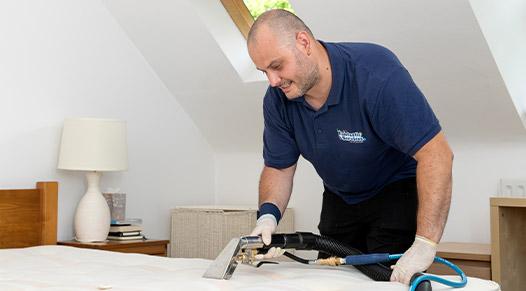
Pricing follows counted rooms and staircases, with protector treated as an optional addition priced by area rather than bundled in. Rooms are best cleared of small furniture, and pale carpet should be left to dry fully before rugs go back down, since a damp pile will take an impression from anything laid on it. Routine upkeep sits within our team in the area, tenancy turnarounds are covered by the end of tenancy cleaning team in South London, neighbouring districts by carpet cleaning services in Victoria, and the general method on carpet and rug cleaning across the UK.