Three quite different sets of growing conditions sit within a few miles of one another on this side of the river, and a planting scheme that thrives on one will sulk on the next. Heavy London Clay covers most of the middle ground, the higher land to the south rises onto lighter sandy and gravelly beds, and the strip nearest the Thames lies on river alluvium and made ground. Working out which of the three a garden stands on explains most of what has already failed in it.
A hole and a jar settle the question
Digging a spade and a half down and looking at what comes out answers more than a shop-bought kit does. Clay rolls into a sausage in the hand and stays there; sandy ground crumbles and will not hold a shape at all. Filling a jar with soil and water, shaking it and leaving it overnight separates the fractions into visible bands. A hole that fills with water and stays full points to a high water table rather than to poor structure, and that is a different problem needing a different answer.
Working clay without ruining it
Clay is fertile and holds nutrients well; the difficulty is timing. Dug or walked on when wet it smears, loses air and sets like a path, and one careless February afternoon undoes a season of improvement. Autumn and late spring are the usable windows. Organic matter spread across the surface and left for worms to take down achieves more over three years than any single deep dig, and it lifts the level gradually enough that beds start to drain without being rebuilt from scratch.
The high ground drains too well
Gardens up on the ridge sit on lighter material that warms early, can be worked in almost any weather and then runs out of water by the middle of June. The response is the reverse of the clay one: bulky organic matter mixed through rather than laid on top, a thick mulch to slow evaporation, and planting chosen with a dry August in mind. Tap-rooted and silver-leaved species that rot away in a heavy bed are perfectly at home there.
Riverside ground and what is buried in it
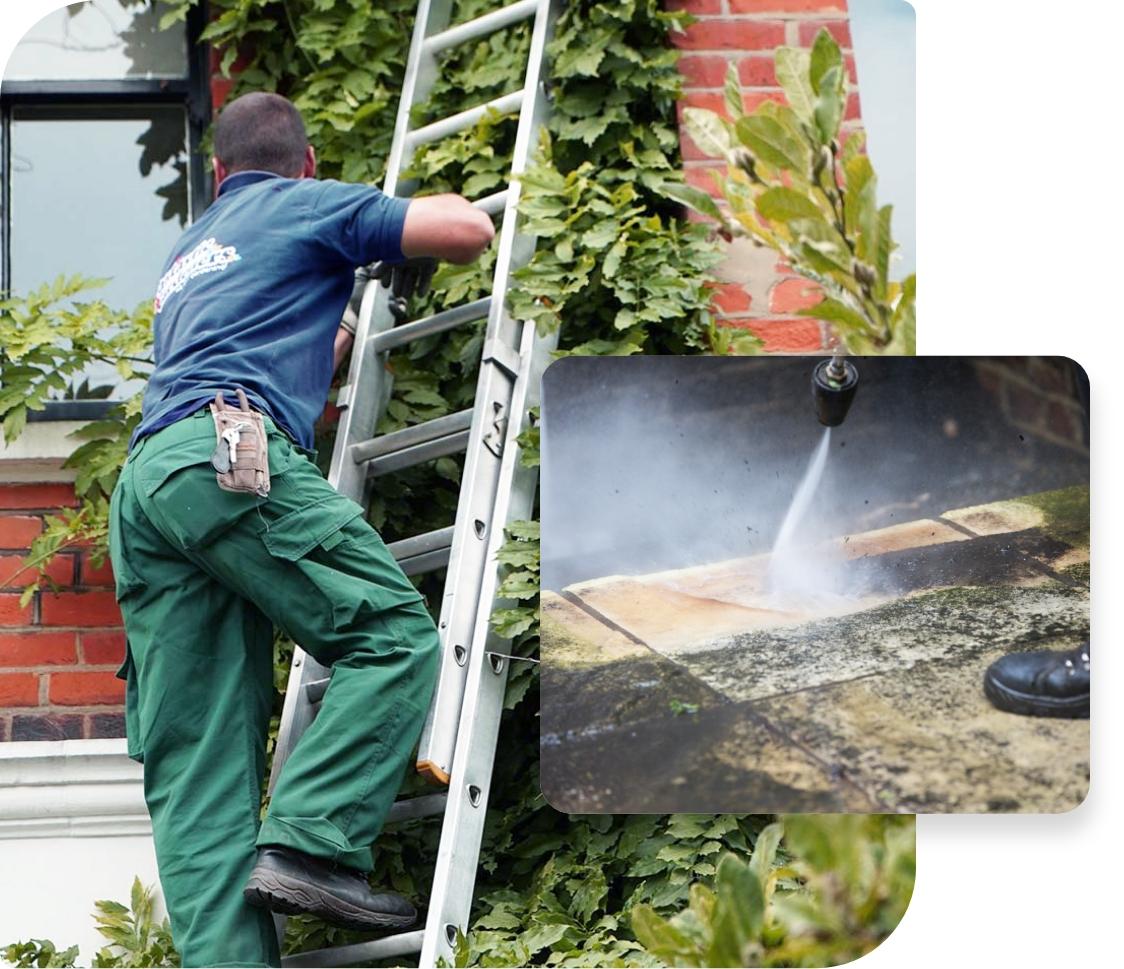
Closer to the water the ground is silt over gravel, frequently with a metre or more of imported fill from past industry and dock works sitting above it. Rubble, ash and old hardcore turn up within a spade's depth, drainage varies wildly across a single plot and the water table can be close to the surface. Raised beds with imported topsoil are often more sensible than trying to reclaim what is already there. Paving laid over that kind of fill settles unevenly and grows algae in the hollows, which is where path and paving cleaning in South East London does more good than another load of compost.
One district, several maintenance calendars
Because the ground varies, the round varies with it. Clay lawns want aeration in autumn and a light cut in a wet spring; ridge lawns want feeding and a raised blade height in summer to stop them browning off. Hedges everywhere are governed by the nesting season rather than by soil type. Small central plots of the kind found around gardening services in Waterloo are worked in shorter, more frequent visits, while long suburban gardens suit fewer and longer ones. The underlying rhythm is common to all of it and is set out on garden maintenance services UK.
Clearance, waste and who carries it
Green waste leaving a property is controlled waste, so it travels under a registered carrier and reaches a licensed transfer station rather than a mixed skip. A routine visit removes its own arisings. A full clearance of an overgrown plot produces several cubic metres of heavy, wet material, and that becomes a vehicle job in its own right, handled in the same way as a local pro near you. Rubble and old hardcore dug out of made ground are kept separate, since they cannot go into green waste at all.
Arranging a first appointment
An opening visit is normally charged by duration, with the number of technicians set by how much has to be cut and carried rather than by the size of the plot on paper. Photographs sent beforehand help establish whether a garden needs a maintenance slot or a clearance. Side access, a working tap and somewhere to stand a vehicle all shorten the job. Where rodent runs or wasp activity turn up in long grass, that stops being a gardening task and passes to mice and rat control in South East London.