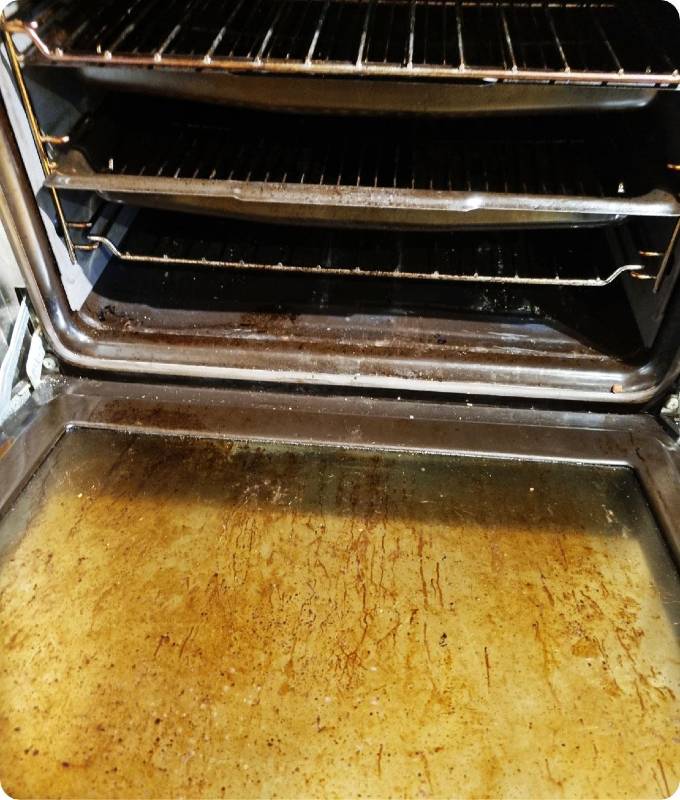
Welwyn Garden City was designed as a planned town, and the housing reflects that mix of eras: interwar houses with generous kitchens, postwar semis, modern new-builds on the outer edges, and a fair number of flats and apartments throughout. What they all have in common is that the ovens inside them get used, and used ovens collect grease and carbon residue steadily regardless of how careful the cook is.
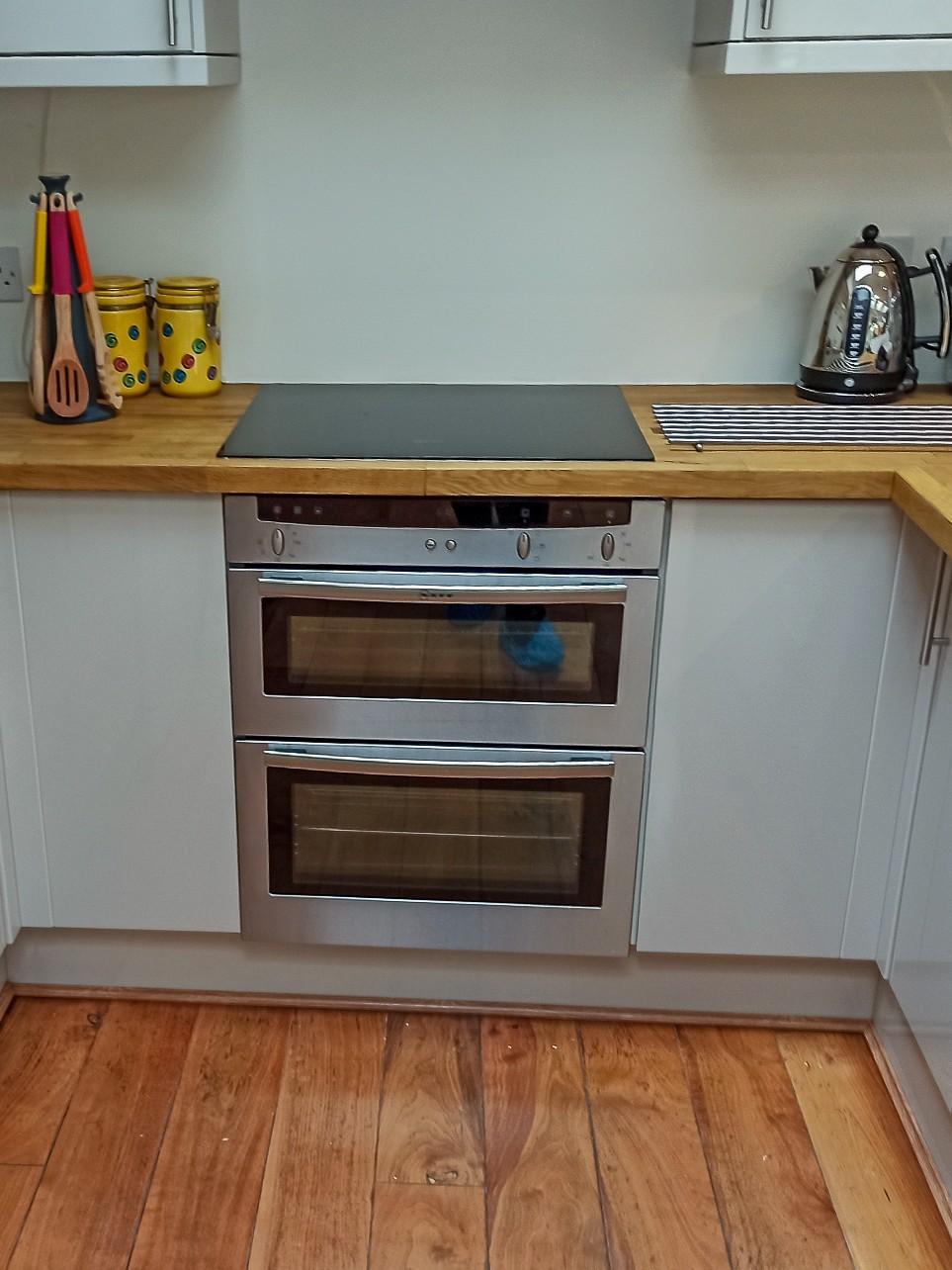
The technician starts by laying down protective floor coverings before anything else is touched. They will take a few moments to check the appliance type, note any unusual features such as a pyrolytic lining or a dual-cavity setup, and identify the areas carrying the worst build-up. This brief assessment shapes how time is allocated across the clean.
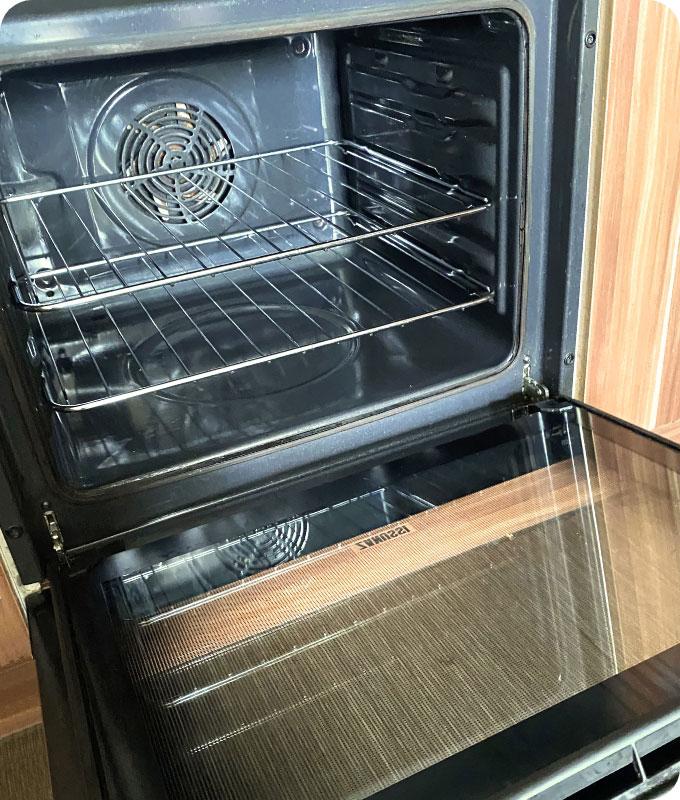
Removable components come out early in the process. Oven racks, the grill pan, side shelf supports, and the inner glass panel are all detached and placed into the portable heated dip tank.
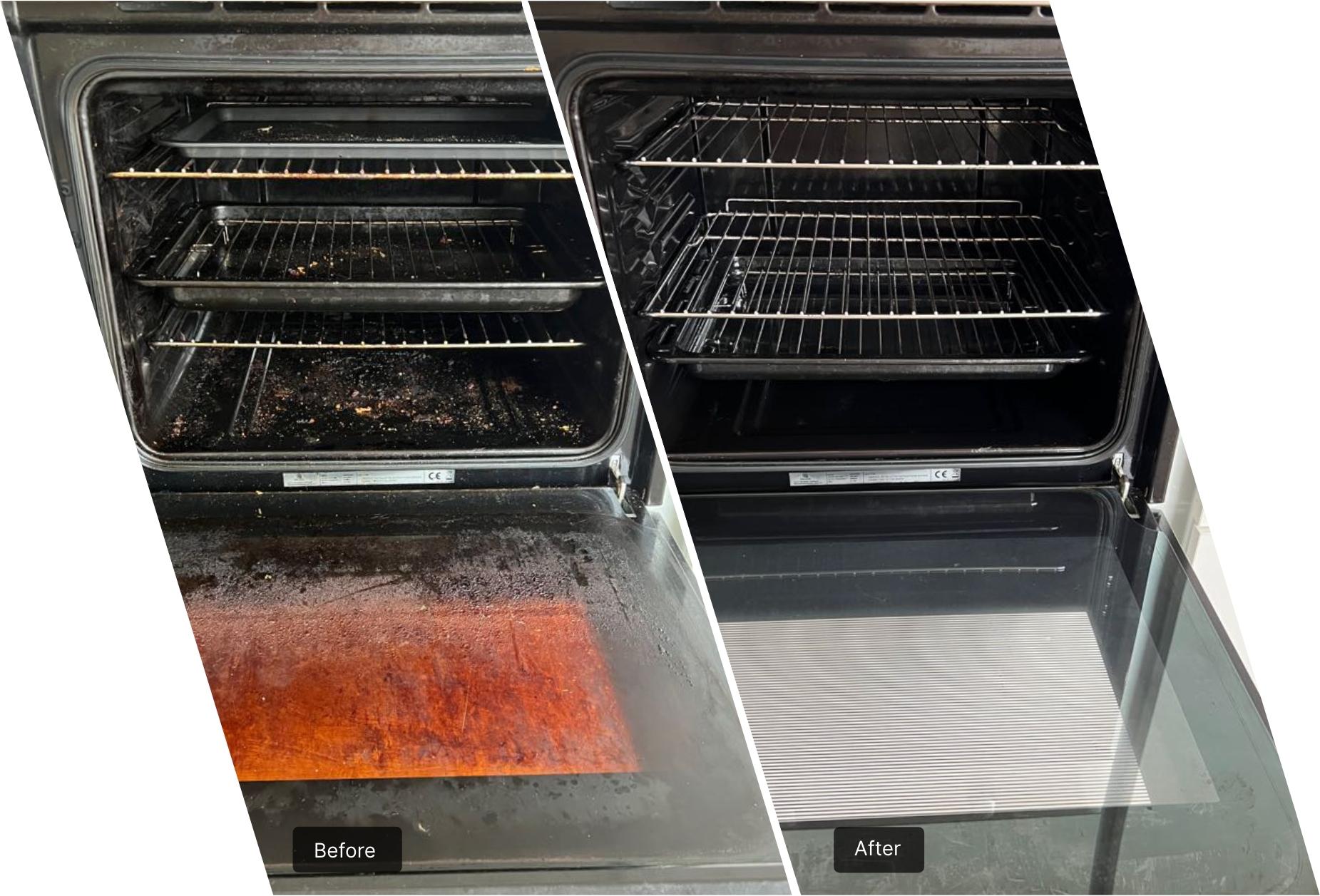
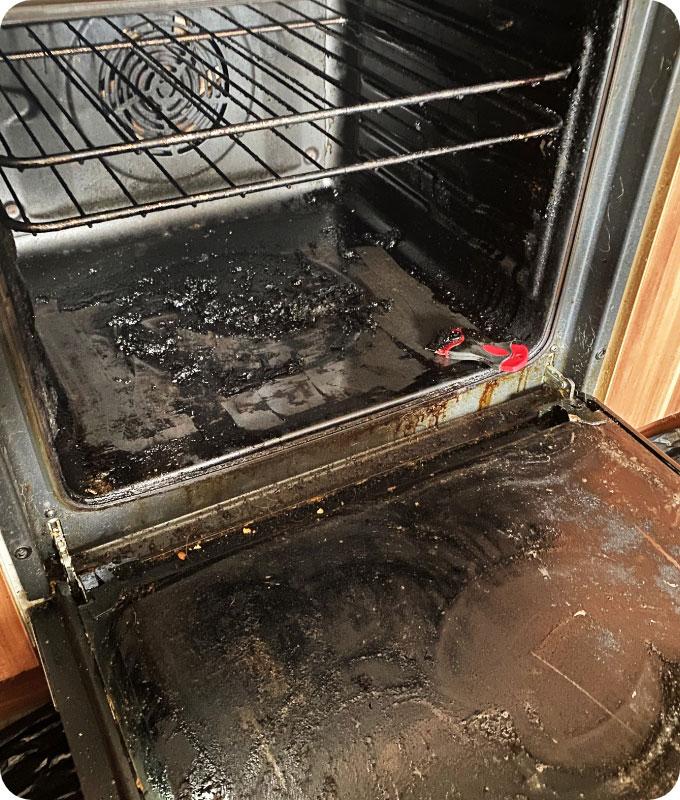
While those parts soak, the technician cleans the oven interior in sections. The roof, back panel, two side walls, and the base are treated in turn, with particular care given to the area around the lower heating element where solidified spillage tends to be thickest. Each section is fully treated before moving on.
- Section-by-section interior clean: Each wall, the base, and the roof are treated individually for a thorough, even result.
- Dip tank component treatment: Racks, grill pans, and glass panels soaked in heated citric acid solution.
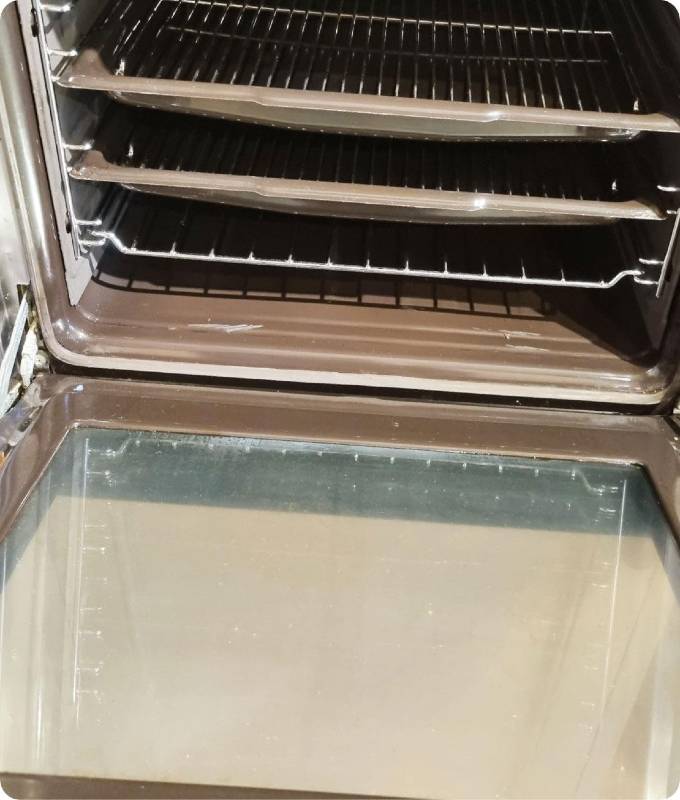
- Door glass polished: Inner and outer panels cleaned to full transparency.