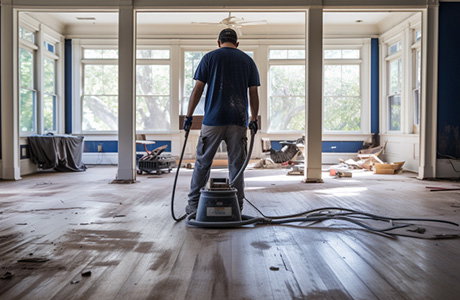
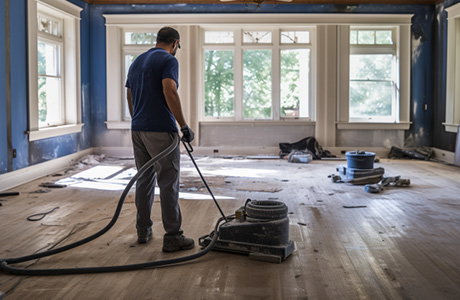
Opening a blocked-up fireplace is one of the more popular jobs in DL1 terraces, and it is easily the dirtiest. Behind the plasterboard there is usually a century of soot, fallen mortar, jackdaw nesting material and loose brick, and all of it comes into the room at once. Soot is oily, it carries a smell, and it is almost impossible to remove from soft furnishings once it has been walked around, which is why this particular project needs planning before the first brick is lifted rather than a tidy-up afterwards.
Soot behaves like nothing else on site
Ordinary construction dust is mineral and dry. Soot is carbon bound with tar, it smears the moment a damp cloth touches it, and a smear on emulsion is a redecoration job. It is removed dry first, with specialist sponges that lift rather than spread, then the surface is degreased before any water is used. A vacuum without adequate filtration will push the finest particles straight through the bag and deposit them on every surface in the house, including rooms nowhere near the chimney.
The chimney above the opening
Once a flue is opened, whatever is loose inside it keeps arriving for weeks. Debris drops during windy spells, and a new hearth gets a fresh layer every few days. The sensible sequence is to have the flue swept and, where a stove or liner is going in, fully lined, before the room is cleaned and decorated. Cleaning a room under an unswept open flue is work that has to be repeated, and the household usually pays for both visits.
Back lanes, yards and getting equipment in
Most of the older terraces here have a rear lane and a small walled yard, and that access route is how materials, waste and equipment move. The yard takes the brunt: mortar splash on the flags, brick dust on the gate, and a well-worn muddy track from the lane to the back door. Doing the inside before the outside guarantees it comes back in on boots, so hard standing and the threshold are dealt with first, then the house, then a final check of the route.
Soft furnishings and floors after a dusty job
Anything woven in the room will have taken soot and mortar dust. Vacuuming lifts the surface layer and leaves the fines bedded in the pile, where they will smell faintly of the chimney for months. Hot water extraction is the treatment that actually removes it, and households further down the A1 corridor turn to rug cleaning services in Northallerton for exactly this reason after opening up a fireplace, usually a week or so after the works finish.
Rubble, old plasterboard and the tip
A chimney opening generates heavy waste out of proportion to the size of the job: brick, mortar, old plasterboard and soot-contaminated sheeting. Plasterboard has to be separated from general waste, and none of this goes in a household bin. A booked removal via waste collection and removal across the UK takes it with the transfer documentation a carrier is required to give, and doing it before the clean means the crew is cleaning rather than carrying.
The neighbours on the other side of the wall
Terraces share flues as well as walls, and opening one breast can push soot and dust through an adjoining stack into the house next door. It is worth knowing before the work starts rather than after a complaint. Where it happens, the remedy is the same careful dry method applied on the other side of the party wall, and dealing with it promptly costs far less than a redecoration.
What a visit covers here
A post-works clean after this kind of job runs from the ceiling down: light fittings, picture rail, the chimney breast and new hearth, the alcoves either side, window reveals, skirting, and the floor last. Where an original floor has been exposed, it is vacuumed along the joints rather than washed, since water on freshly sanded boards raises the grain. The visit is charged on team hours, so the length of the works and how much of the house was affected matter more than the room count. Full service details are published on vetted after builders cleaning.