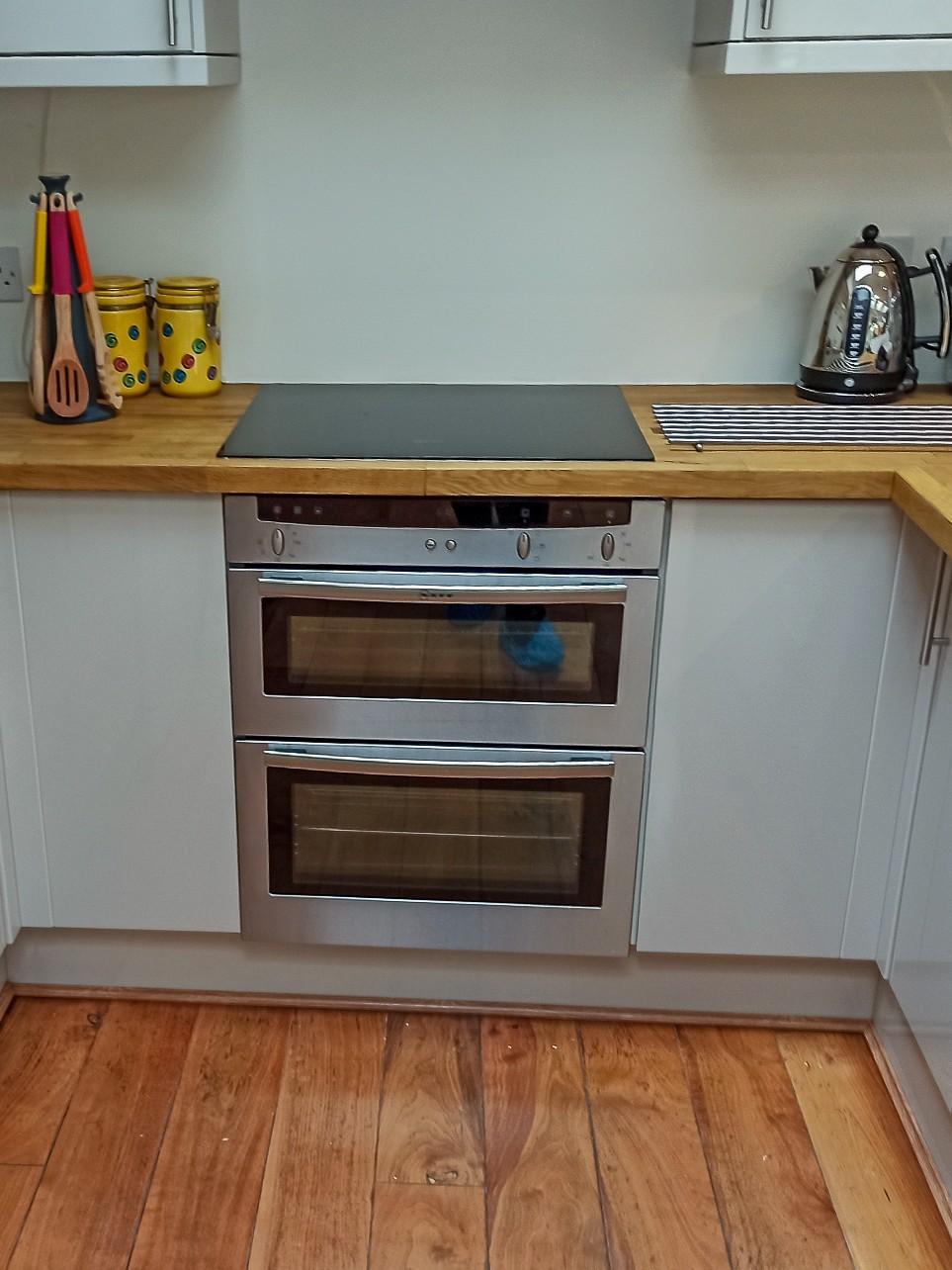
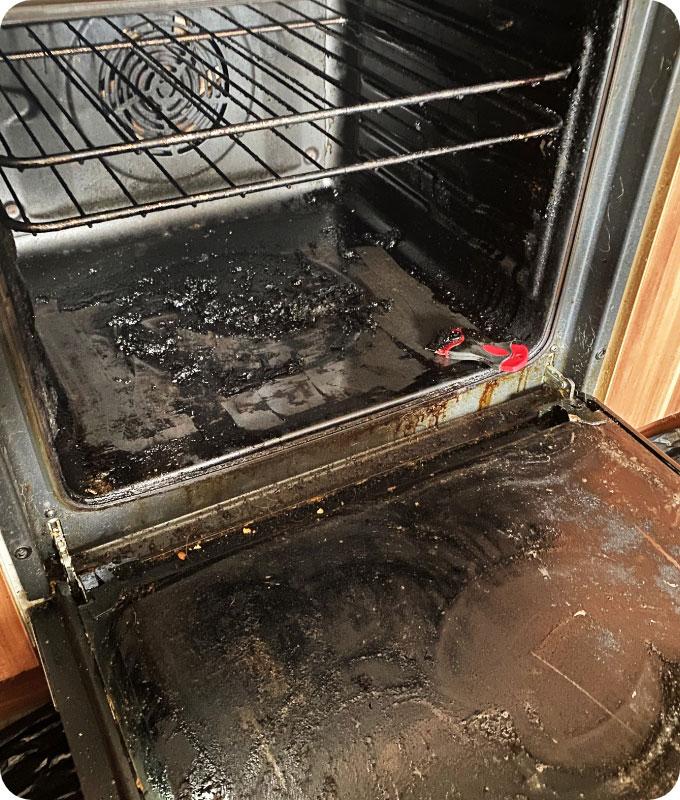
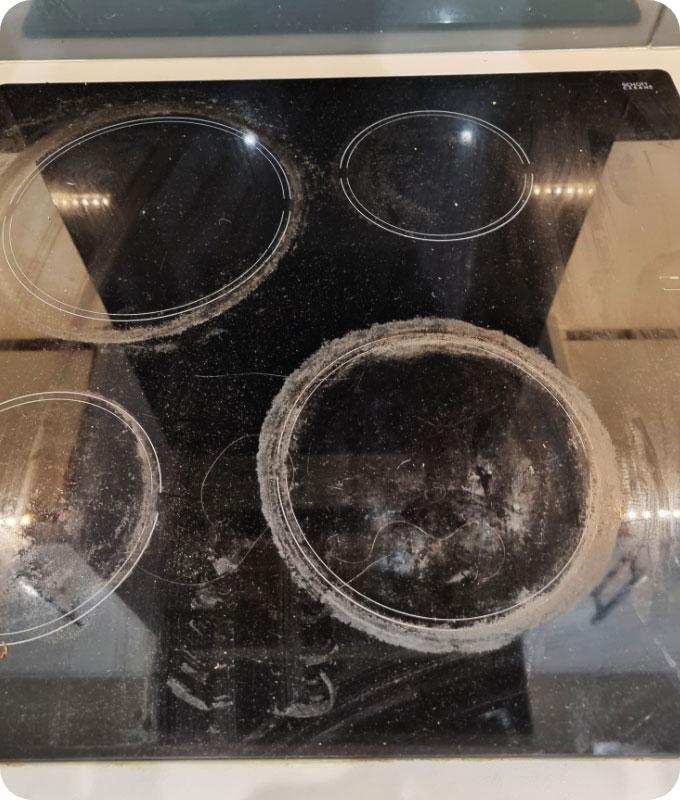
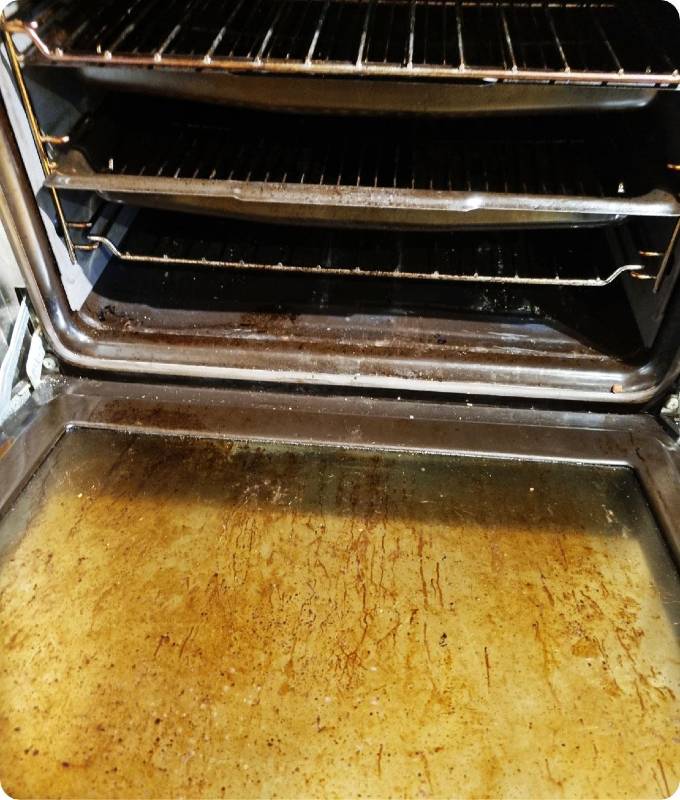
Gorton is a dense residential area of east Manchester, with housing stock that is largely made up of Victorian terraces, interwar properties, and post-war council-built homes. Kitchens in these properties often run compact, with limited floor space and appliances that have seen years of consistent use. The ovens inside accumulate carbonised grease steadily, and the narrow layouts can make DIY cleaning particularly difficult to do properly.
The technician starts with protective floor covering before anything is moved or touched. They check the oven configuration, noting the cavity type, whether there is a separate grill compartment, a fan housing, or a self-cleaning lining, and they identify where the carbon and grease concentration is heaviest before starting work.
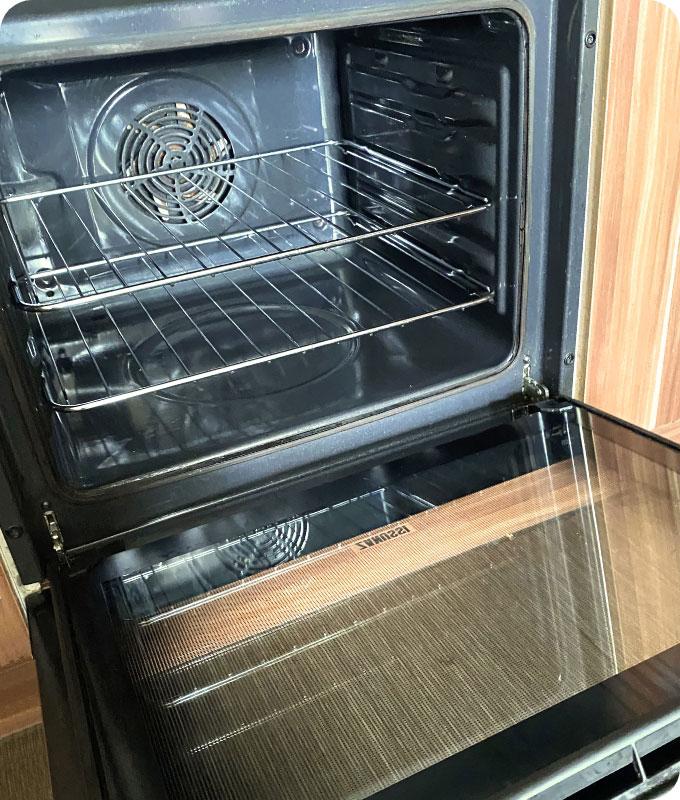
Detachable components are removed and placed into the portable heated dip tank. Oven racks, shelf supports, the grill pan, and the inner door glass go in together and soak in the citric acid solution while the technician moves through the fixed interior surfaces methodically.
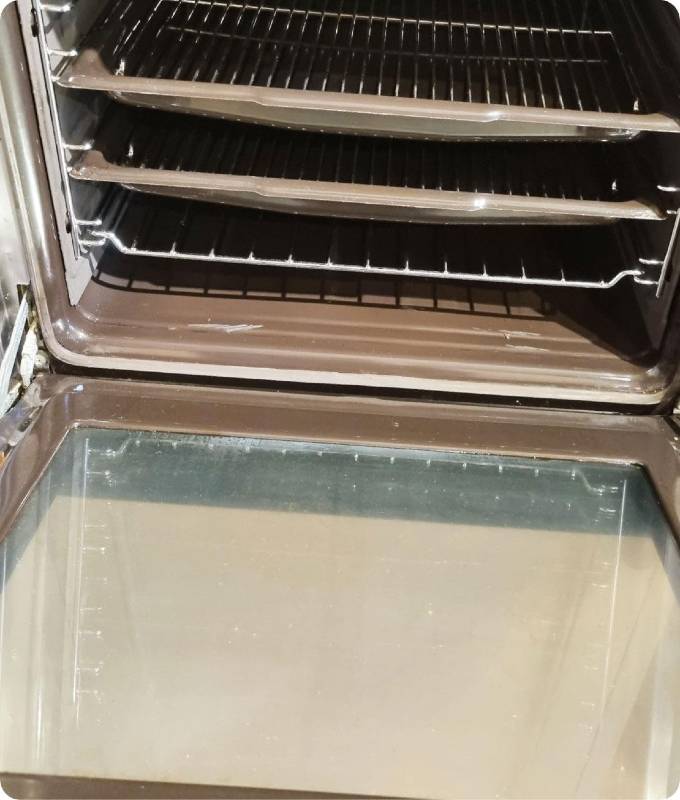
Cavity roof, back panel, both side walls, and the oven base each receive separate treatment. The base area around the lower heating element, where drips and spillage solidify into the thickest deposits, is given particular attention throughout.
- Citric acid dip tank: Racks, grill pans, and door glass panels soaked to break down carbonised grease without caustic chemicals.
- Section-by-section interior work: Each cavity surface treated individually for a thorough, even clean throughout.
- Door glass cleared: Inner and outer panels polished to full transparency before the technician leaves.