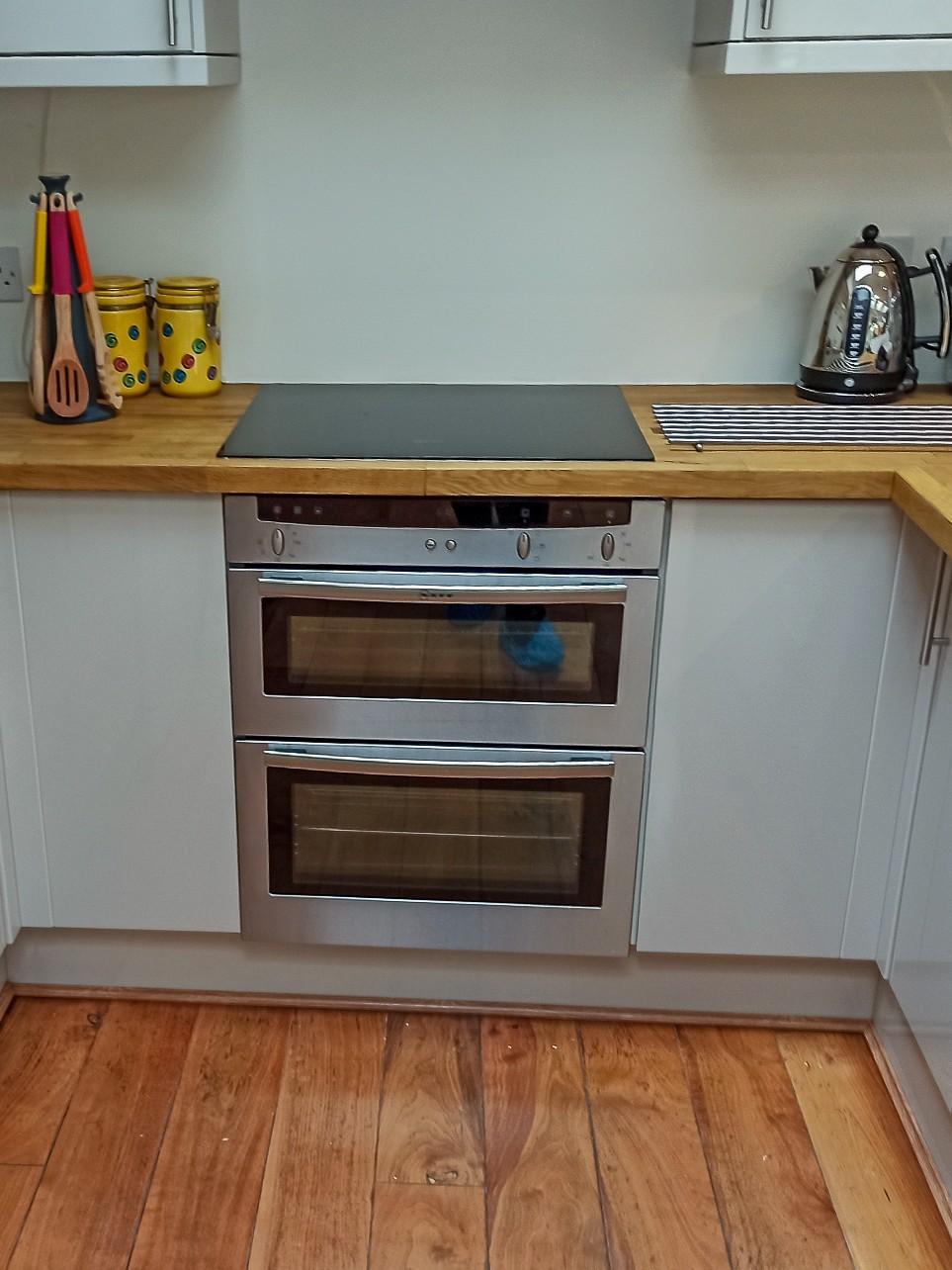
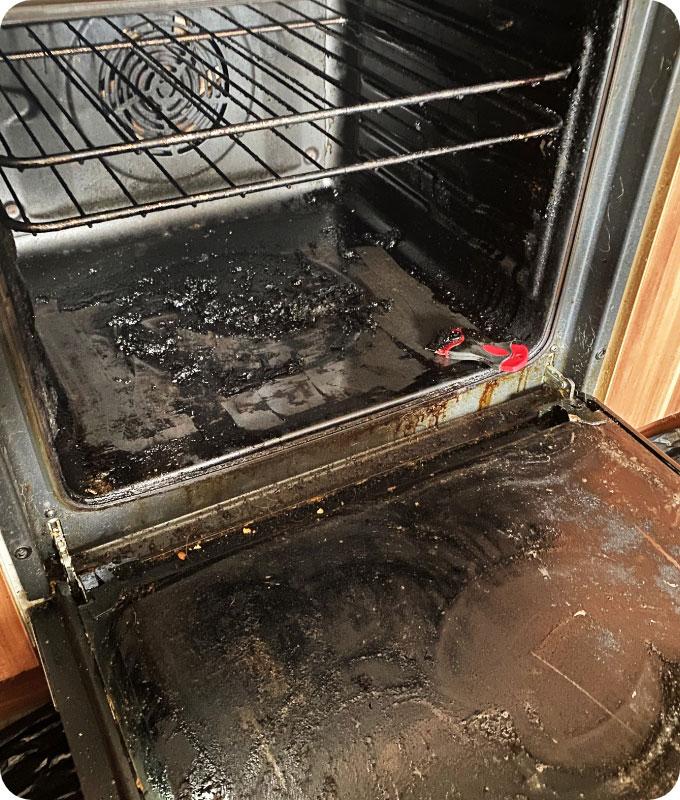
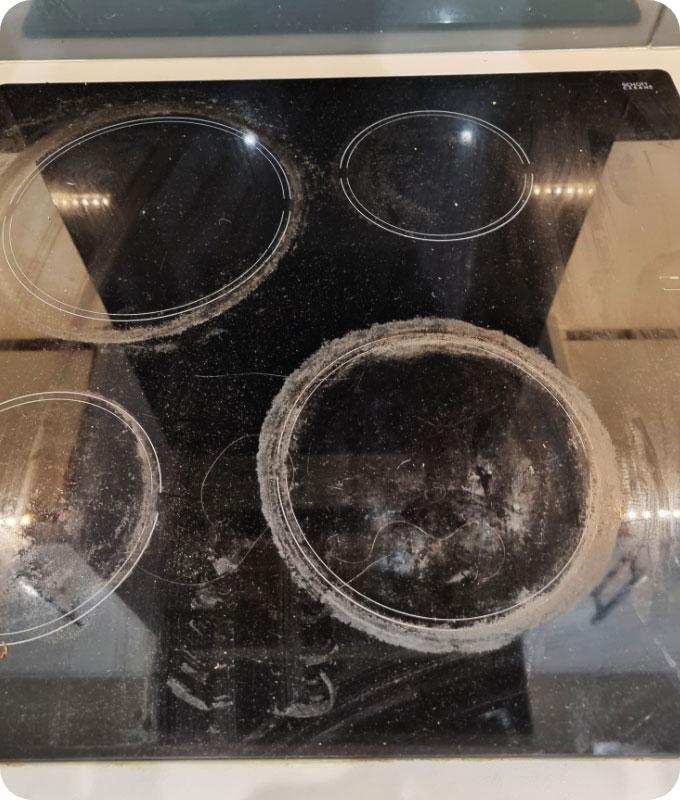
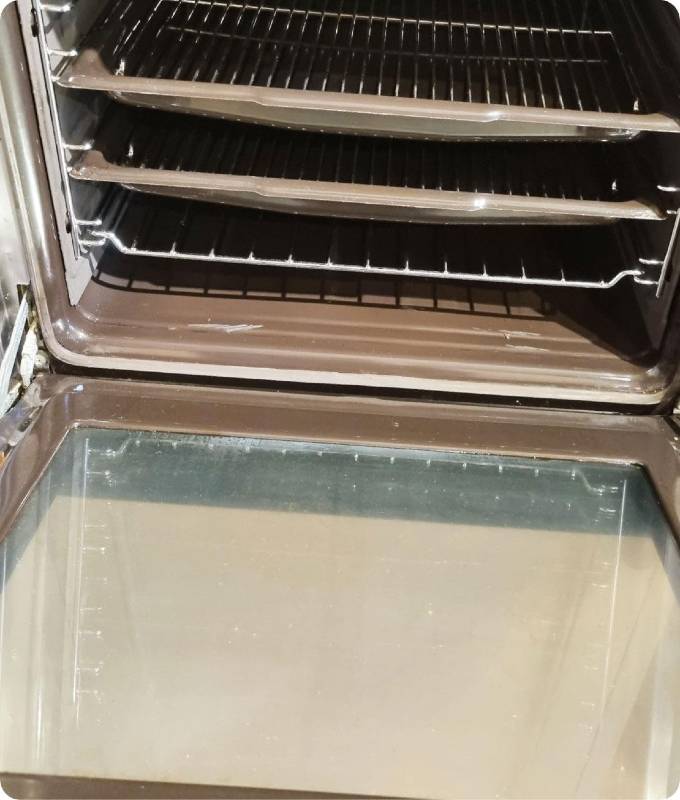
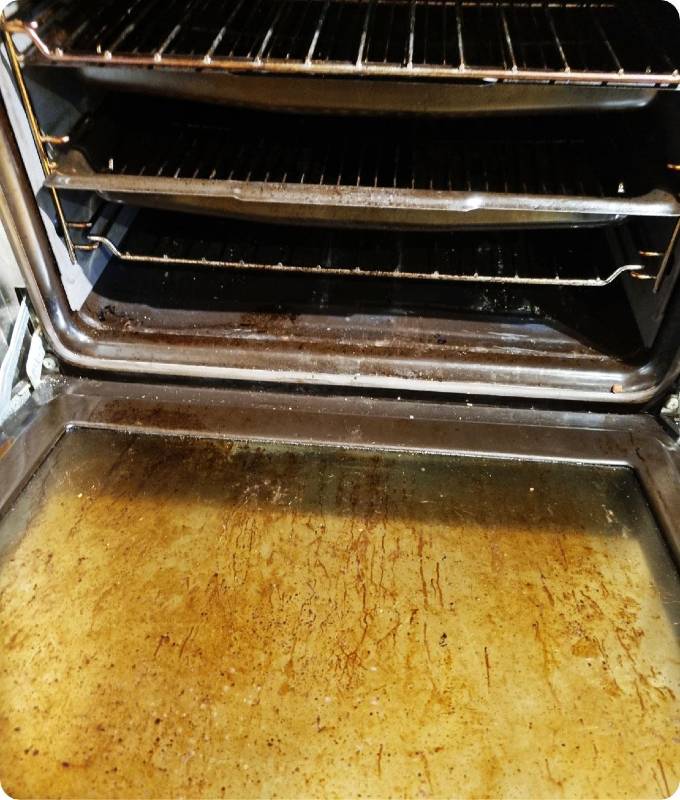
Chadderton is a mix of interwar terraces, 1960s semis, and newer housing developments spread across OL1. Whether the oven sits in a compact mid-terrace kitchen or a larger detached property, the grease and carbon build-up is the same problem. Regular cooking, especially roasting and grilling, deposits carbonised residue on the oven base, side panels, fan housing, and door glass that ordinary wiping cannot shift.
Before touching anything, the technician lays down protective floor sheets and assesses the appliance. They note the oven type, whether it has a fan-assisted cavity, a separate grill compartment, or a pyrolytic lining, and identify where the heaviest carbonisation has occurred. That quick assessment shapes the order of work.
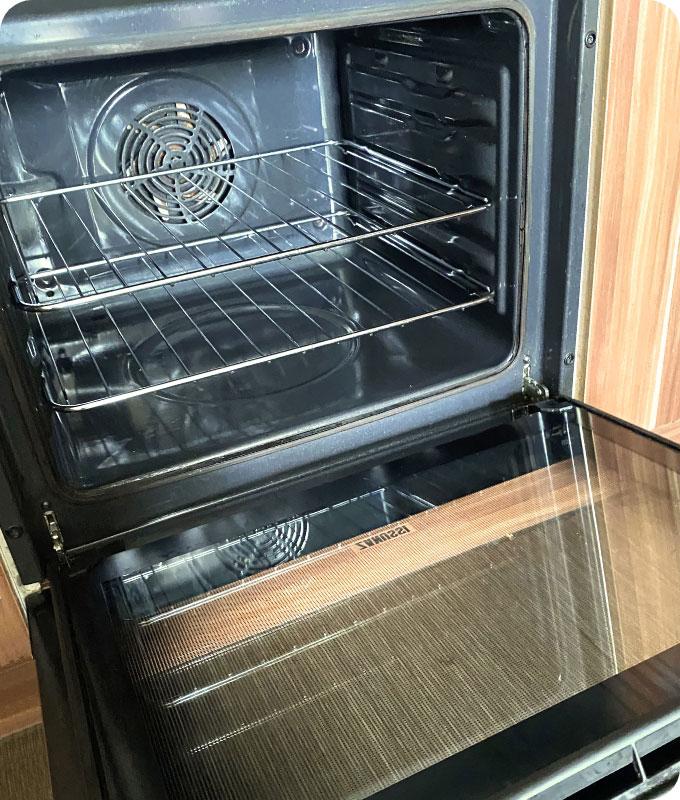
Removable parts come out first. Racks, grill pans, side runners, and the inner door glass panel are placed into the portable heated dip tank filled with citric acid-based solution. The soak works on baked-on grease while the technician cleans the oven interior section by section.
The cavity walls, roof panel, base, and the area around the lower heating element each get individual treatment. Carbonised deposits on the element surround are handled carefully to avoid contact with the element itself.
- Dip tank soak: Racks, grill pans, and glass panels treated in heated citric acid solution to lift baked-on grease.
- Interior panel clean: Cavity roof, back wall, side panels, and base cleaned individually for complete coverage.
- Door glass polished: Inner and outer panes brought back to full transparency.